 UPDF
UPDF
 UPDF for Windows
 UPDF for Mac
 UPDF for iPhone/iPad
 UPDF for Android
 Nomostar
 UPDF AI Online
 UPDF Sign
 IvyCraft
 Edit PDF
 Annotate PDF
 Create PDF
 PDF Form
 Edit links
 Convert PDF
 OCR
OCR PDF to Word
 PDF to Image
 PDF to Excel
 Organize PDF
 Merge PDF
 Split PDF
 Crop PDF
 Rotate PDF
 Protect PDF
 Sign PDF
 Redact PDF
 Sanitize PDF
 Remove Security
 Read PDF
 UPDF Cloud
 Compress PDF
 Print PDF
 Batch Process
 About UPDF AI
 UPDF AI Solutions
 AI User Guide
 FAQ about UPDF AI
 Summarize PDF
 Translate PDF
 Chat with PDF
 Chat with AI
 Chat with image
 PDF to Mind Map
 Explain PDF
 PDF AI Tools
 Image AI Tools
 AI Chat Tools
 AI Writing Tools
 AI Study Tools
 AI Working Tools
 Other AI Tools
 AI Bookmark Generation
 AI Bookmark Summary
 AI Watermark Generation
 AI Background Generation
 AI Sticker Generation
 AI Stamp Generation
 AI Editing Suite
 UPDF Copilot
 AI Page Management
 AI Semantic Search
 PDF to Word
 PDF to Excel
 PDF to PowerPoint
 Enterprise Solution
 Enterprise Sign
 Enterprise AI
 Enterprise Plan
 Enterprise User Guide
 Enterprise Webinar
 IT
IT Education
 Construction
 Financial Service
 Healthcare
 Insurance
 Legal
Legal Manufacturing
 Government
 Researchers & PhDs
 Solopreneurs & Freelancers
 Lawyers & Legal Professionals
 Real Estate Agents & Brokers
 Education Solution
 Customer Stories
 User Guide
 UPDF Tricks
 FAQs
FAQs UPDF Reviews
 Download Center
 Blog
Blog Newsroom
 Tech Spec
 Updates
 UPDF vs. Adobe Acrobat
 UPDF vs. Foxit
 UPDF vs. PDF Expert

Select a PDF table, press Ctrl + C, paste into Word, and formatting often breaks immediately. Columns can collapse, merged cells separate, and unwanted line breaks appear throughout the pasted table content. Rebuilding everything manually can take more time than simply typing all the table figures again yourself. This happens because PDFs store positioned text and drawn lines instead of actual structured table objects.
The clipboard cannot identify where individual cells begin or end, causing the original grid to disappear. Understanding how to copy a table from a PDF to Word can help preserve important table formatting. One approach skip copying by letting you edit table values directly or analyze them using AI. Another uses UPDF or Microsoft Word PDF import to extract tables while keeping their structure intact.
Scenario Quick Navigator
First, identify what you need to do with your PDF table, then choose the suitable method below:
- Edit and Analyze Tables: Go to Method 1 for editing values, calculating totals, or analyzing PDF tables with AI.
- Copy Tables With Formatting: Go to Method 2 for copying PDF tables or charts into Word with formatting intact.
- Open PDF in Word: Go to Method 3 for opening and converting PDF tables directly with Microsoft Word.
- Extract Scanned PDF Tables: Go to Method 4 for extracting tables from scanned or image-based PDFs with OCR.
Tired of fixing broken table borders and random line breaks in Word? Download UPDF for free to edit PDF tables directly or export them with perfect layout retention.
Windows • macOS • iOS • Android 100% secure
Method 1: Edit & Analyze PDF Tables Directly with AI (No Copying Needed)
Best For:
- Quick corrections to table data, calculating totals, or analyzing complex financial and academic tables without breaking the layout.
Not For:
- Adding PDF tables into existing Word reports requiring final delivery as DOCX files.
Many people copy a table from a PDF to Word simply to change a few numbers or typos. UPDF lets you edit that information directly within the PDF. It automatically recognizes and matches the original font, size, and style. If the new text is slightly longer or shorter, you can freely resize and reposition the text boxes and table border lines to maintain a clean layout.
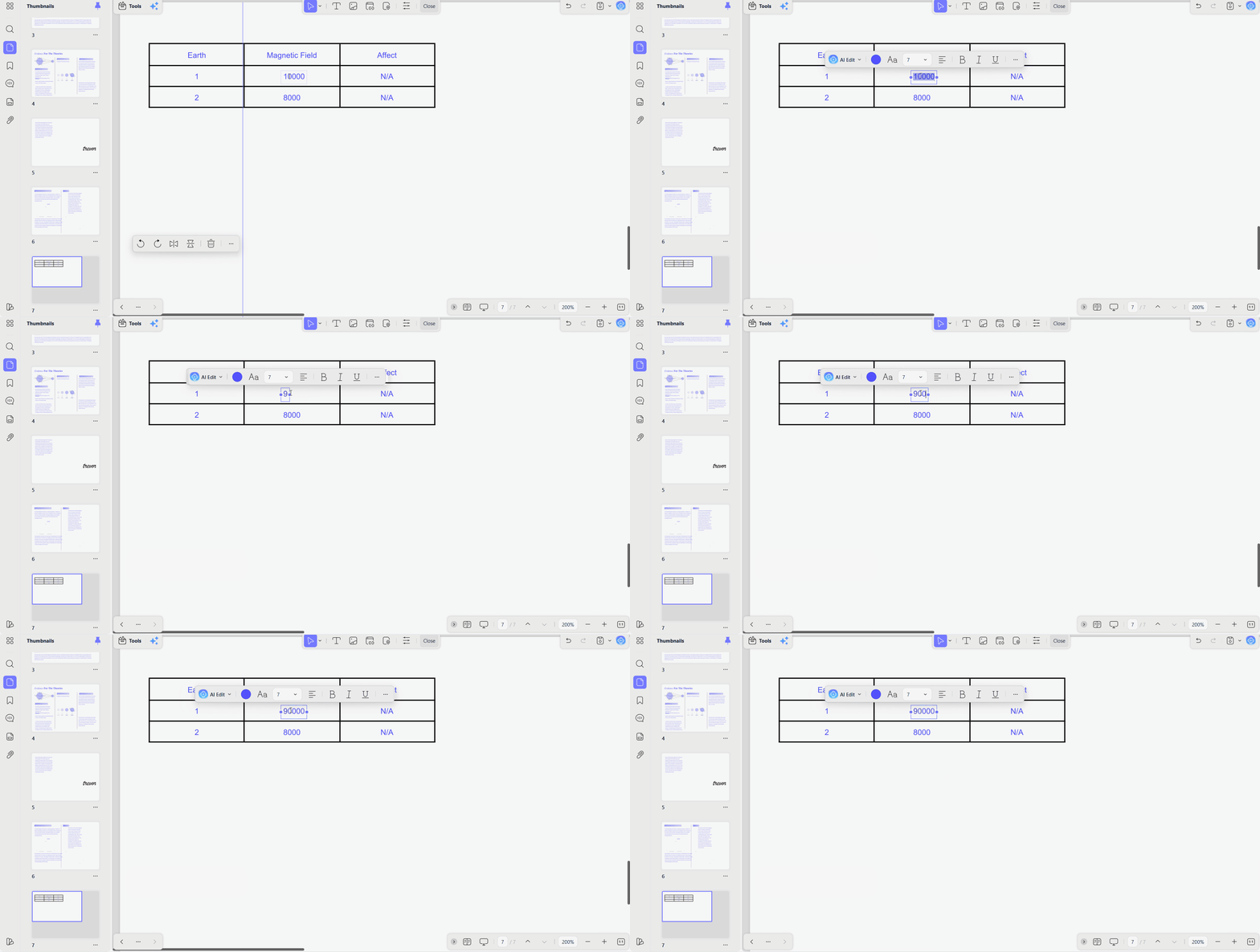
Step 1. Open your PDF in UPDF, select "Tools" from the left panel, and enter "Edit" mode. Click any cell to modify the text or numbers directly. Use the bounding box handles to freely adjust the text box or align table lines if needed.
Step 2. Next, click the "UPDF AI" icon in the top left corner and press the "Chat with PDF" button. After that, enter these prompts to analyze the table:
- Data Summarization: Highlight a table and prompt, "Summarize the key data points in this table and calculate the total."
- Comparative Analysis: Prompt, "Compare the tables on Page 3 and Page 5, and list the top 3 items with the highest cost variance."
- Data Export: Prompt, "Extract this table and output it as clean Markdown or CSV text," which gives you something to paste without a conversion pass.
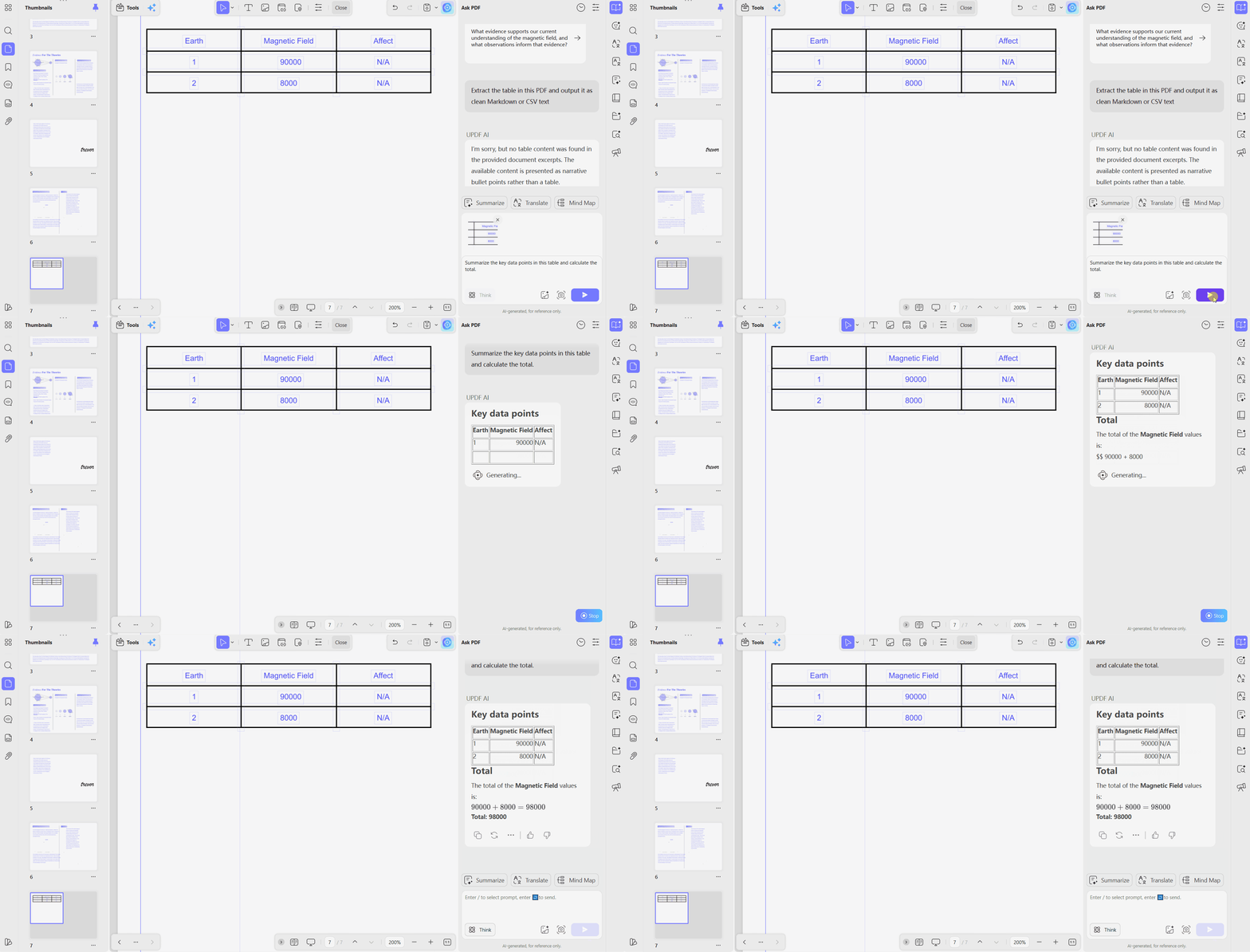
UPDF AI reads table text well, but charts and diagrams are treated as graphic content. For graphics, UPDF recommends adding a screenshot to the chat box with your chosen prompt. For other table extraction options, see our guide on how to extract a table from a PDF.
Method 2: High-Fidelity Table & Chart Extraction via UPDF (Native Word Table)
Best For:
- Extracting complex multi-column tables, merged cells, or embedded charts into Word with perfect borders, shading, and structure intact.
Not For:
- Changing a quick figure that you can modify directly using Method 1.
Copying table content via the clipboard often explodes the layout into fragmented text lines. UPDF's conversion engine rebuilds the underlying structure into a true Native Editable Word Table. It preserves complex elements—including merged cells, custom cell shading, grid borders, and multi-page table continuity—so you don't have to reformat anything manually.
Step 1. Open your PDF in UPDF, click "Tools", and choose "Word" under the "PDF Converter" section.
Step 2. Next, pick a layout mode from these 2 options:
- Retain Word Flowing Format: Content uses Word's normal flow and adjusts as you edit, closely matching the original layout. Choose this when the table must behave like native Word content inside a larger report.
- Retain Word Textbox Style: Content sits in fixed text boxes that hold the original positioning precisely. Choose this when visual fidelity matters more than editability afterward.
Step 3. Once done, press the "Apply" button and choose a location for the converted file to begin the conversion process.
(See the side-by-side comparison below showing how UPDF retains 100% table borders, cell shading, and alignment when converted to Word)
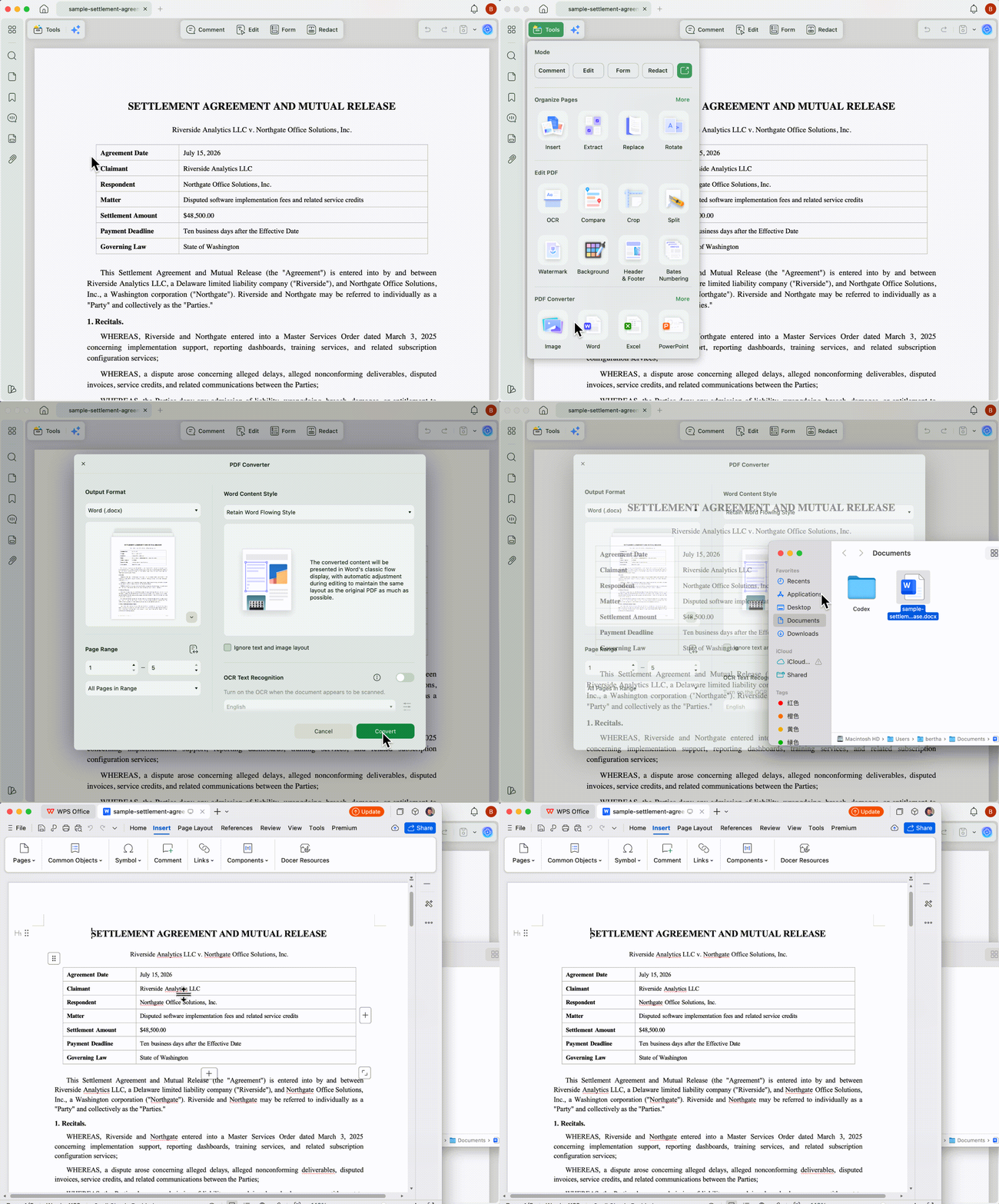
Charts remain intact because UPDF transfers them as graphic objects instead of rebuilding their original design. This helps preserve chart quality, positioning, and appearance when moving PDF content into Microsoft Word documents. Learn how to convert PDF to Word without losing formatting for more details about maintaining original layouts during conversion. You can also explore our guide on how to convert PDF into other file formats supported by UPDF.
Method 3: Open PDF Directly in Microsoft Word (No Extra Software)
Best For:
- Quick extraction of simple text-based tables when installing anything extra is off the table.
Not For:
- Merged cells, heavy shading, multi-column layouts, or any scanned document.
Microsoft Word can open PDFs and convert simple bordered tables into editable content easily. However, complex page layouts may change because Word rebuilds the PDF during conversion completely. Adhere to the steps below to copy and paste a table from a PDF:
Step 1. Once you open MS Word, import your PDF via the drag-and-drop method. Word will show a conversion prompt; press "OK" to continue.
Step 2. Find the table in the converted PDF and press the "Four-Arrow" icon in the top left corner of the table. Use "Ctrl + C" to copy the table.
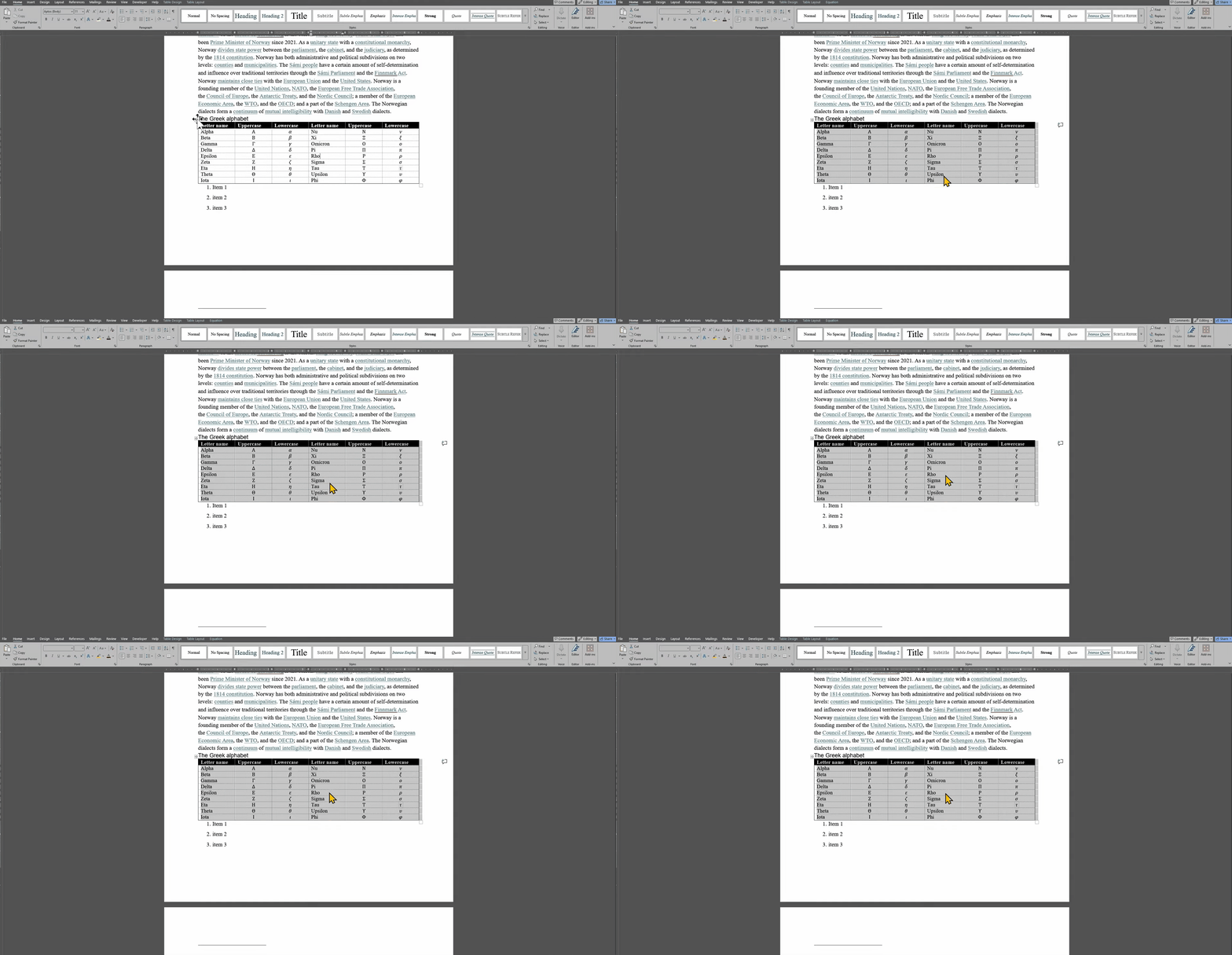
Step 3. Next, paste it into another document where needed.
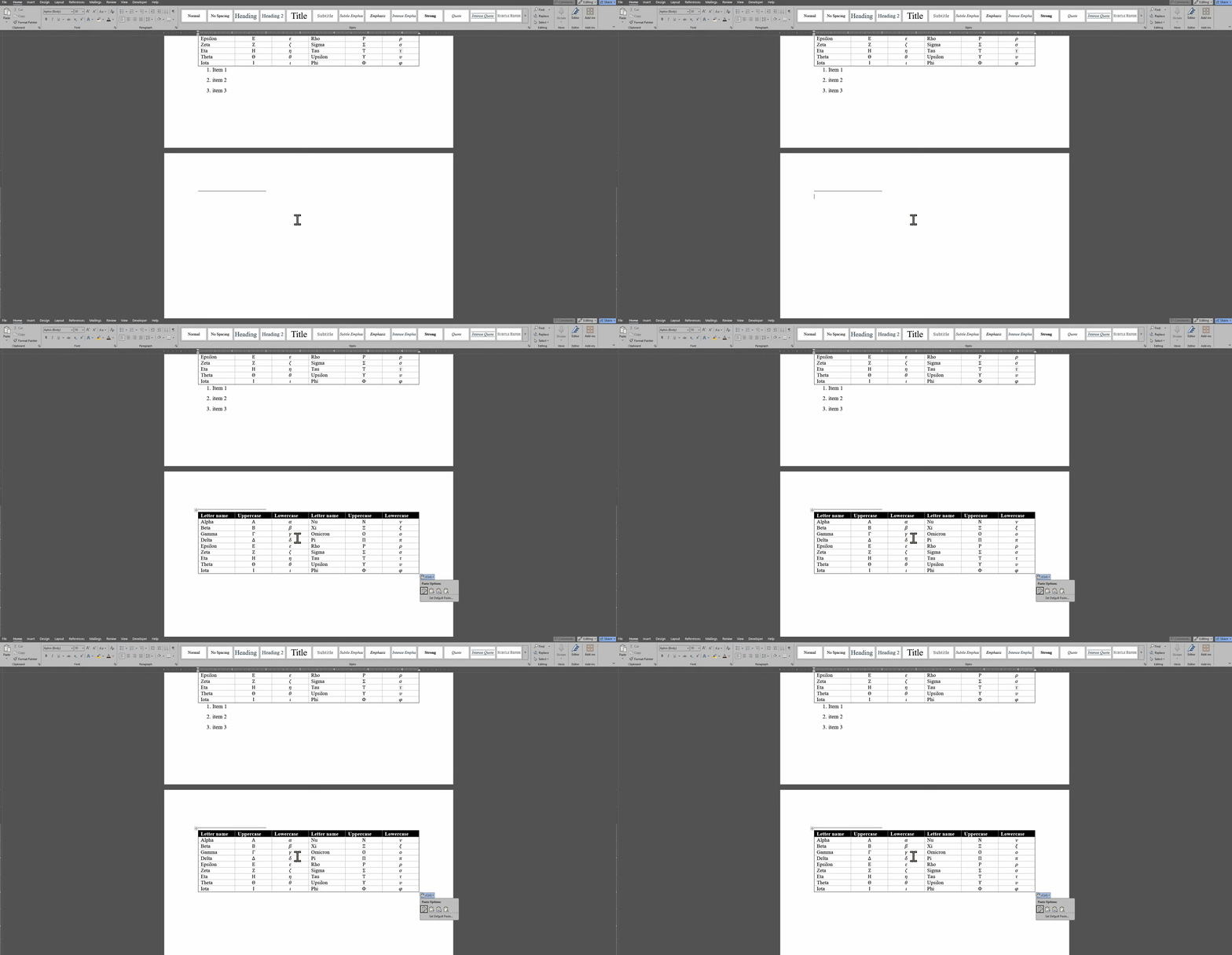
Microsoft notes that complex tables, page borders, and footnotes may not convert. Scanned PDF pages require OCR before Word can recognize and edit their text properly. For other methods, see how to copy PDF to Word for additional guidance.
Method 4: Copy Scanned PDF Tables using UPDF AI-powered OCR
Best For:
- Image-based PDFs, paper scans, and read-only financial tables where text cannot be highlighted.
Not For:
- Native PDFs with already selectable text.
A scanned table is essentially an image, leaving no selectable text for copying. UPDF's AI-powered OCR engine accurately recognizes scanned table layouts and converts them into searchable, editable text. It is specifically optimized for numerical accuracy—preventing common mistakes like mistaking 0 for O or 1 for l in financial statements and invoices.
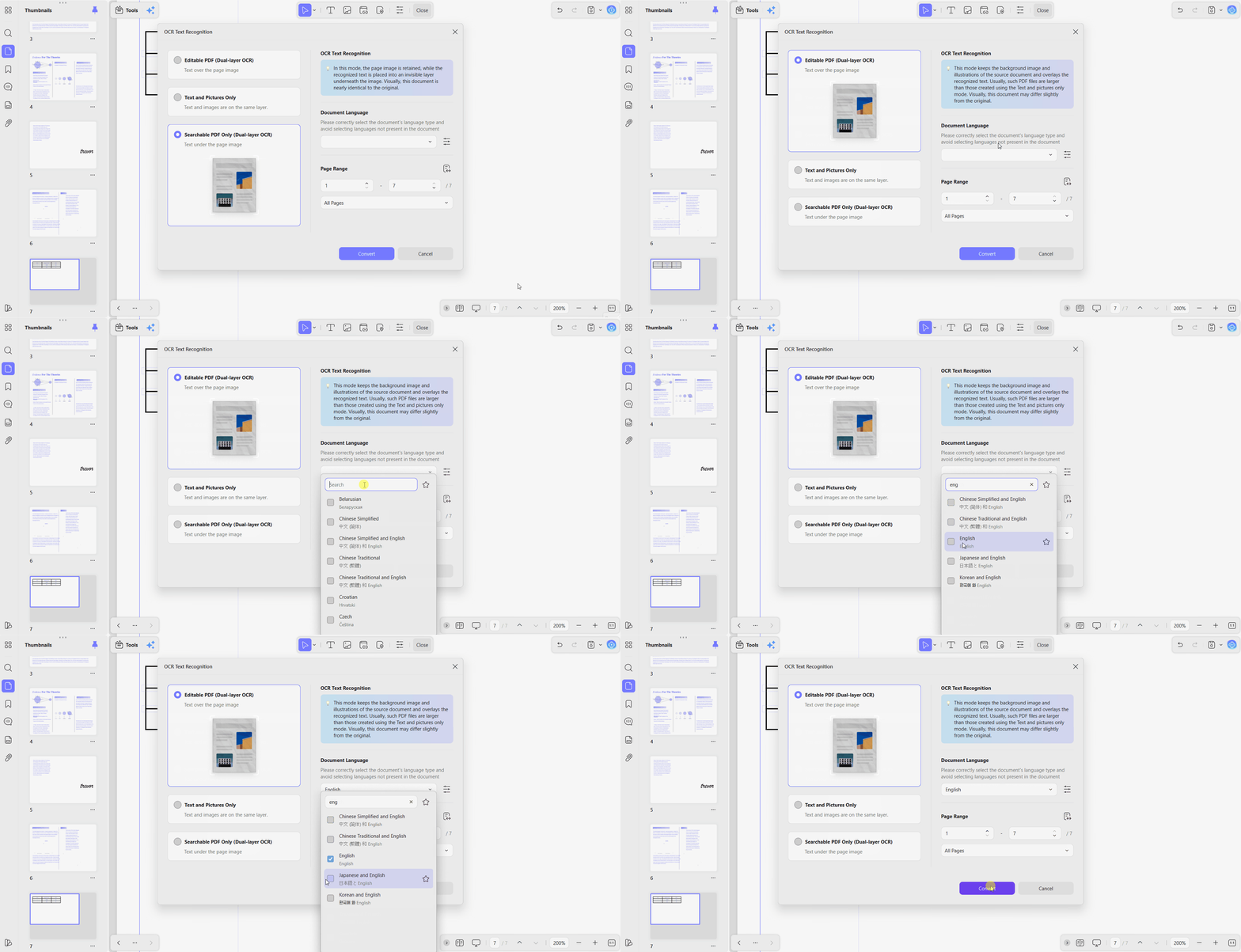
Step 1. In UPDF, choose the "OCR" tool in the "Tools" section. After that, choose the "Editable PDF" mode to make the converted PDF editable afterward.
Step 2. Choose the accurate languages used in the PDF and select a page range. Once done, press the "Convert" button to begin the conversion process.
Step 3. Open the newly generated PDF and either copy the recognized table text directly or use Method 2 to convert it into a fully formatted Word document.
Every route above answers a different shape of the same underlying problem, and all 4 run from one application.
Whether you need to analyze table data with AI or export complex charts to Word without mess, UPDF handles it all seamlessly.
Windows • macOS • iOS • Android 100% secure
Comparison: Which Method Fits Your Needs?
Your needs and table complexity determine the best way to copy a table from PDF to Word. The table below compares each method to help you choose the most suitable option:
| Approach / Solution | Copying Required? | Formatting Preservation | Best Scenario | Rating |
| Method 1: UPDF Direct Edit & AI | No (Stays in PDF) | 100% (Original file layout untouched) | Quick text/number fixes, resizing bounding boxes, AI data analysis | 5/5 |
| Method 2: UPDF Convert to Word | Yes | Very High (Native Word table, intact borders & shading) | Complex multi-column/multi-page tables, embedded charts & merged cells | 5/5 |
| Method 3: Native MS Word Open | Yes | Moderate (Layout and borders may shift) | Simple text-only tables without complex formatting | 3/5 |
| Method 4: UPDF AI OCR Extraction | Optional | High (Accurate numerical & character recognition) | Scanned image tables, paper invoices, and read-only PDFs | 4/5 |
Frequently Asked Questions
Why can't I copy and paste a table from a PDF?
Copying often fails because scanned PDFs contain images instead of selectable text. Security permissions can also prevent users from selecting or copying table content. UPDF OCR converts scanned images into selectable text for easy copying afterward.
How do I copy a PDF table to Word without losing formatting?
Converting through UPDF usually keeps table gridlines, cell alignment, and formatting intact. This method can extract a table from a PDF to Word as structured content. For scanned documents, run OCR first before copying the recognized table afterward.
How to copy a chart from PDF to Word?
Using UPDF Word export keeps charts clearer than copying through the clipboard. Charts transfer as graphic objects, helping preserve their original quality and resolution. After conversion, select the chart and paste it into your Word document.
Can I edit or calculate data in a PDF table directly without converting to Word?
Yes, UPDF lets you change text inside table cells without converting documents. Gridlines remain in place while you edit numbers, labels, or other content. UPDF AI can calculate sums, averages, and variances directly from table data.
What if I need to convert my Word document back to PDF after editing the table?
After editing, Word can save your finished document directly as a PDF. Alternatively, UPDF can convert the completed Word file back into PDF easily. See our Word to PDF guide for steps covering both available methods.
Conclusion
To conclude, learning how to copy a table from PDF to Word depends on your needs. Microsoft Word handles simple bordered tables well without requiring any additional software or tools. UPDF works better for complex layouts, embedded charts, and tables requiring accurate formatting. Scanned tables need OCR, while direct editing or AI analysis avoids conversion completely.
Ready to simplify your PDF table workflow? Download UPDF for free to experience high-fidelity table extraction and instant AI data analysis!
Windows • macOS • iOS • Android 100% secure





 Lizzy Lozano
 Enola Davis