 UPDF
UPDF
 UPDF for Windows
 UPDF for Mac
 UPDF for iPhone/iPad
 UPDF for Android
 Nomostar
 UPDF AI Online
 UPDF Sign
 IvyCraft
 Edit PDF
 Annotate PDF
 Create PDF
 PDF Form
 Edit links
 Convert PDF
 OCR
OCR PDF to Word
 PDF to Image
 PDF to Excel
 Organize PDF
 Merge PDF
 Split PDF
 Crop PDF
 Rotate PDF
 Protect PDF
 Sign PDF
 Redact PDF
 Sanitize PDF
 Remove Security
 Read PDF
 UPDF Cloud
 Compress PDF
 Print PDF
 Batch Process
 About UPDF AI
 UPDF AI Solutions
 AI User Guide
 FAQ about UPDF AI
 Summarize PDF
 Translate PDF
 Chat with PDF
 Chat with AI
 Chat with image
 PDF to Mind Map
 Explain PDF
 PDF AI Tools
 Image AI Tools
 AI Chat Tools
 AI Writing Tools
 AI Study Tools
 AI Working Tools
 Other AI Tools
 AI Bookmark Generation
 AI Bookmark Summary
 AI Watermark Generation
 AI Background Generation
 AI Sticker Generation
 AI Stamp Generation
 AI Editing Suite
 UPDF Copilot
 AI Page Management
 AI Semantic Search
 PDF to Word
 PDF to Excel
 PDF to PowerPoint
 Enterprise Solution
 Enterprise Sign
 Enterprise AI
 Enterprise Plan
 Enterprise User Guide
 Enterprise Webinar
 IT
IT Education
 Construction
 Financial Service
 Healthcare
 Insurance
 Legal
Legal Manufacturing
 Government
 Researchers & PhDs
 Solopreneurs & Freelancers
 Lawyers & Legal Professionals
 Real Estate Agents & Brokers
 Education Solution
 Customer Stories
 User Guide
 UPDF Tricks
 FAQs
FAQs UPDF Reviews
 Download Center
 Blog
Blog Newsroom
 Tech Spec
 Updates
 UPDF vs. Adobe Acrobat
 UPDF vs. Foxit
 UPDF vs. PDF Expert

Quick answer:
Most people convert PDFs to Google Docs for the same reason: a PDF is a finished document you can only read, but a Google Doc is a workspace where your team can comment, suggest edits, translate, or reuse content. The problem is getting from one to the other without destroying the layout. There is no dedicated "PDF to Google Doc converter" built by Google — the conversion happens through Drive's import or a Word detour.
Why the Word detour works: Google Docs reads Word files natively, so handing it a clean .docx instead of a raw PDF means Docs doesn't have to guess at your layout — columns, tables, and images land much closer to the original. Below are three methods ranked by how well they preserve your document, plus a routing table and the mobile workflow.
For other conversion targets and a deeper look at preserving layout, the how to convert PDF pillar guide covers the full picture.
Part 1. Which Method Should You Use?
| Your situation | Method | Best for |
|---|---|---|
| You need formatting kept intact | UPDF → Word → Google Drive | Reports, resumes, anything with tables or images |
| The PDF is scanned or image-based | UPDF with OCR → Word → Google Drive | Scanned contracts, photographed documents |
| Plain-text PDF, no software to install | Google Drive direct import | Simple text files, quick one-offs |
| You already have Microsoft Word | Word → save as .docx → Google Drive | Occasional conversions on a Word machine |
| I need my team to comment, suggest edits, or translate | UPDF → Word → Google Drive | Collaboration, track changes, @mentions, built-in translation |
Which Method Is Best?
For most people, UPDF (UPDF → Word±OCR → Docs) wins because it keeps the original formatting and is the only option here that reliably handles scanned PDFs through OCR. Google Drive's direct import is the fastest for plain text but unreliable on anything structured, and Microsoft Word sits in between but requires a paid Office license. If your document has tables, columns, or images — or it's a scan — convert with a tool built for layout retention first.
Part 2. Method 1. Convert PDF to Google Docs With UPDF (Best for Keeping Formatting)
Best for:
- documents where layout matters and scanned files needing OCR.
Not for:
- a quick one-off when you'd rather not install anything — use Method 2.
Google Docs reads Word files natively, so converting your PDF to a clean Word document first is the most reliable way to land in Docs without broken layouts. UPDF converts PDFs to Word, Excel, PowerPoint, HTML, text, and image formats while keeping the original structure, and it handles scanned PDFs through built-in OCR. If you don't have it yet, download UPDF for free — it installs in about a minute on Windows and Mac.
Windows • macOS • iOS • Android 100% secure
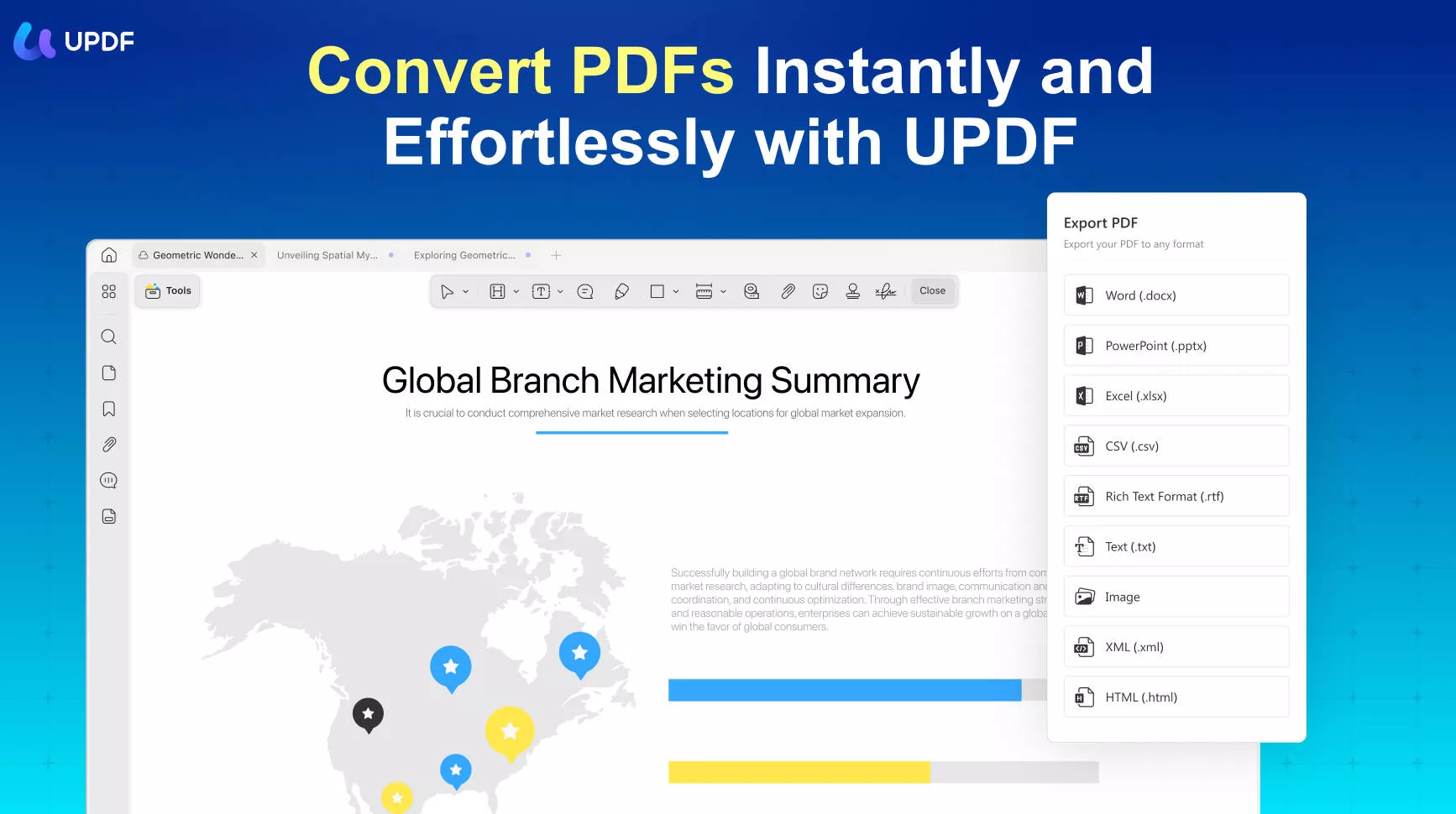
Let's look at how UPDF can convert PDF to Google Docs-supported formats on Windows and Mac:
Step 1. Download and install UPDF, then launch it.
Windows • macOS • iOS • Android 100% secure
Step 2. Open the PDF in UPDF on Windows or Mac — drag the file in, or use Open File on the home screen.
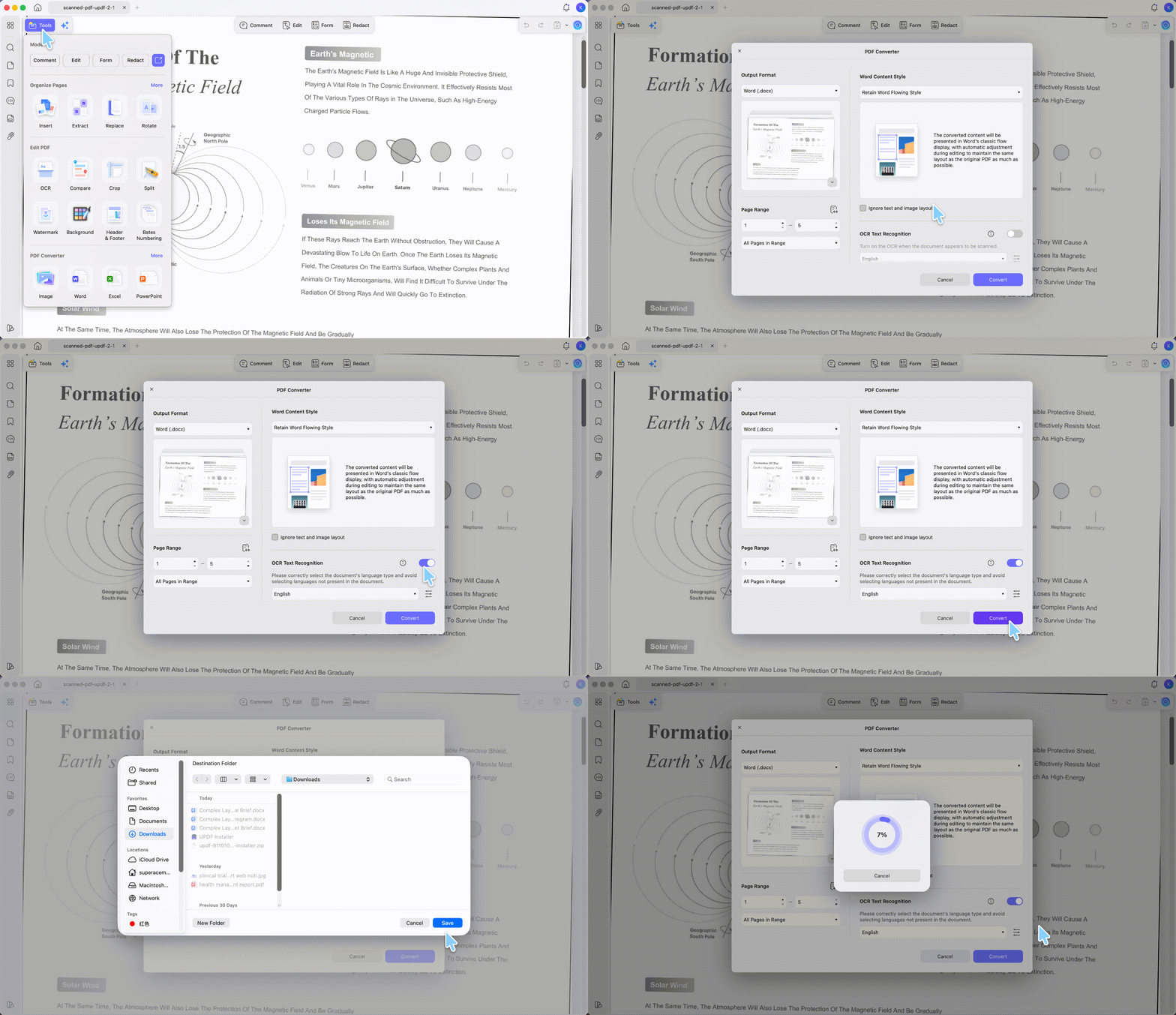
Step 3. Click the Tools icon in the right-side panel, then choose Word. The PDF Converter window opens.
Step 4. Set the page range if needed, and leave Word Content Style on Retain Word Flowing Style to keep the layout close to the original. If your PDF is scanned or image-based, turn on the OCR Text Recognition toggle in the same window and pick the document language — no separate OCR pass needed.
Step 5. Click Convert, then pick a folder to save the Word file.
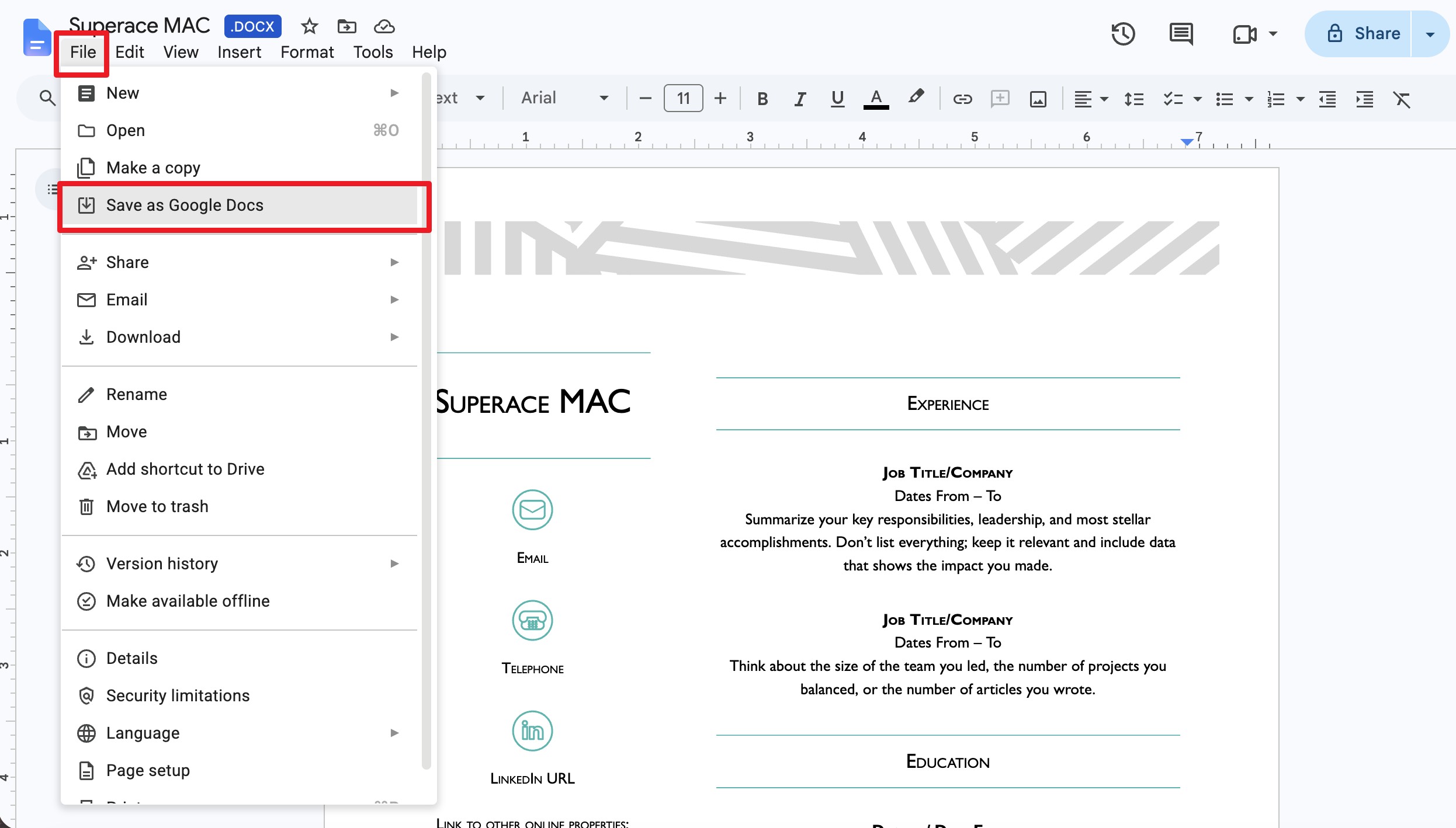
Step 6. Open Google Drive, click New → File upload, and upload the Word file. Right-click it and choose Open with → Google Docs → File → Save as Google Docs.
Convert Multiple PDFs to Word at Once
If you have several PDFs to move into Google Docs, convert them in one pass instead of one by one.
Step 1. Click Tools in the bottom toolbar, then choose Convert under Batch PDFs.
Step 2. Add all the PDFs you want to convert, set the output format to Word (.docx) (turn on OCR if any are scanned), and run the batch.
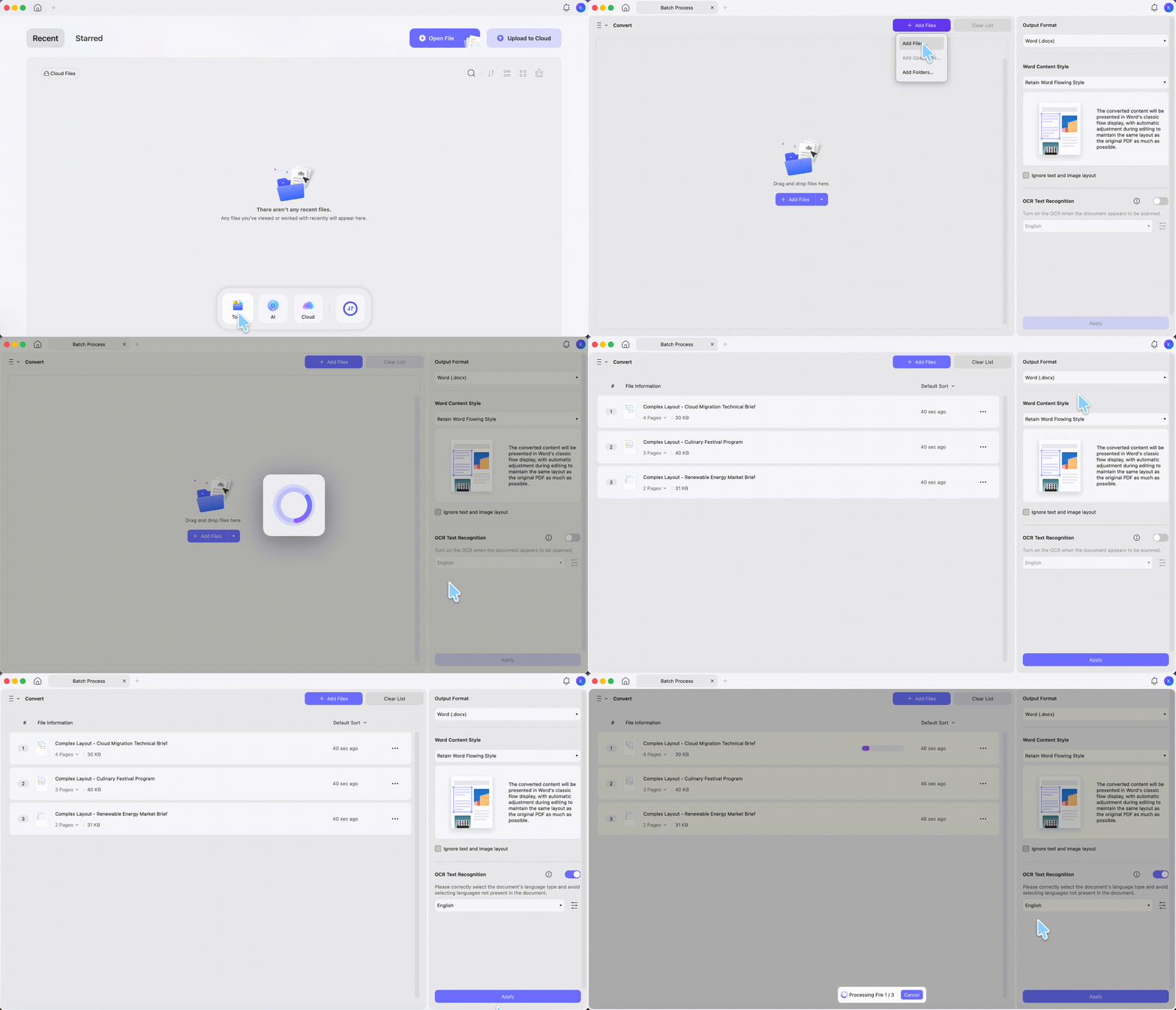
Step 3. Upload the converted Word files to Google Drive and open each with Google Docs. Then go to File → Save as Google Docs.
Video guide on How to Convert PDF on Desktop
Part 3. Method 2. Convert PDF to Google Docs Online With Google Drive
Best for:
- simple text PDFs and quick conversions with no install.
Not for:
- scanned PDFs or layout-heavy files — Drive has no reliable OCR for this and will garble the structure; use Method 1.
Method 2 works for any PDF to Google Doc conversion when formatting isn't critical. If the PDF is mostly plain text and you'd rather not install anything, Google Drive converts it directly. Expect formatting to shift on anything with columns, tables, or graphics.
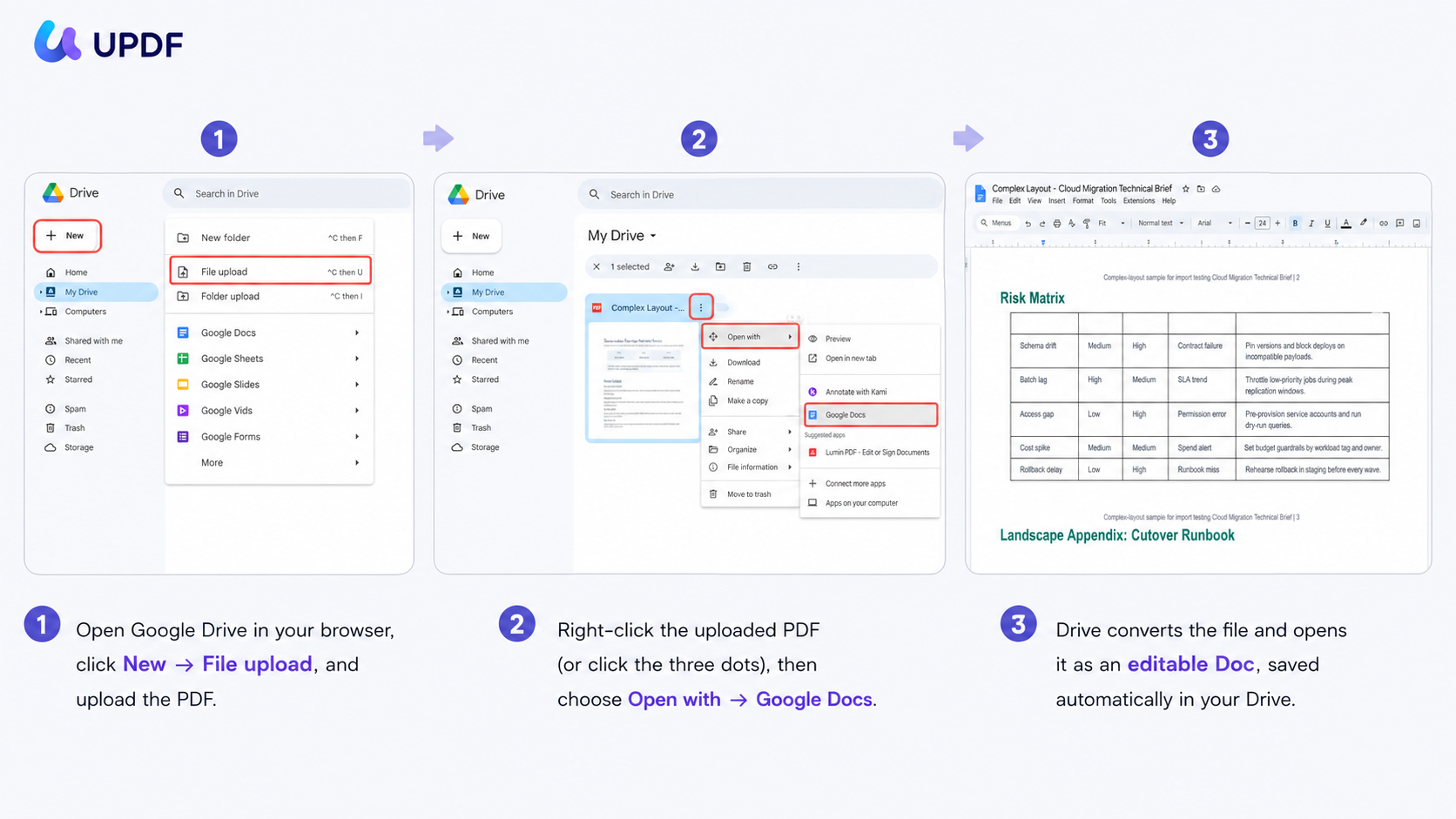
Step 1. Open Google Drive in your browser, click New → File upload, and upload the PDF.
Step 2. Right-click the uploaded PDF (or click the three dots), then choose Open with → Google Docs.
Step 3. Drive converts the file and opens it as an editable Doc, saved automatically in your Drive.
Part 4. Method 3. Convert PDF to Google Docs With Microsoft Word
Best for:
- occasional conversions when Word is already installed.
Not for:
- keeping complex layouts intact — Word's PDF conversion often reflows them; use Method 1.
If you already have Microsoft Word, it can open a PDF and convert it to an editable document you then move into Docs.
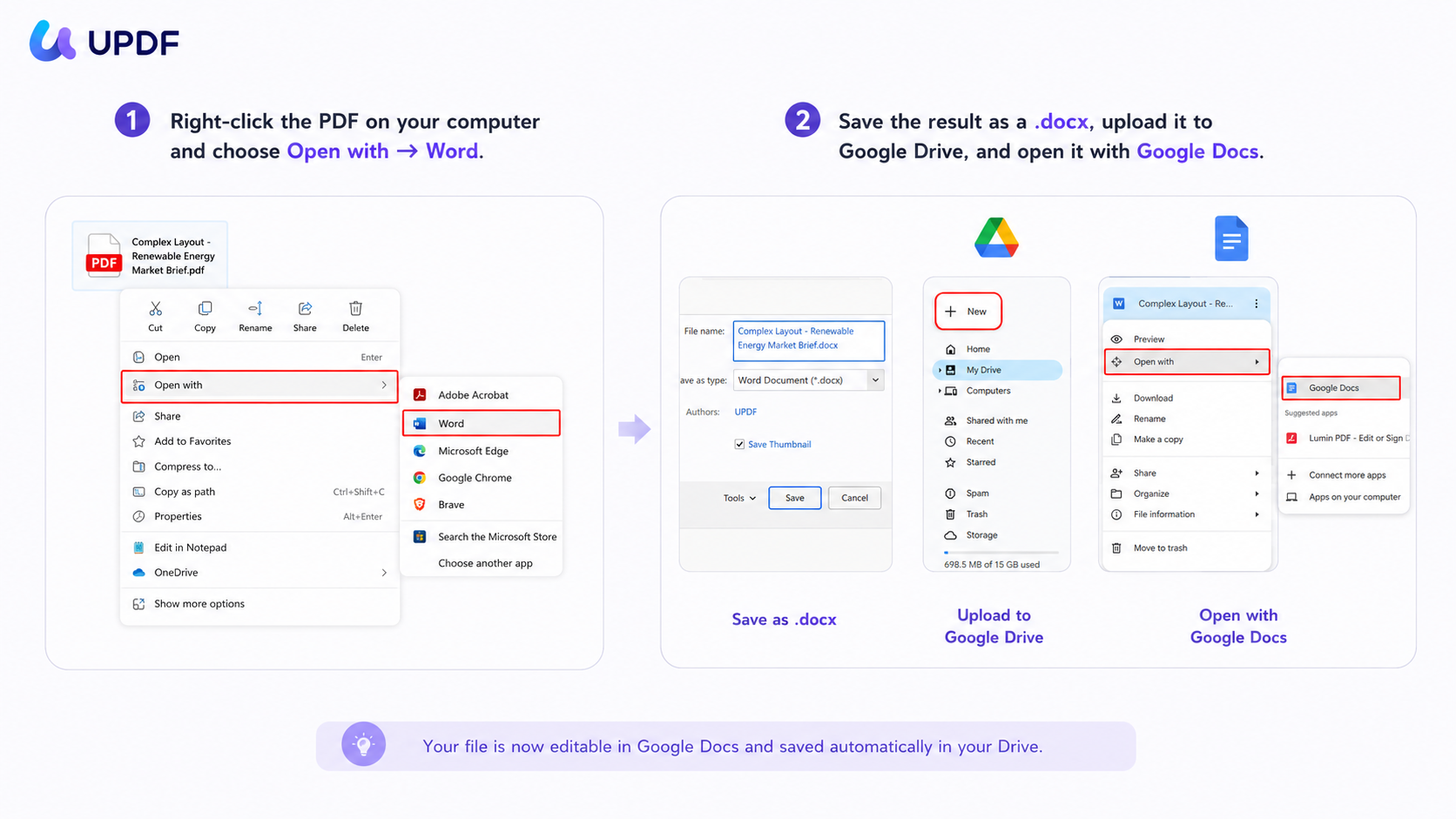
Step 1. Right-click the PDF on your computer and choose Open with → Word.
- Possible scenarios: Word warns it will convert the PDF and may not keep the original formatting exactly. Click OK.
Step 2. Save the result as a .docx, upload it to Google Drive, and open it with Google Docs. Then go to File → Save as Google Docs.
Part 5. How to Convert PDF to Google Docs on iPhone & Android
The conversion steps are the same on iOS and Android — convert to Word in the UPDF app, then open the file in Docs through Drive or the Google Docs app.
Step 1. Install the free UPDF app from the App Store or Google Play and open it.
Windows • macOS • iOS • Android 100% secure
Step 2. Tap Tools, choose PDF to Word, select your file, adjust the settings, and tap Continue to convert. (For a scanned PDF, turn on OCR in the conversion settings.)
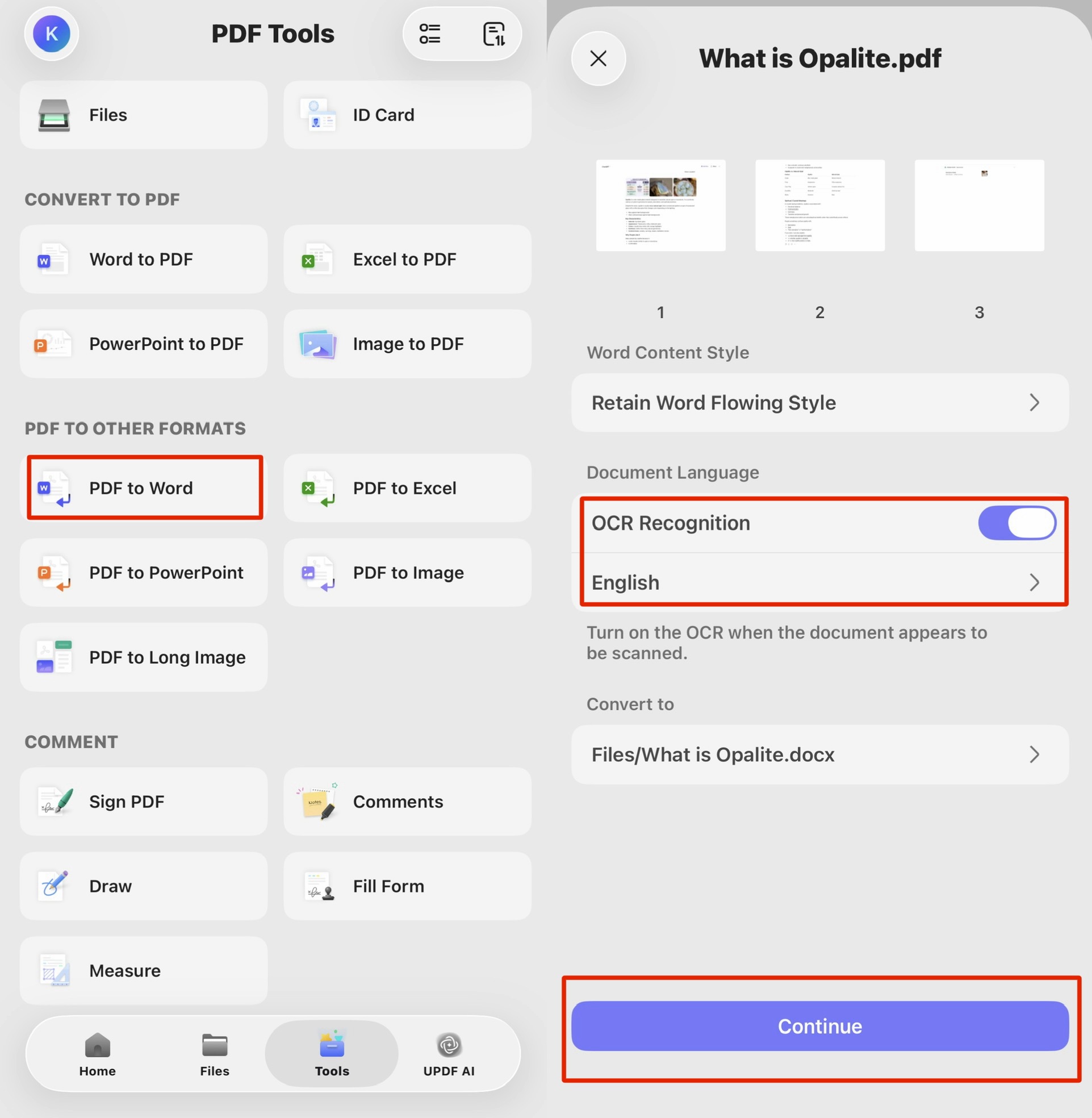
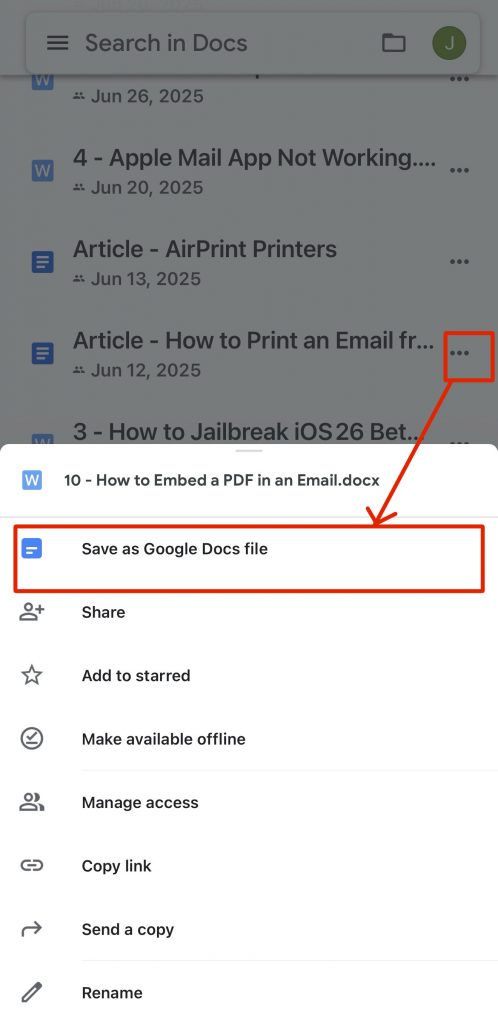
Step 3. Save or share the Word file to Google Drive, then open it with the Google Docs app. Then go to ... → Save as Google Docs file.
Part 6. FAQS About Converting PDF to Google Docs
1. Can I convert PDF to Google Docs for free?
Yes. Google Drive's direct import is free, and UPDF's converter works in the free version — exported files carry a trial watermark until you upgrade to Pro, which removes it.
2. What file types does Google Docs support for import?
Drive accepts a wide range, including Word, PDF, RTF, plain text, and HTML, plus Apple Pages and various image and Microsoft formats. Word is the most reliable bridge from PDF to a clean Doc.
3. Is there a file-size or page limit when converting?
Google Drive caps Docs conversions at around 50 MB and 1.02 million characters, so very large or long PDFs may fail or get truncated. Converting locally with UPDF avoids the Drive ceiling, and you can set a specific page range in the converter to handle big files in sections.
4. Will the links and clickable elements in my PDF still work in Google Docs?
Hyperlinks usually carry over, but interactive elements like form fields, buttons, and embedded media typically don't survive any PDF-to-Docs conversion. If those matter, keep the original PDF and edit it directly in a PDF editor instead of moving to Docs.
5. Can I translate a PDF using Google Docs?
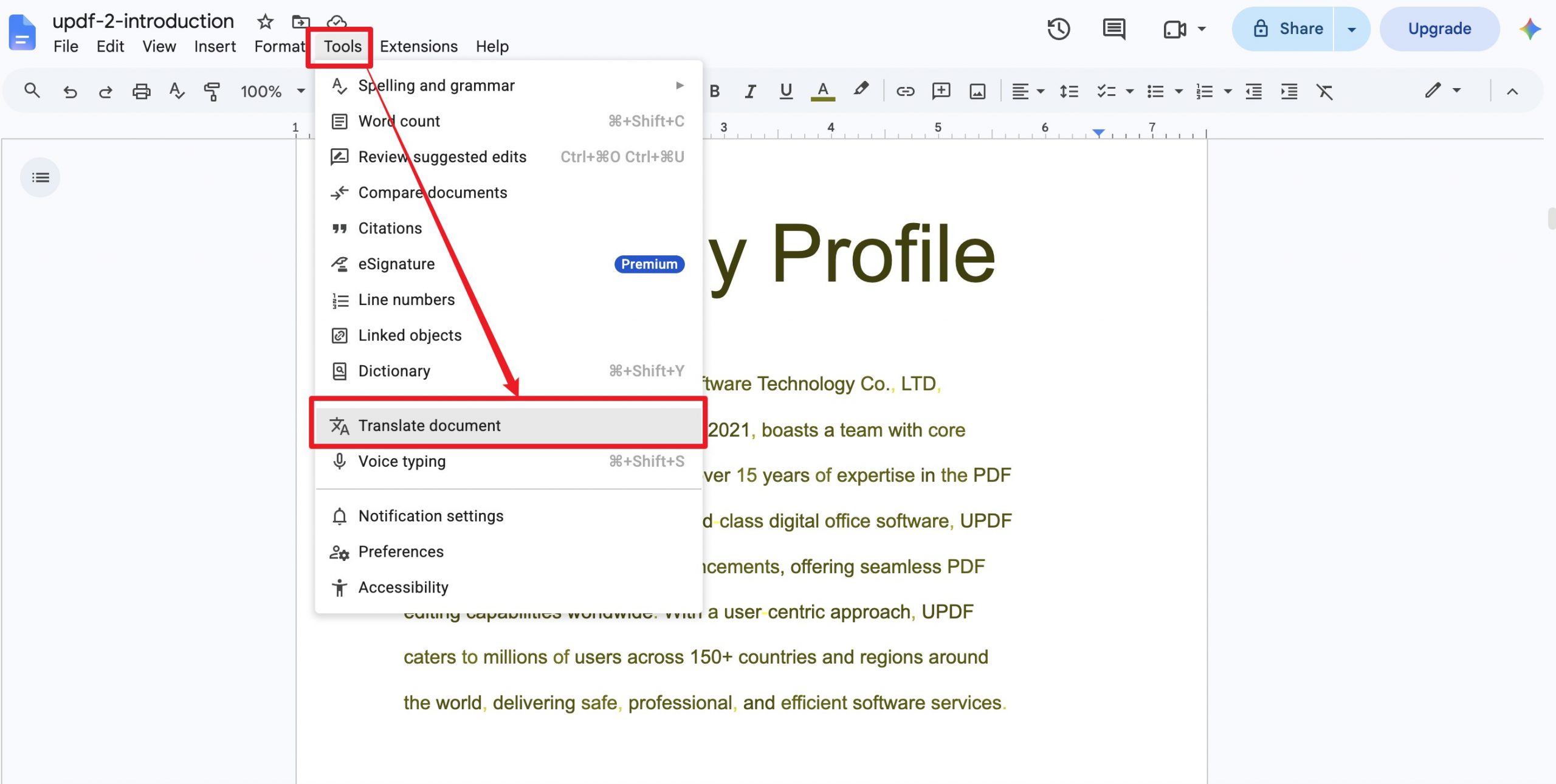
Yes — once the PDF is in Google Docs (via any method above), go to Tools > Translate document. This is one of the fastest ways to translate an entire PDF. The catch: it only works on editable text, so scanned PDFs need OCR first (use Method 1 with OCR enabled before uploading to Docs).
6. Why does my text look jumbled or broken into random lines after converting?
This usually happens with multi-column PDFs or text wrapped around images. Google Drive's direct import reads text left-to-right across the whole page, so columns get stitched together into one long paragraph. The fix is Method 1: convert to Word first with UPDF, which preserves column and table boundaries before Docs opens the file.
Conclusion
Whether you need to convert PDF to Google Doc, turn a PDF into a Google Doc, or find a reliable PDF to Google Doc converter, the rule is the same: For plain text, Google Drive's direct import is quick and free. For reports, resumes, scanned files, or anything with tables and images, convert to Word first with UPDF — it preserves the layout, handles scanned PDFs with OCR, and works on Windows, Mac, iPhone, and Android. This Word-bridge method is the better choice when formatting accuracy matters.
Download UPDF for free to convert your own PDF. You can export for free with a trial watermark, and upgrading to Pro removes the watermark on export.
Windows • macOS • iOS • Android 100% secure




 franck Petit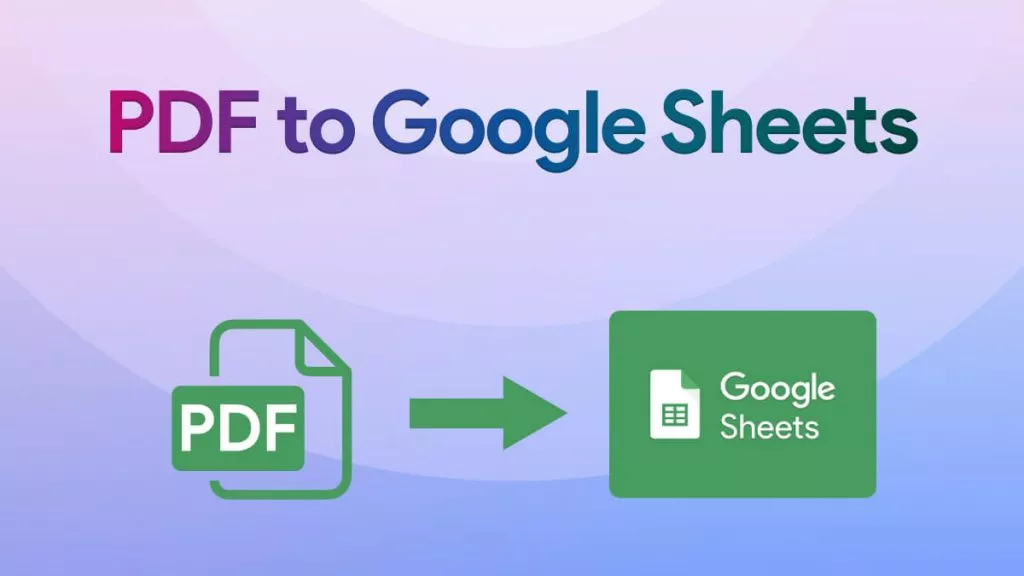
 Engelbert White
 Enola Davis
 Lizzy Lozano