 UPDF
UPDF
 UPDF for Windows
 UPDF for Mac
 UPDF for iPhone/iPad
 UPDF for Android
 Nomostar
 UPDF AI Online
 UPDF Sign
 IvyCraft
 Edit PDF
 Annotate PDF
 Create PDF
 PDF Form
 Edit links
 Convert PDF
 OCR
OCR PDF to Word
 PDF to Image
 PDF to Excel
 Organize PDF
 Merge PDF
 Split PDF
 Crop PDF
 Rotate PDF
 Protect PDF
 Sign PDF
 Redact PDF
 Sanitize PDF
 Remove Security
 Read PDF
 UPDF Cloud
 Compress PDF
 Print PDF
 Batch Process
 About UPDF AI
 UPDF AI Solutions
 AI User Guide
 FAQ about UPDF AI
 Summarize PDF
 Translate PDF
 Chat with PDF
 Chat with AI
 Chat with image
 PDF to Mind Map
 Explain PDF
 PDF AI Tools
 Image AI Tools
 AI Chat Tools
 AI Writing Tools
 AI Study Tools
 AI Working Tools
 Other AI Tools
 AI Bookmark Generation
 AI Bookmark Summary
 AI Watermark Generation
 AI Background Generation
 AI Sticker Generation
 AI Stamp Generation
 AI Editing Suite
 UPDF Copilot
 AI Page Management
 AI Semantic Search
 PDF to Word
 PDF to Excel
 PDF to PowerPoint
 Enterprise Solution
 Enterprise Sign
 Enterprise AI
 Enterprise Plan
 Enterprise User Guide
 Enterprise Webinar
 IT
IT Education
 Construction
 Financial Service
 Healthcare
 Insurance
 Legal
Legal Manufacturing
 Government
 Researchers & PhDs
 Solopreneurs & Freelancers
 Lawyers & Legal Professionals
 Real Estate Agents & Brokers
 Education Solution
 Customer Stories
 User Guide
 UPDF Tricks
 FAQs
FAQs UPDF Reviews
 Download Center
 Blog
Blog Newsroom
 Tech Spec
 Updates
 UPDF vs. Adobe Acrobat
 UPDF vs. Foxit
 UPDF vs. PDF Expert

When collaborating on contracts, research papers, or client briefs, PDFs often accumulate dozens of sticky notes, highlights, stamps and drawing markups from reviewers. Sharing these unrevised files can accidentally expose internal feedback, reviewer names or sensitive discussion, creating professional embarrassment or data‑leak risks.
Example: Before cleaning a legal review copy, archive the commented version, confirm which suggestions were accepted or rejected, and then remove comments from the distribution copy only. For a related workflow, see learn how PDF comments are added.
You may run into frustrating roadblocks: delete buttons are greyed‑out, comments reappear after saving, or flattened PDFs make annotations impossible to erase. You may also mistakenly flatten files, thinking they have fully removed comment layers.
This guide starts with a scenario‑matching table so you can quickly locate your exact situation and jump straight to the proper fix. We cover online utilities, desktop editors, and native system workarounds to help you clean PDF annotations reliably.
Among these tools, UPDF is a well‑rounded choice. It supports full comment management across Windows, Mac, iOS and Android under one local‑privacy‑focused license. Without subscription lock‑in, it handles single or batch comment removal. Step‑by‑step guidance appears in Part 2 for your reference.
Windows • macOS • iOS • Android 100% secure
Part 1. Match Your Scenario to the Right Solution
Locate your real‑world use case below, view the recommended approach and core reasoning, then navigate to the corresponding step‑by‑step section.
| Your Scenario / Problem | Recommended Solution | Why This Works | Jump to |
|---|---|---|---|
| You only need to erase a few individual comments or highlights | Single‑comment removal inside PDF editor | Fast, no full‑document processing; keeps other useful annotations intact | Part 3 Online Solutions |
| You want one‑click removal of all comments, highlights, stamps and markups | Bulk remove all annotations feature | Targets the full comment layer, avoids manually deleting items one‑by‑one | Part 2 Professional PDF editors |
| You cannot delete other people’s comments; delete button greyed‑out | Desktop editor with full annotation permission support | Free readers such as Adobe Reader only permit deleting comments created by your own account | Part 2 Professional PDF editors |
| Working with confidential contracts / internal business documents | Offline desktop PDF tool | Avoid uploading private materials to third‑party online servers, eliminate data exposure risk | Part 2 Desktop PDF editors |
| Quick one‑off task, no software installed on device | Trusted online PDF annotation remover | Zero local installation; only for non‑sensitive, public‑safe documents | Part 3 Online Solutions |
| You own a Mac and prefer built‑in utilities without downloading apps | Mac Preview native workflow | Free out‑of‑box tool; note it only handles annotations generated within Preview itself | Part 4 Built-in solutions |
| PDF is flattened; markups are burned into page visuals and cannot be edited normally | Retrieve original un‑flattened source file; fallback: redaction workaround | Flatten merges markups into static page images; standard comment‑removal functions have no effect | Retrieve original file |
| Need to process dozens of PDFs and strip comments in batches | Desktop software supporting batch annotation clearing | Online tools rarely offer reliable bulk comment removal for multi‑file jobs | Part 2 Professional PDF editors |
Next, let's look at the tools available to you and their respective pros and cons; choosing the right tool can make your workflow more efficient.
Part 2. How to Remove Comments from PDF with Adobe & Its Best Alternative
Desktop software is the most reliable way to remove comments from PDFs. All processing happens locally — no uploads, no privacy concerns.
Balancing features, usability and cost, UPDF stands out among desktop PDF software. It fully supports comment‑removal workflows alongside complete PDF editing, accurate OCR, and native AI functions. One license covers Windows, Mac, iOS and Android, with flexible one‑time‑purchase options. It avoids the high recurring subscription costs of legacy tools while maintaining solid performance for daily PDF tasks.
UPDF — The Best Cross‑Platform Value
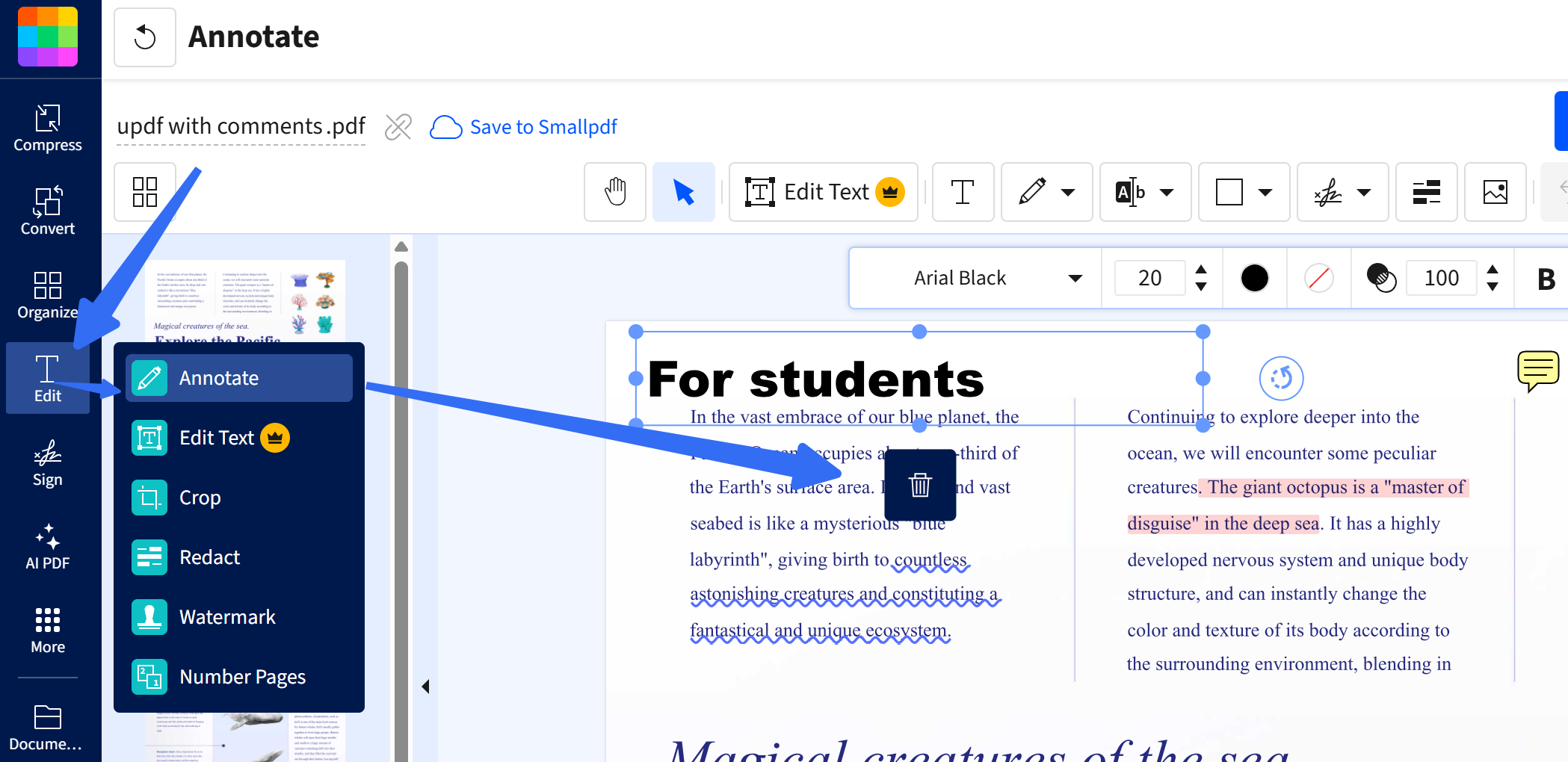
UPDF offers a clean, modern interface with full comment management capabilities across Windows, Mac, iOS, and Android. Except for removing comments from PDF, UPDF can also add and insert all kinds of annotations if you don't know how to annotate PDF.
Windows • macOS • iOS • Android 100% secure
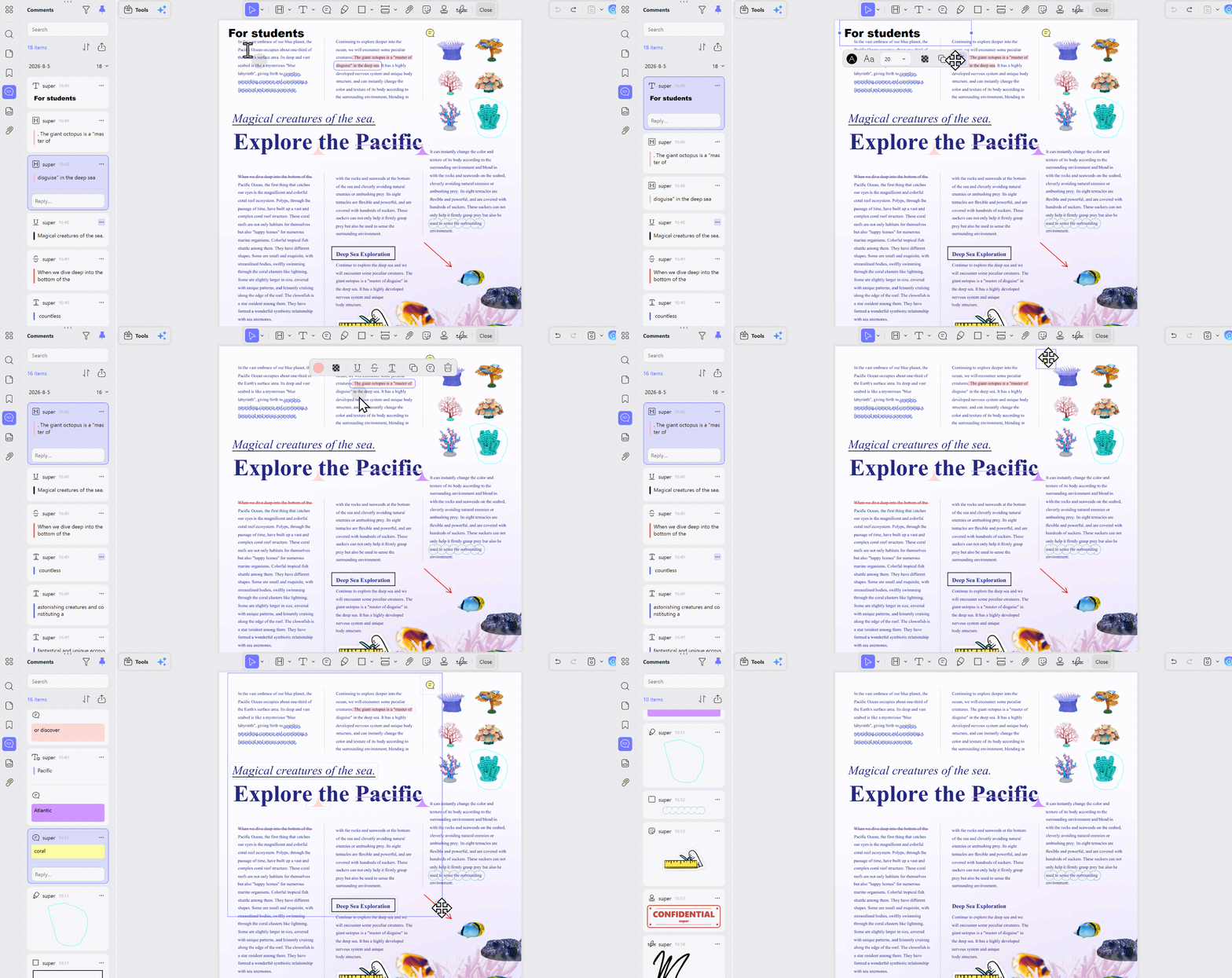
How to delete comments in UPDF:
- Open your PDF in UPDF
- Click the Comment icon in the left toolbar
- All comments are listed in the Comments pane
- To delete a single comment: Click the comment, then click the trash icon
- To delete all comments: There's no “Select All” option in the Comments, but you can use the shortcut key: "Long Press Ctrl+Mouse Left Click" for Windows users (Long Press Command+Mouse Left Click for Mac users) to select all comments to delete all in one PDF file
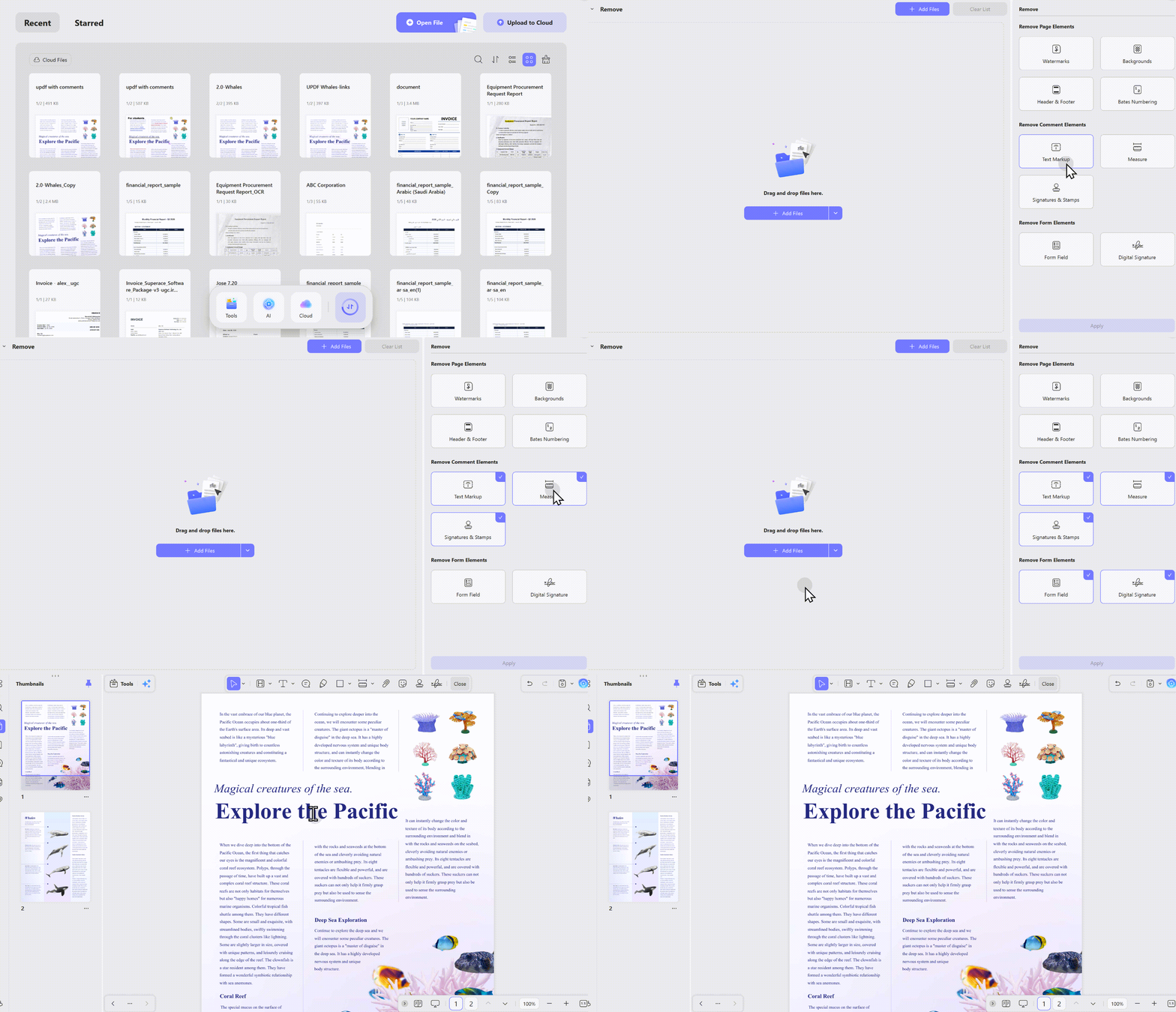
Not efficient enough? Too many steps? Batch Remove supports one-click removal for all text markups and signatures at the same time for hundreds of pages.
Critical distinction: “Hiding” comments is not the same as deleting them. In Adobe Acrobat, you can hide all comments with Shift + Ctrl + 8, but they're still in the file. Anyone who knows how can unhide them. If you need comments truly gone, you must delete or flatten them.
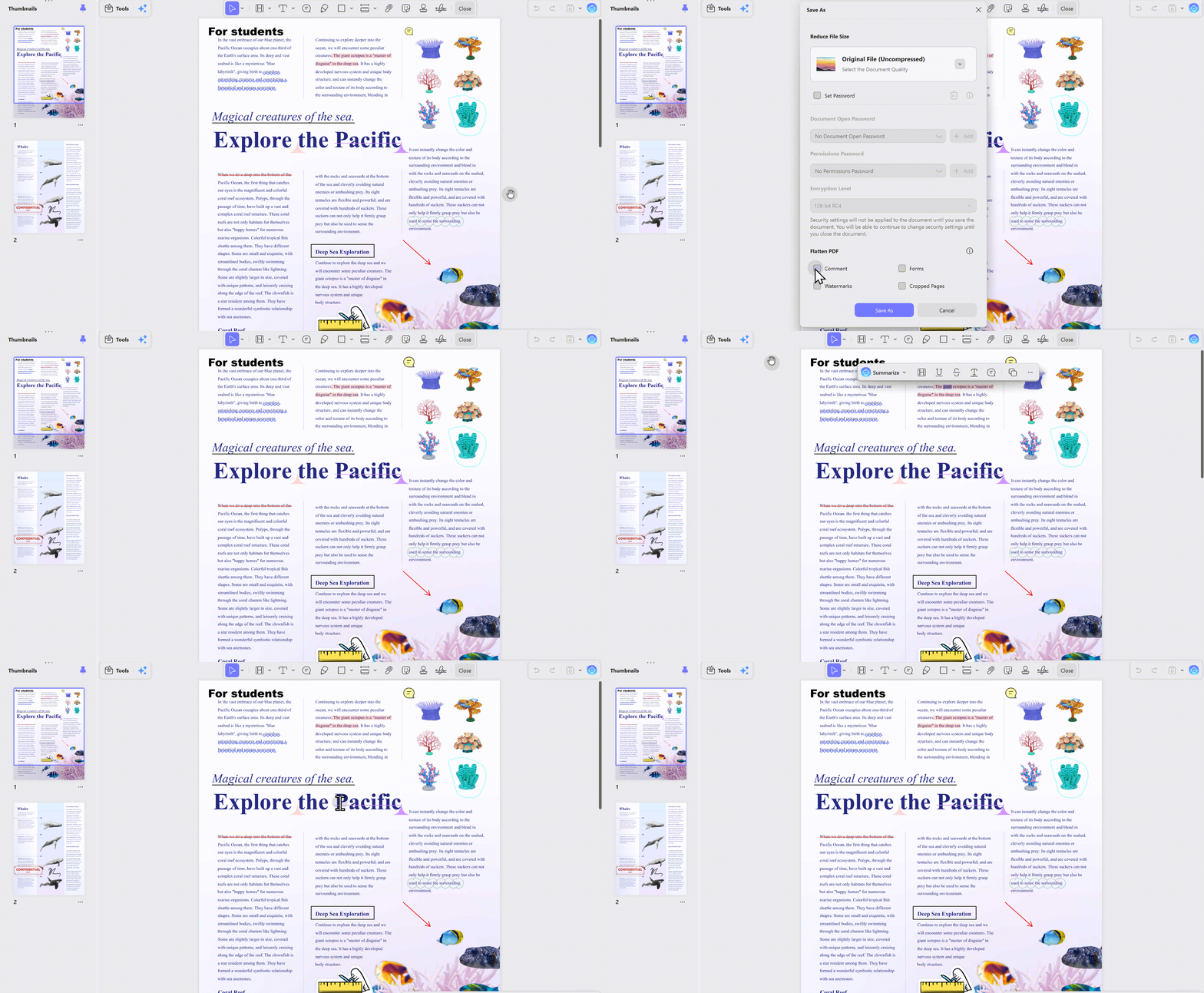
Here's how to use UPDF to flatten PDF pages. The flatten function makes annotations non-editable, but they do not disappear. You can use it when you need the comments to remain visible but uneditable (e.g., for compliance records or archiving).
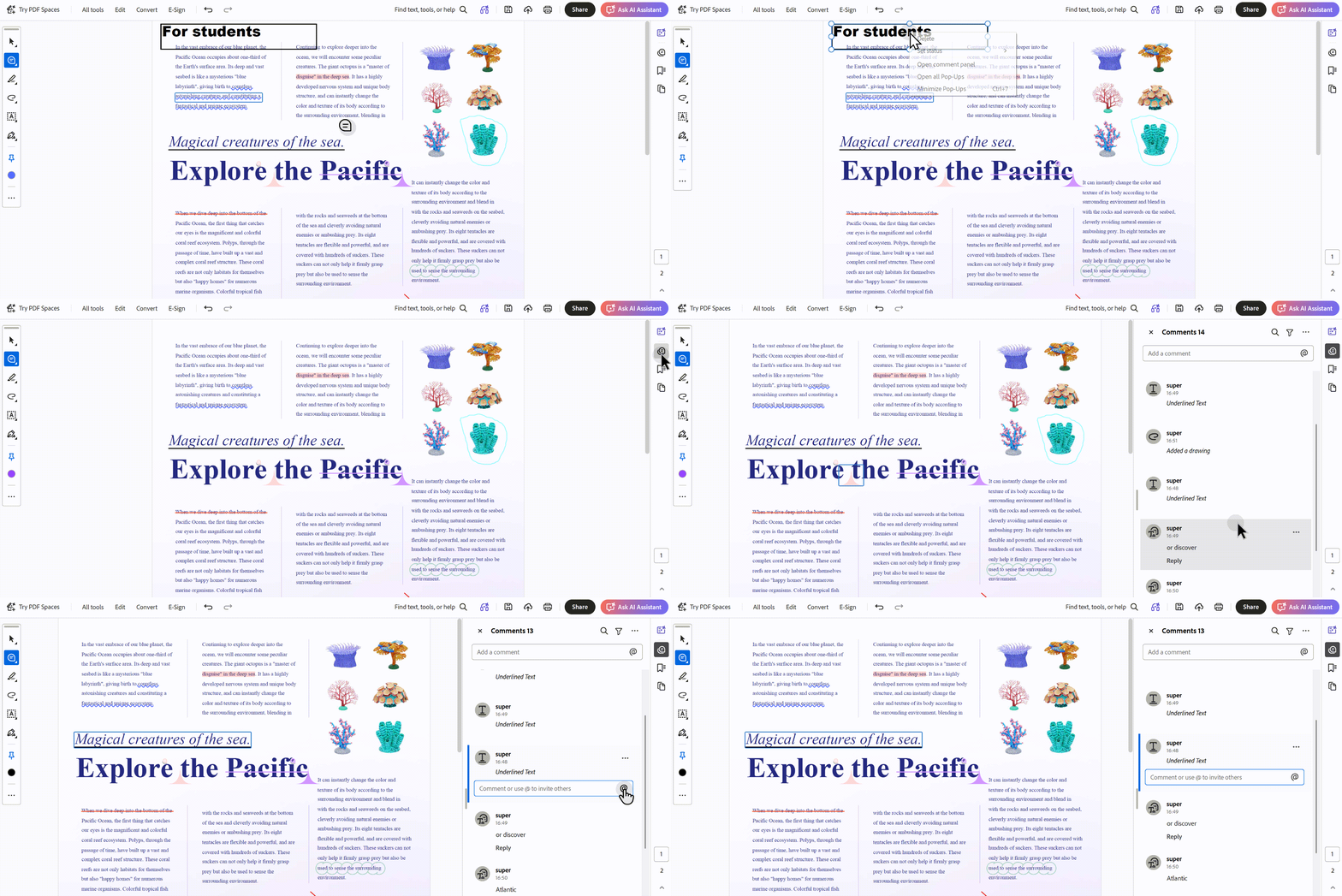
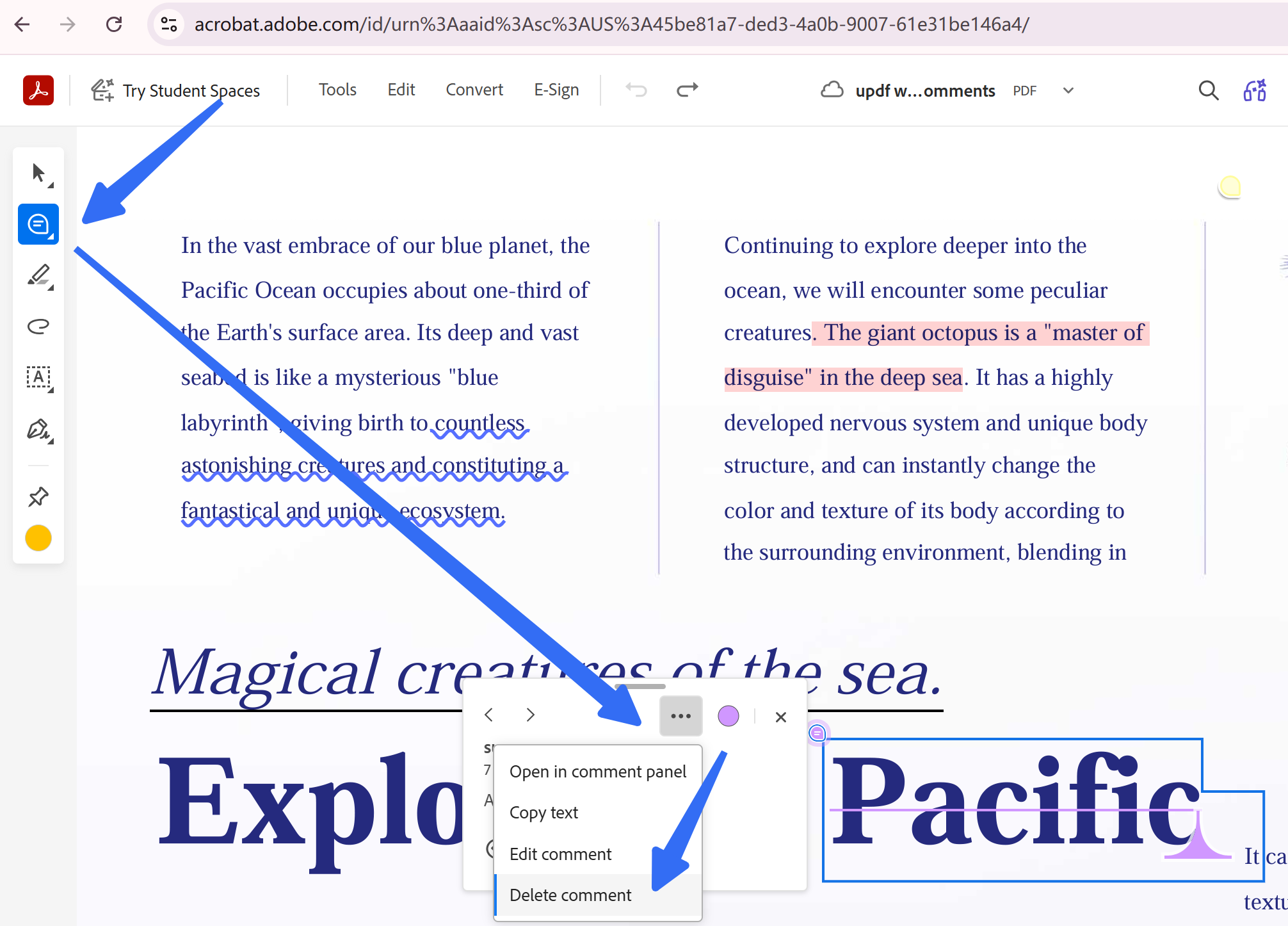
Still want to know how to remove comments from a PDF in Adobe Acrobat? Here are the steps: You can right-click the comment to delete or use the comment bar on the right to check all comments and select to remove.
Windows • macOS • iOS • Android 100% secure
Part 3. How to Remove Comments from PDF Online Free
Online tools are the fastest way to remove comments from a PDF if you don't mind uploading your file (or if the tool processes locally in your browser).
Critical warning: Never upload confidential legal, financial or internal‑only business documents to online services. Data leakage risks exist with cloud‑processed files. Only use for non‑private materials.
Adobe Acrobat Online — Adobe's official online editor. Select Edit > Comment > Delete to remove individual annotations. Supports all major comment types. Best for users who trust Adobe quality and don't mind logging in.
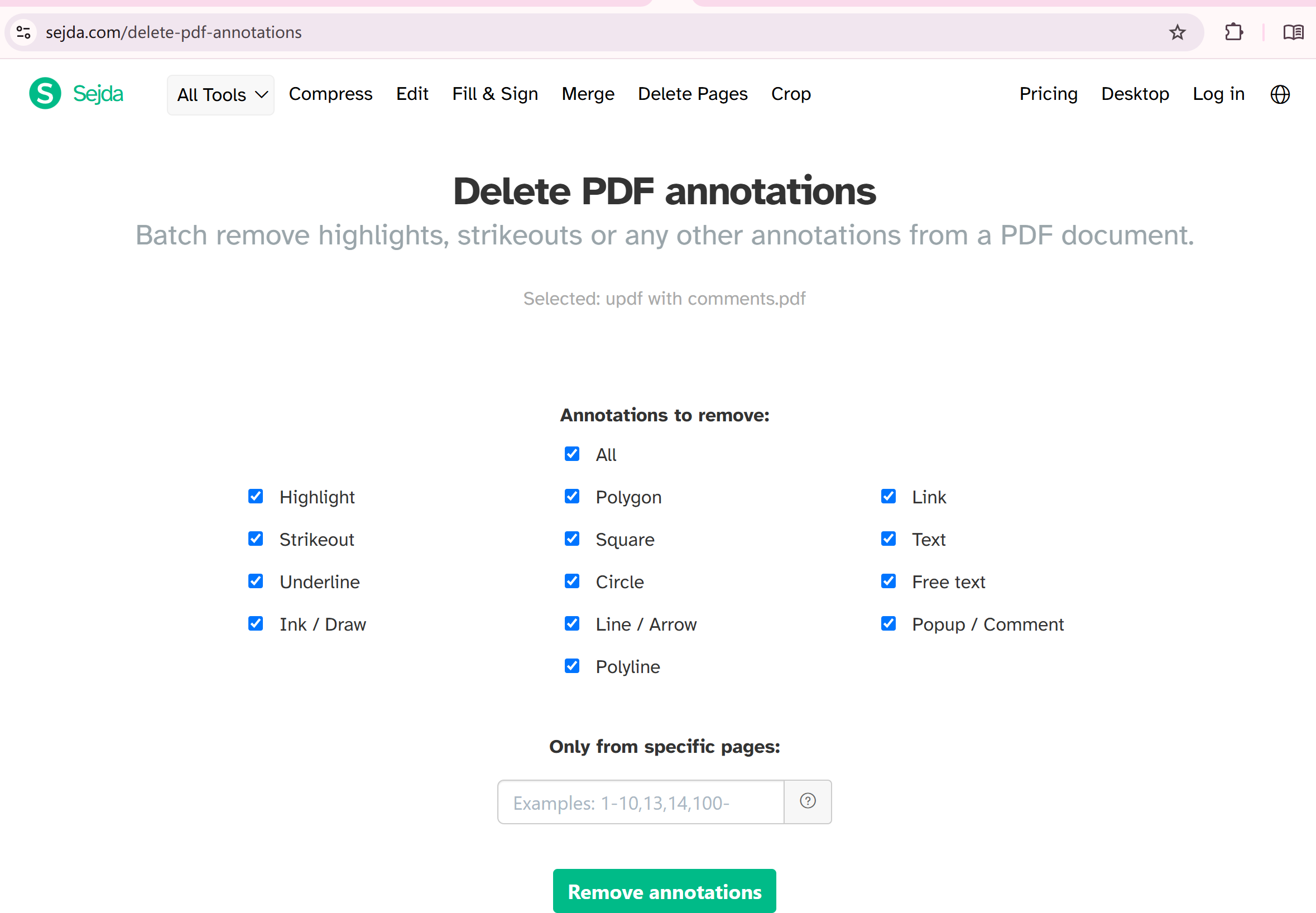
Sejda — One of the most capable free online tools. Upload your PDF, select the annotations that you want to remove, select comments individually or use “Delete All,” then download. Free tier: 200 pages/50MB, 3 tasks per hour. You can't delete them one by one or select annotations to delete.
Smallpdf — Clean, modern interface with 20+ PDF tools. Comment deletion is straightforward. Free tier has usage limits.
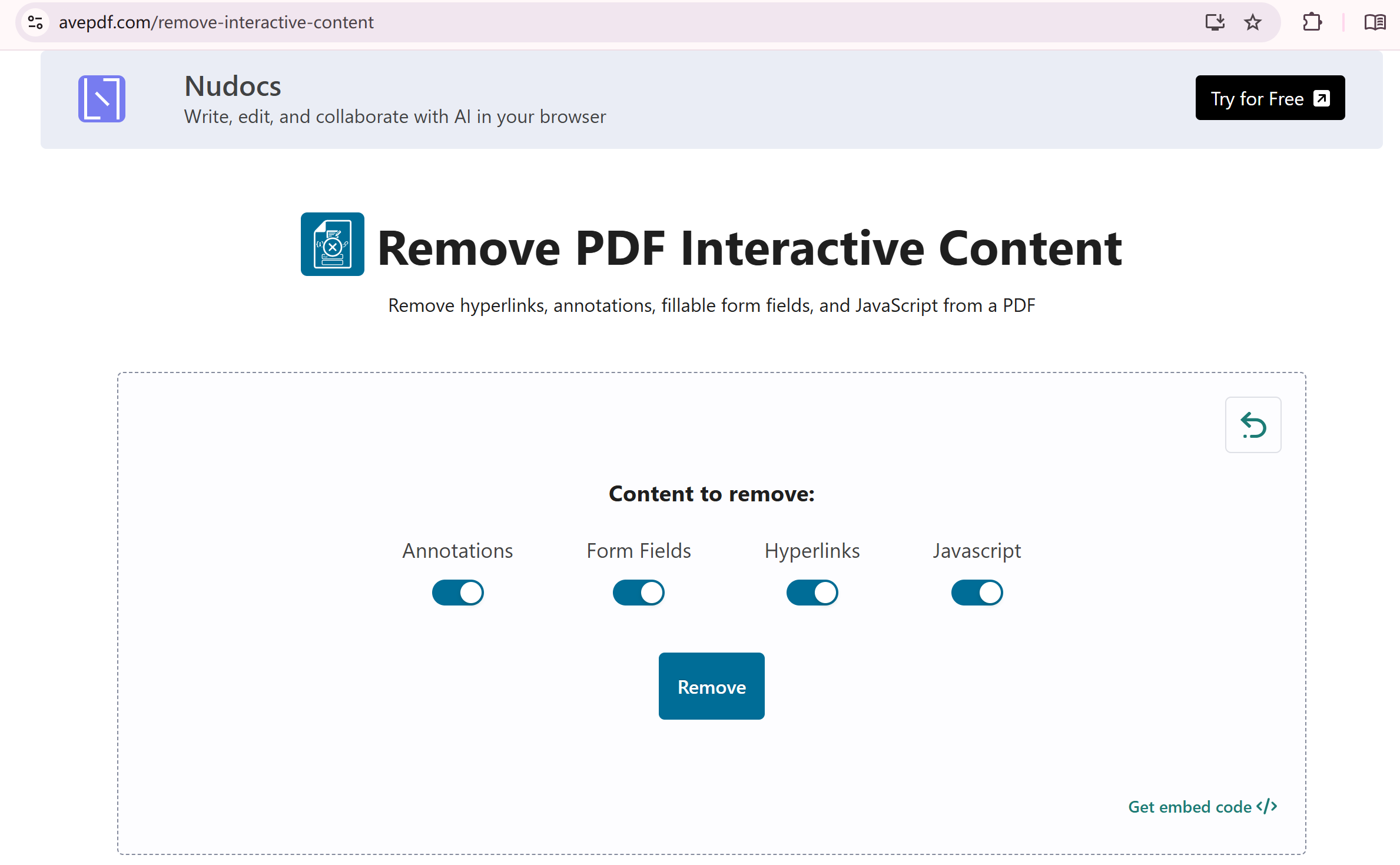
AvePDF — Upload your PDF and use the comment removal tool. Recommended in multiple guides as a quick online option. The deletion method is the same as Sejda.
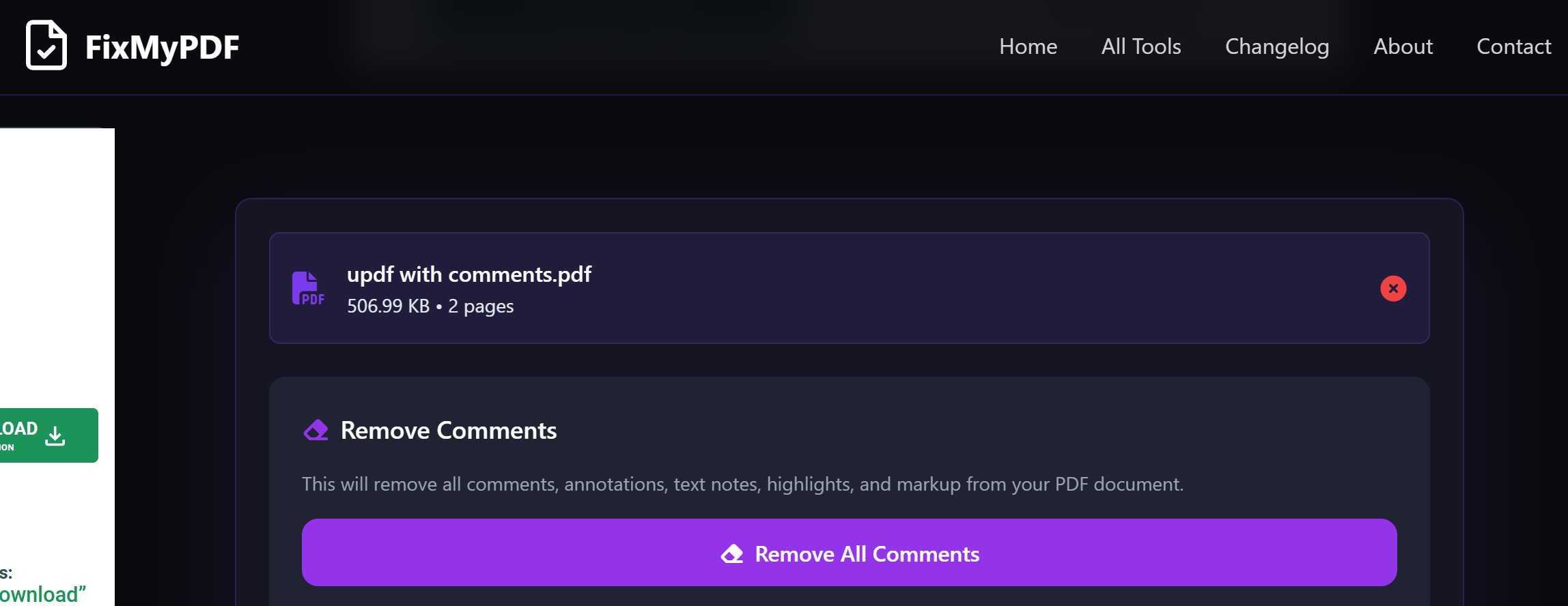
FixMyPDF — Upload your annotated PDF, click “Remove Annotations,” and download a clean version — identical to the original but with the annotation layer completely stripped.
Limitations shared by online tools: Cannot resolve flattened, burned‑in markups; file‑size and daily‑task usage limits apply to free tiers; cannot reliably handle password-protected PDFs.
Part 4. How to Remove Comments from PDF with Built-in Workaround
Unwanted PDF comments may leak review notes when sharing files. Learn practical built‑in workarounds like Mac Preview and Print options to erase these markups and deliver clean PDFs without additional tools.
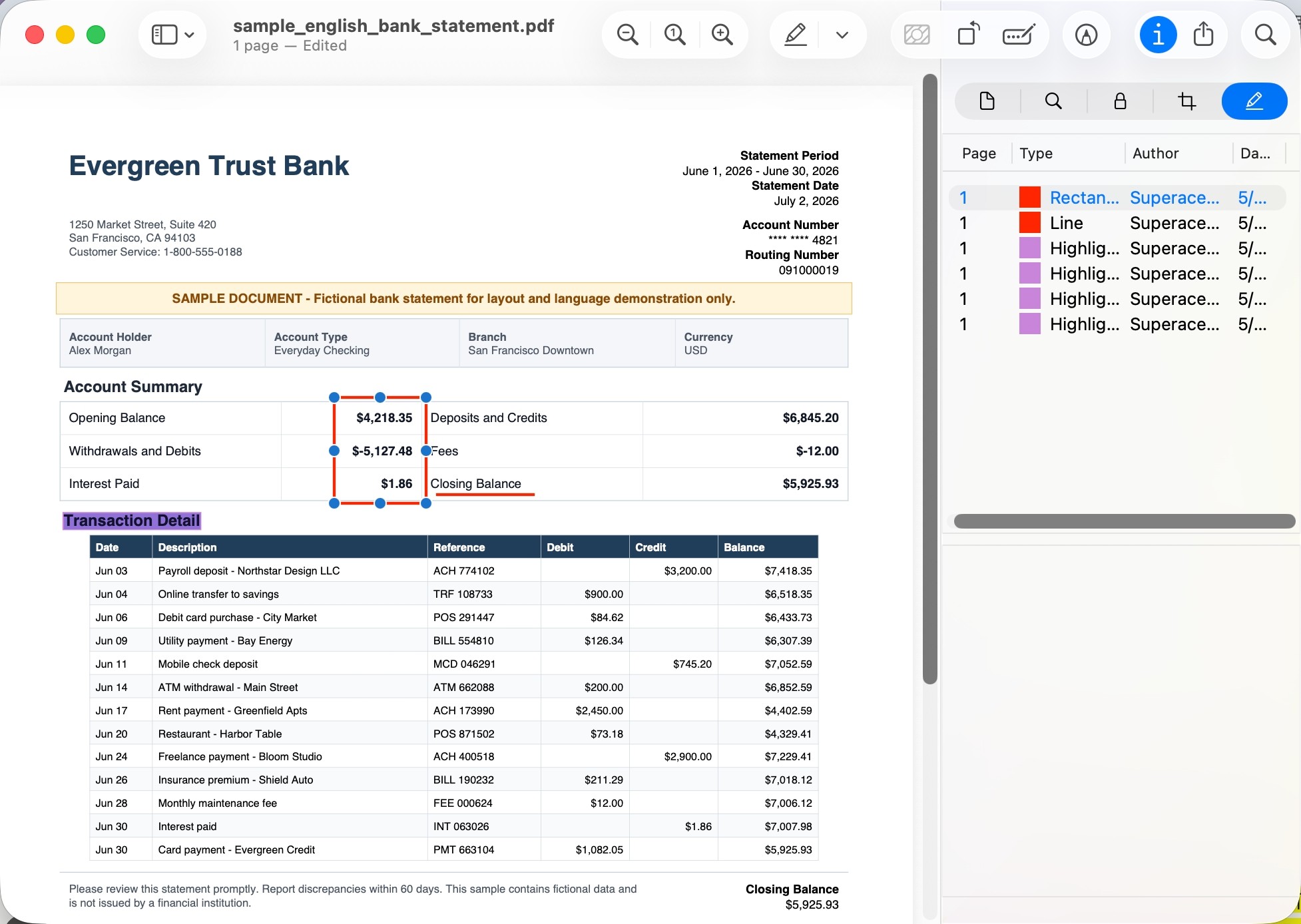
Mac Preview Native Method
Core limitation reminder: Preview can only delete annotations created within Preview itself. Comments imported from other PDF editors cannot be removed inside Preview.
- Open PDF with Mac Preview
- Show markup toolbar and open annotation list
- Select Preview‑generated comments and press Delete on the keyboard
- Export as a new PDF file. If comments originate from Adobe or third‑party reviewers, Preview will not permit deletion — switch to a cross‑platform desktop editor instead.
Print‑to‑PDF Last‑Resort Workaround
Warning: This produces flattened output. All annotations visually disappear but are embedded in the page graphics; you cannot edit comments in the new PDF afterwards.
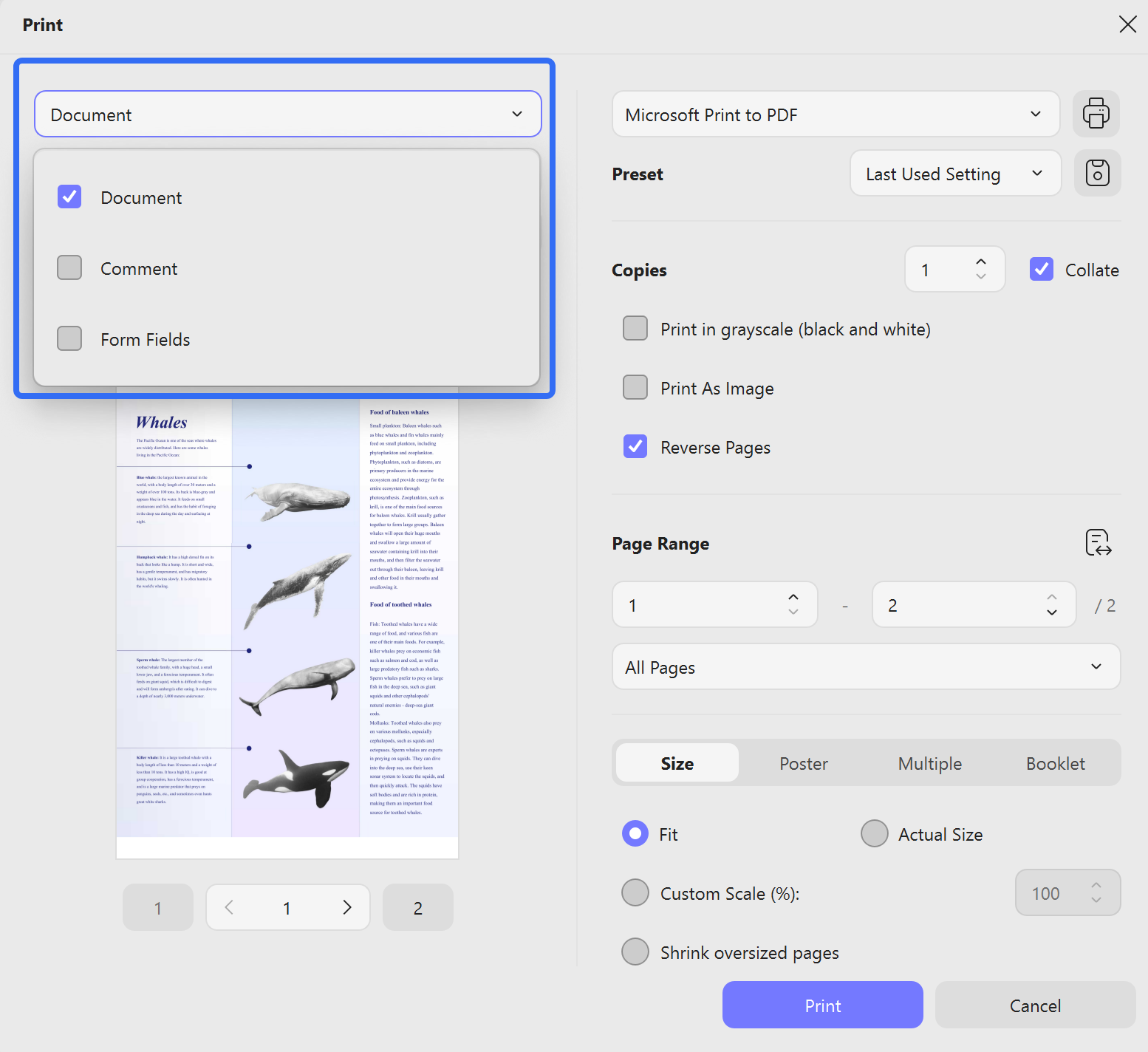
- Open your PDF in any PDF reader or viewer; here we take UPDF as an example
- Trigger the Print function
- In print settings, turn off the “Print comments and markups” option
- Select Save as PDF / Print‑to‑PDF virtual printer
- Generate a new PDF file. Use only when you no longer need any editable‑annotation capability.
Windows • macOS • iOS • Android 100% secure
FAQs about Removing Comments from PDF
Does removing PDF comments also delete the underlying text?
No. It removes annotation objects, not the document’s original page content, unless the comments were previously flattened into the page.
Can I remove all comments from a PDF at once?
Many PDF editors provide an annotation list where you can select all comments and delete them together. Save a backup first.
Why do comments still appear after I delete them?
Some may be flattened, embedded as page content, or stored in another annotation layer. Inspect the page and annotation list separately.
Conclusion
Throughout this article, we have discussed different online and offline methods to remove comments from PDF documents. All these methods will help you finalize the document after the reviewing process is over. Every PDF annotator discussed in this article is good enough to carry out this comment-removal task in an efficient manner.
However, if you want to use the best PDF comment remover, UPDF is the perfect option for your requirements. With its easy-to-use annotation features, UPDF has made the comment removal process easier than ever. So, without wasting any time, press the "Free Download" button to get your hands on this multi-featured PDF annotator.
Windows • macOS • iOS • Android 100% secure



 Enola Miller
 Enya Moore
 Delia Meyer