 UPDF
UPDF
 UPDF for Windows
 UPDF for Mac
 UPDF for iPhone/iPad
 UPDF for Android
 Nomostar
 UPDF AI Online
 UPDF Sign
 IvyCraft
 Edit PDF
 Annotate PDF
 Create PDF
 PDF Form
 Edit links
 Convert PDF
 OCR
OCR PDF to Word
 PDF to Image
 PDF to Excel
 Organize PDF
 Merge PDF
 Split PDF
 Crop PDF
 Rotate PDF
 Protect PDF
 Sign PDF
 Redact PDF
 Sanitize PDF
 Remove Security
 Read PDF
 UPDF Cloud
 Compress PDF
 Print PDF
 Batch Process
 About UPDF AI
 UPDF AI Solutions
 AI User Guide
 FAQ about UPDF AI
 Summarize PDF
 Translate PDF
 Chat with PDF
 Chat with AI
 Chat with image
 PDF to Mind Map
 Explain PDF
 PDF AI Tools
 Image AI Tools
 AI Chat Tools
 AI Writing Tools
 AI Study Tools
 AI Working Tools
 Other AI Tools
 AI Bookmark Generation
 AI Bookmark Summary
 AI Watermark Generation
 AI Background Generation
 AI Sticker Generation
 AI Stamp Generation
 AI Editing Suite
 UPDF Copilot
 AI Page Management
 AI Semantic Search
 PDF to Word
 PDF to Excel
 PDF to PowerPoint
 Enterprise Solution
 Enterprise Sign
 Enterprise AI
 Enterprise Plan
 Enterprise User Guide
 Enterprise Webinar
 IT
IT Education
 Construction
 Financial Service
 Healthcare
 Insurance
 Legal
Legal Manufacturing
 Government
 Researchers & PhDs
 Solopreneurs & Freelancers
 Lawyers & Legal Professionals
 Real Estate Agents & Brokers
 Education Solution
 Customer Stories
 User Guide
 UPDF Tricks
 FAQs
FAQs UPDF Reviews
 Download Center
 Blog
Blog Newsroom
 Tech Spec
 Updates
 UPDF vs. Adobe Acrobat
 UPDF vs. Foxit
 UPDF vs. PDF Expert

Editing a PDF should be simple—but it often isn't. One small text edit can unexpectedly change the layout because the original font isn't available on your computer. When your PDF editor substitutes another font, spacing, alignment, and page formatting can all be affected.
The next step is to work with the PDF while keeping the right copy close at hand. You can follow the video below for an introduction to editing PDF content in UPDF.
That's why many users search for ways to find a font from a PDF. In most cases, the goal isn't to admire the typography—it's to identify the correct font so they can edit the document without breaking its design or maintain consistent branding.
Whether you're updating a client contract, revising a company brochure, or recreating an older document, the first step is identifying the font used in the PDF. Some tools read embedded font information directly, while others recognize fonts visually from screenshots when the PDF contains only scanned images.
This guide explains four practical methods to help you:
- Find the font used in a PDF
- Identify fonts in scanned PDFs
- Understand why missing fonts cause editing problems
- Choose the best tool for your workflow
Need to check a font without uploading your PDF?
Windows • macOS • iOS • Android 100% secure
Quick-Routing Matrix: Which PDF Font Finder Method Do You Need?
Before you look for a font detector from PDF, identify your exact workflow obstacle:
| If you need to... | Recommended Method |
| Edit a PDF but don't have the original font | Method 1 – i2PDF |
| Identify fonts in a scanned PDF | Method 2 – WhatTheFont |
| Check fonts without uploading your document | Method 3 – UPDF |
| View embedded font metadata | Method 4 – Adobe Acrobat |
Not every method works for every PDF. For example, tools that read embedded font metadata won't work on scanned documents, while image-based font identifiers can't always determine the exact font name. The sections below explain when each method works best and how to use it.
Method 1: Extraction & Package Download — i2PDF Online Method
Best for:
- Anyone who needs to edit a PDF but is blocked because the original font isn't installed locally. This method extracts the actual name and provides a direct installer package to download.
i2PDF scans the document's embedded font resources and lists every detected typeface. You can download and install the matching font package on your Windows or macOS computer. This can save considerable time when you need to edit a document without replacing the original typography.
Follow these steps to find font in PDF using i2PDF:
- Open your web browser and go to the official i2PDF Extract Fonts from PDF tool.
- Drag and drop your PDF into the upload area, or click Choose File to browse for it.
- The platform will automatically trigger its internal font detector from PDF script and display a clean list of all embedded font families found in the PDF.
- Find the missing font name from the list and click the Download button next to it to grab the raw .ttf or .otf file.
- After the font file has been downloaded, double-click it locally to install it onto your Windows or macOS system.
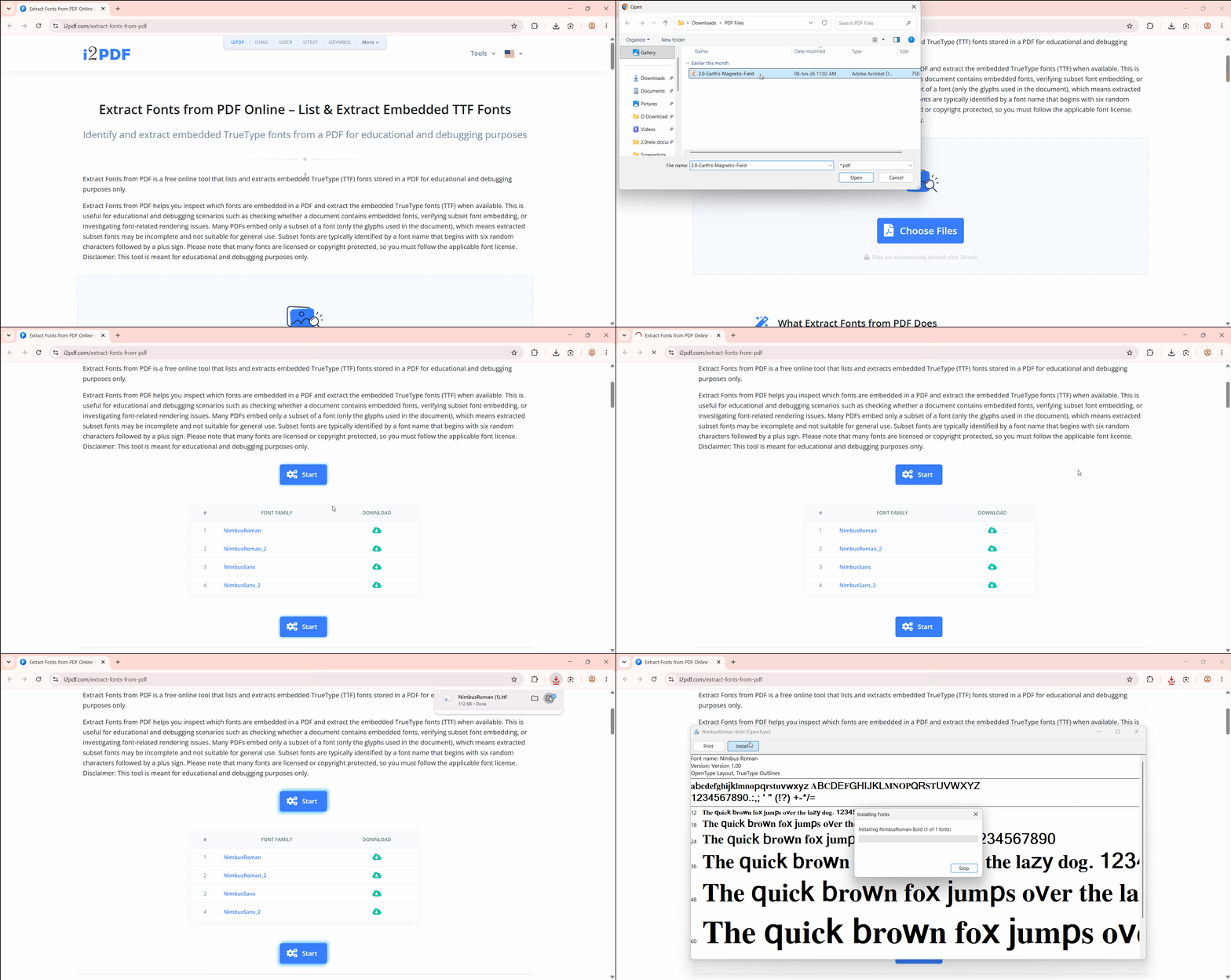
After you have installed the correct font, you can edit text normally without the layout falling apart. If you are doing more than a one-line fix, we recommend you read this comprehensive master pillar page on how to edit a PDF and type without formatting errors.
And if you want to avoid this problem entirely on documents you create yourself, our guide on how to embed fonts in a PDF covers how to bake the font in from the start.
Note: Fonts pulled this way are often licensed, so whatever you do with the extracted file should respect the original font's license. This is a troubleshooting and editing aid. Avoid using it to acquire a font for redistribution.
Method 2: The Solution for Scanned Images — MyFonts Visual Recognition
Best for:
- Scanned documents, flattened image-only files, old vector graphics where the text has been turned into outlines and become impossible for standard PDF tools to highlight or select characters.
Sometimes, trying to find the font from PDF isn't as simple as checking the document's properties. Older manuals, scanned contracts, brochures, and print-ready artwork contain no editable text. Since there are no embedded font details to inspect, you will need a visual font identifier from PDF instead.
MyFonts' WhatTheFont analyzes the shapes of individual letters and compares them against a massive font library to suggest the closest matching typefaces. Follow these steps to find what font a PDF is written in with this tool:
- Open your PDF and take a clean screenshot of the section containing the font you want to identify.
- Navigate to the MyFonts WhatTheFont dashboard on your browser and upload the cropped image snippet.
- The tool isolates individual characters and lets you select the one you want matched.
- Select the text and click "Identify font". The database will process the geometry to show you a ranked list of the closest-matching fonts and font-family links.
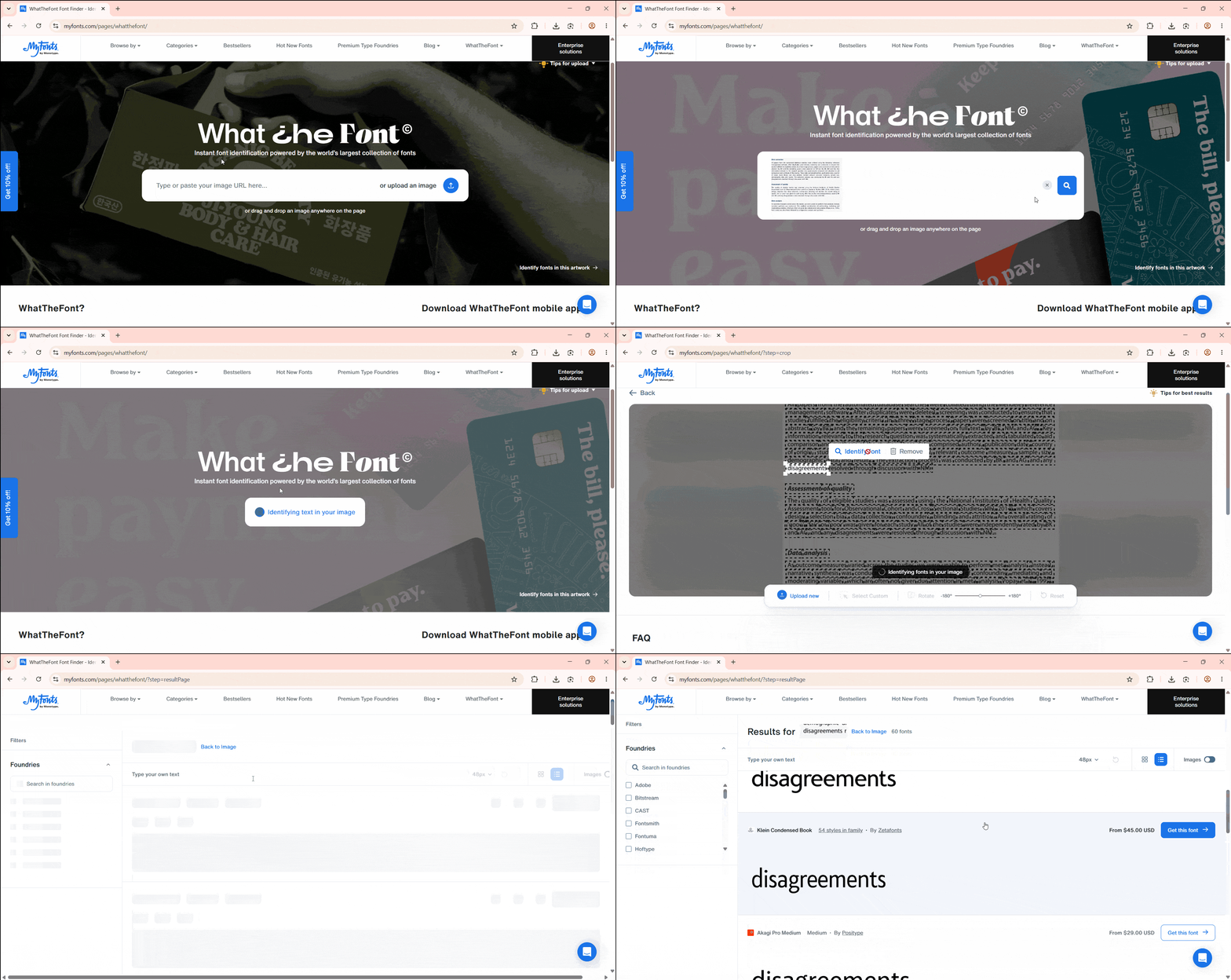
Keep in mind that this method gives you likely matches. The results aren't confirmed fonts, just visual matches where the accuracy depends on image quality and text clarity.
Method 3: Light, Secure, Local Inspection — UPDF Instant Checker
Best for:
- Professionals handling private company documents or financial agreements who cannot risk uploading files to public web tools, and want to check font in PDF files locally in real-time.
UPDF is the best method for detecting fonts directly in the local PDF editor without leaving the app. So, it offers two advantages: you get to know the font and can make edits at the same time.
Follow these steps to detect font in PDF with UPDF:
1. Launch UPDF on your desktop and open the PDF file you intend to inspect.
Windows • macOS • iOS • Android 100% secure
2. Click Tools > Edit to switch the interface to PDF editing mode.
3. Double-click on any line of text you wish to verify. A properties menu or floating toolbar will instantly show up next to your cursor and reveal the exact active font name, point size, and weight styles.
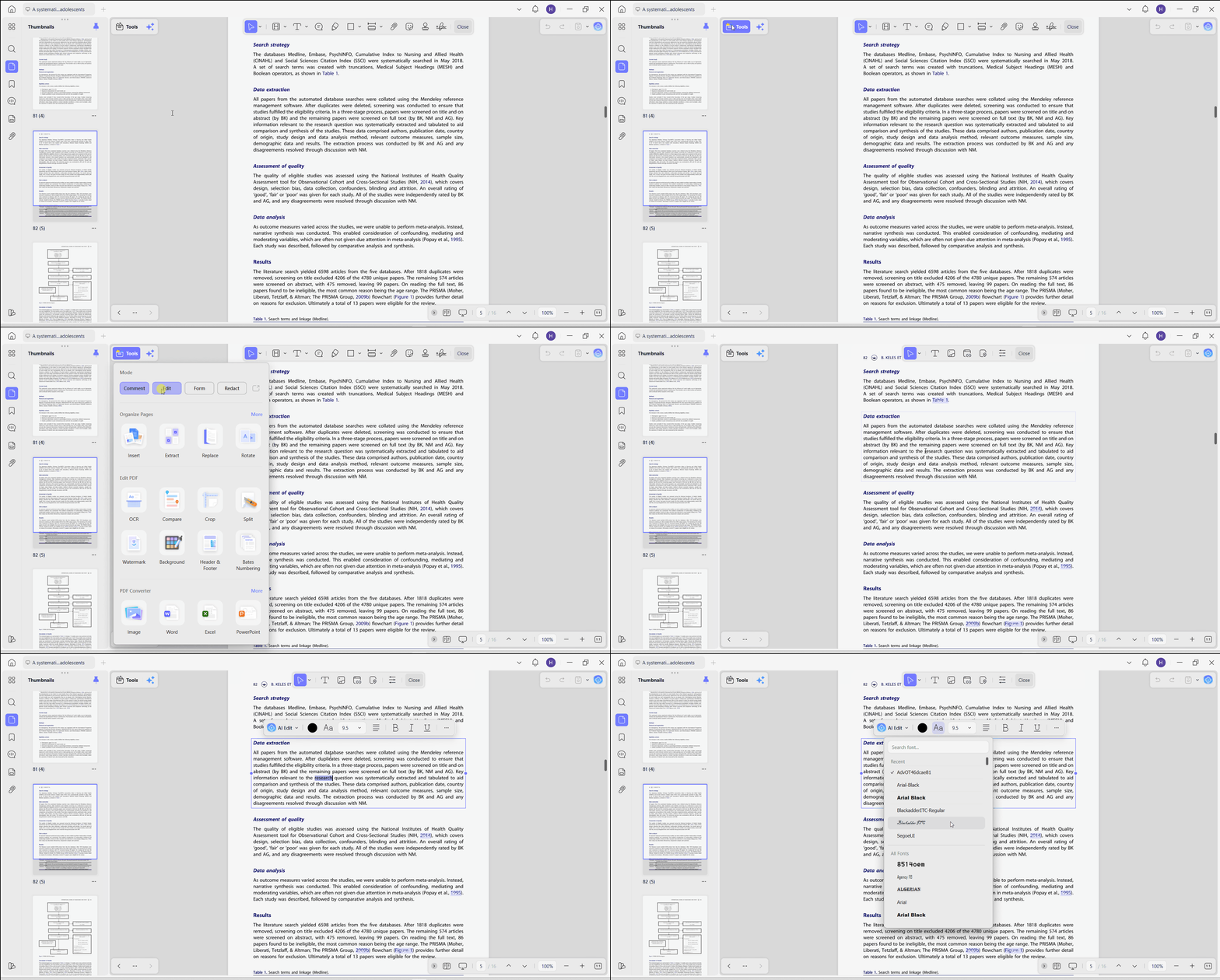
If the font turns out to be one you already have, you can fix the text right there. If it's something obscure you don't have access to, UPDF also lets you swap the section to a font you do have, which is often the faster fix for one-off edits anyway. Check out our detailed guide on how to change font in PDF files efficiently.
If you are dealing with multiple fonts across a long document, read up on managing global typography with an automated PDF font changer utility.
Method 4: Advanced Metadata Auditing — Adobe Acrobat Properties
Best for:
- Print operators or publishers who already own Adobe's heavy-duty premium-tier software and want a complete list of every font embedded in the document. Useful for pre-press checks or compliance reviews.
Adobe Acrobat users don't need a separate font finder from PDF to inspect the fonts in their documents. Acrobat includes built-in font auditing features that list every typeface used throughout the PDF. It also provides details about whether each font is fully embedded or stored as an Embedded Subset.
Here's how to identify font in PDF using Adobe Acrobat:
- Open the PDF in Adobe Acrobat Pro.
- Press Ctrl + D on Windows or Cmd + D on Mac. Alternatively, click File > Properties from the top menu.
- In the Document Properties window, select the Fonts tab.
- Acrobat will display a complete list of all fonts used in the document, along with whether each's embedded.

When you find font names in PDF with Adobe, pay attention to how each font is labeled. A font marked "Embedded Subset" means only the characters actually used in the document are packed into the file. For example, if the original document included only the letters A through M, the PDF may not include the remaining characters. So, even though Acrobat correctly identifies the font, you still won't be able to type new text using that font unless the complete font is installed on your computer.
FAQs
What is a PDF font finder?
A PDF font finder is a tool that identifies the fonts used in a PDF document. Depending on the tool, it can either read embedded font metadata or analyze the appearance of text in an image. Knowing the font name helps you edit PDFs accurately, match branding, or replace missing fonts without disrupting the document layout.
Why does my editor show the correct font name, but still messes up when I try to type new text?
This is almost always the subset issue. The PDF embedded only the characters originally typed into it. When you try to identify a font in a PDF and add new text, your editor looks for the rest of the font's character set on your local system storage. If it's not there, it falls back to a substitute, which throws off spacing and line breaks. The fix is installing the actual font file rather than relying on what's embedded.
Can I permanently extract a rare font file directly from a static PDF document?
Basic document readers cannot perform this operation. If you need to strip away an unpurchasable, embedded typeface family from a document to save it on your machine, you need a deep asset extraction tool. Secondly, many PDFs contain only embedded font subsets or protected fonts that can't be extracted. If extraction isn't possible, you will need to obtain the font from its original source. For a secure, step-by-step walkthrough, refer to our technical guide on how to safely extract font from PDF files.
Why does WhatTheFont fail to identify text on my scanned document?
Visual font matching depends on clean letterforms. Blurry scans, low resolution, connected cursive strokes, or a busy background all make it harder for the tool to accurately isolate individual characters. To maximize the accuracy of a PDF font finder, zoom in as much as possible before taking a screenshot, and choose a section with clear text on a plain background.
Conclusion
The need to find font from PDF in a real corporate environment is almost always a protective measure to avoid formatting disasters and keep brand consistency intact. If you need the actual font file to make real changes, i2PDF gets you there fastest. If you are working with a scan or flattened text, MyFonts' WhatTheFont is a great option. And if you just need a quick, private answer while you are already editing, UPDF's property panel handles it in two clicks without sending a client's document anywhere near the open web.
Stop guessing and start checking. Download UPDF for free and get instant font detection built right into your editor.
Windows • macOS • iOS • Android 100% secure






 Enrica Taylor

 Enola Miller
 Enid Brown
  Trkan Aydin