 UPDF
UPDF
 UPDF for Windows
 UPDF for Mac
 UPDF for iPhone/iPad
 UPDF for Android
 Nomostar
 UPDF AI Online
 UPDF Sign
 IvyCraft
 Edit PDF
 Annotate PDF
 Create PDF
 PDF Form
 Edit links
 Convert PDF
 OCR
OCR PDF to Word
 PDF to Image
 PDF to Excel
 Organize PDF
 Merge PDF
 Split PDF
 Crop PDF
 Rotate PDF
 Protect PDF
 Sign PDF
 Redact PDF
 Sanitize PDF
 Remove Security
 Read PDF
 UPDF Cloud
 Compress PDF
 Print PDF
 Batch Process
 About UPDF AI
 UPDF AI Solutions
 AI User Guide
 FAQ about UPDF AI
 Summarize PDF
 Translate PDF
 Chat with PDF
 Chat with AI
 Chat with image
 PDF to Mind Map
 Explain PDF
 PDF AI Tools
 Image AI Tools
 AI Chat Tools
 AI Writing Tools
 AI Study Tools
 AI Working Tools
 Other AI Tools
 AI Bookmark Generation
 AI Bookmark Summary
 AI Watermark Generation
 AI Background Generation
 AI Sticker Generation
 AI Stamp Generation
 AI Editing Suite
 UPDF Copilot
 AI Page Management
 AI Semantic Search
 PDF to Word
 PDF to Excel
 PDF to PowerPoint
 Enterprise Solution
 Enterprise Sign
 Enterprise AI
 Enterprise Plan
 Enterprise User Guide
 Enterprise Webinar
 IT
IT Education
 Construction
 Financial Service
 Healthcare
 Insurance
 Legal
Legal Manufacturing
 Government
 Researchers & PhDs
 Solopreneurs & Freelancers
 Lawyers & Legal Professionals
 Real Estate Agents & Brokers
 Education Solution
 Customer Stories
 User Guide
 UPDF Tricks
 FAQs
FAQs UPDF Reviews
 Download Center
 Blog
Blog Newsroom
 Tech Spec
 Updates
 UPDF vs. Adobe Acrobat
 UPDF vs. Foxit
 UPDF vs. PDF Expert

Quick answer:
Here is the part most guides skip: converting an Excel sheet to PDF does not make it fillable. Printing or exporting an .xlsx to PDF gives you a static page—the table lines are just an image of a grid, and no one can type into them. To get input boxes, checkboxes, and dropdowns that people can actually fill and return, you need one extra step: field recognition. This guide covers the full desktop workflow (Windows and Mac), a free online option when you don't want to install anything, and how to fill the finished form on an iPhone or Android. If you also handle forms sent to you, see our guide on how to fill in a PDF form.
Part 1. Create a Fillable PDF from Excel with UPDF (Windows & Mac)
UPDF handles both moves in one place—convert, recognize fields, add formulas, then save—so you never bounce between a converter and a separate form editor.
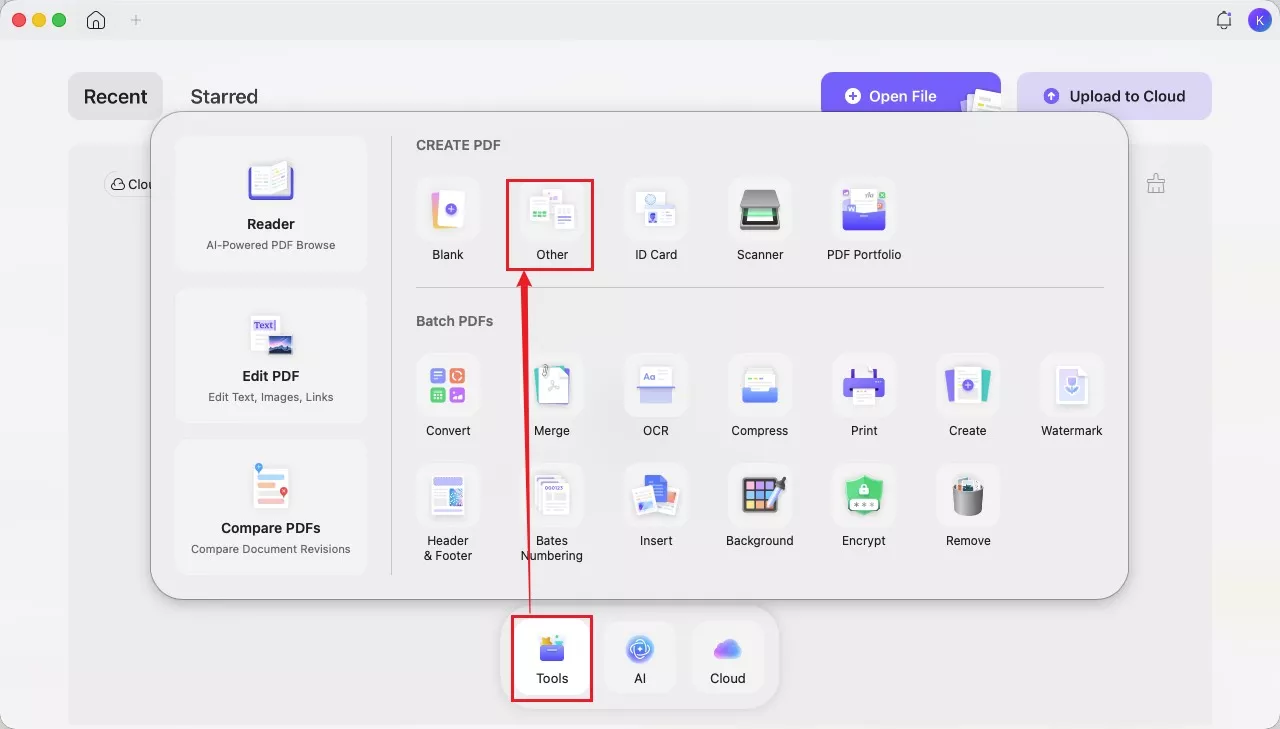
Step 1. Convert the Excel file to PDF. The fastest way is to drag your .xlsx file straight onto the UPDF desktop window—UPDF auto-converts it to PDF on drop. If you prefer menus, go to Tools → Other → PDF from Excel (Win) or Select Files (Mac) and pick your file. If you don't have UPDF yet, download UPDF for free and install it in under a minute, then drop the file in.
Windows • macOS • iOS • Android 100% secure
Step 2. Recognize the existing fields. Enter Form mode from the top tool bar, then go to ... More and run Form Field Recognition. UPDF scans the page and turns the blank cells from your spreadsheet into fillable form fields automatically, so you don't have to place every box by hand.
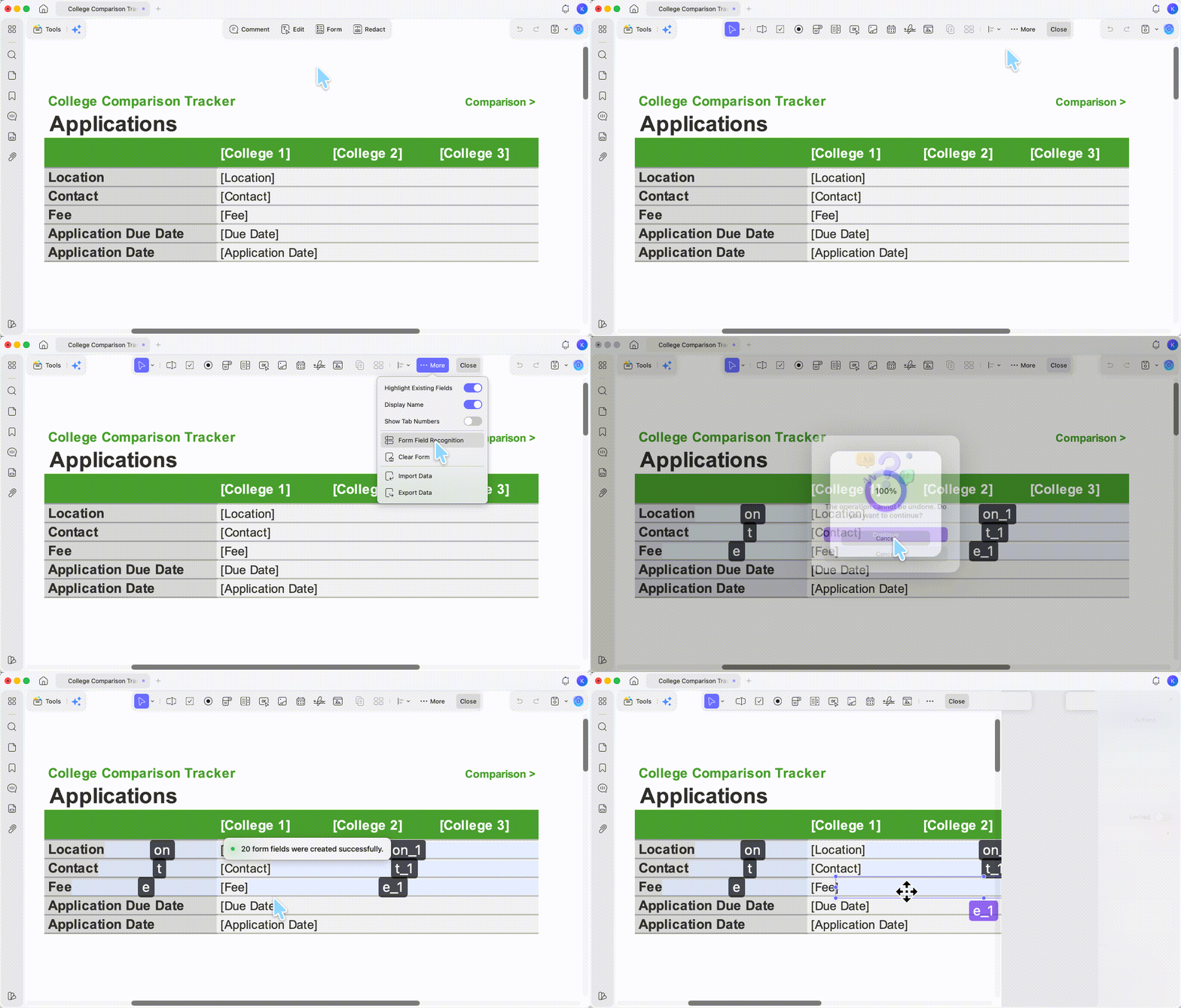
Step 3. Add or adjust fields manually. Recognition handles the obvious blanks; you refine the rest. From the Prepare Form toolbar you can drop in nine field types—text fields, checkboxes, radio buttons, dropdown (list) menus, date fields, signature fields, and more. Drag any field to reposition it, or select a field and nudge it with the arrow keys for pixel-precise alignment when a merged cell throws the layout off.
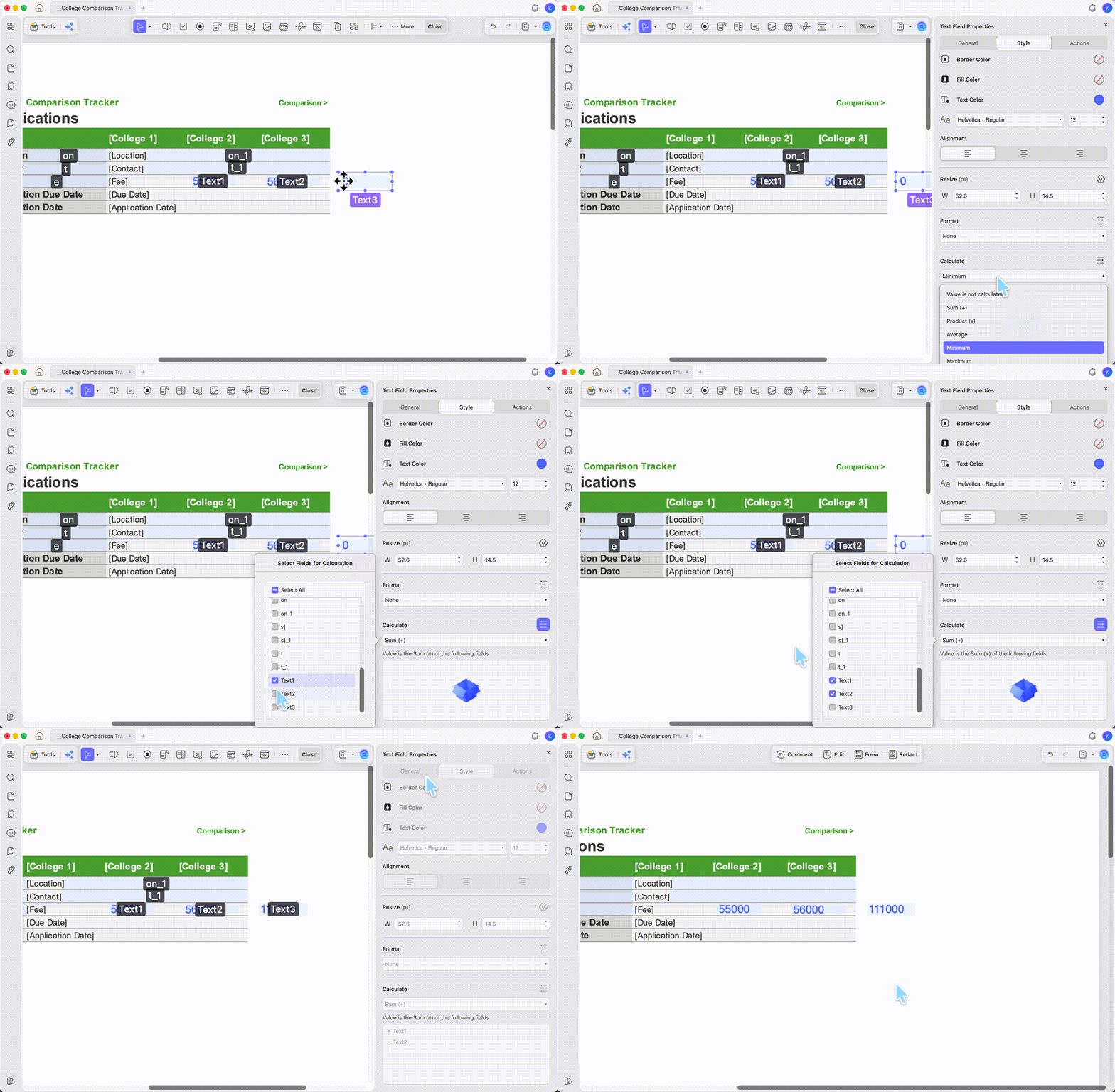
Step 4. Add formulas so the form still calculates. This is the piece Excel users care about most. A converted PDF won't carry your spreadsheet formulas, but you can rebuild them on the form. Double-click a numeric field to open Properties → Style → Calculate, and set a sum, product, average, maximum or minimum across the fields you name. A quantity-times-price total or a running subtotal will then update as the form is filled—so an invoice or expense sheet stays live, not static.
Step 5. Save or share the fillable PDF. Save the file, or use Share to send it via link or email. The finished form is standard PDF, so recipients can fill it on any compliant reader—including UPDF on a phone. When responses come back, export the PDF form data to Excel for analysis; saving a filled PDF does not automatically update the source workbook.
Best for:
- forms that need precise fields, working calculations, offline handling, or privacy—your file stays on your machine and is never uploaded.
Not for:
- a one-off form you'd rather build in the browser without installing anything—use Part 2 instead.
A note on the free version: UPDF's free tier lets you try the whole workflow, but file conversions are capped at 2 per day and saved files carry a trial watermark; UPDF Pro (US$49.99/year or US$79.99 lifetime) removes the watermark and the daily cap. Download UPDF for free to build your first fillable form from Excel—Pro features unlock when you need unlimited conversions or watermark-free export.
Windows • macOS • iOS • Android 100% secure
Part 2. Free Online Option: DocFly
If you need a fillable PDF once, don't want to install software, and the file isn't sensitive, DocFly works in the browser.
Step 1. On your web browser, access the DocFly tool, tap Click to Upload Your File, and choose the Excel file with fillable form fields.
Start with a document structure that will be easy to build on. For a visual introduction to the tools, see the video on working with PDF forms in UPDF below.
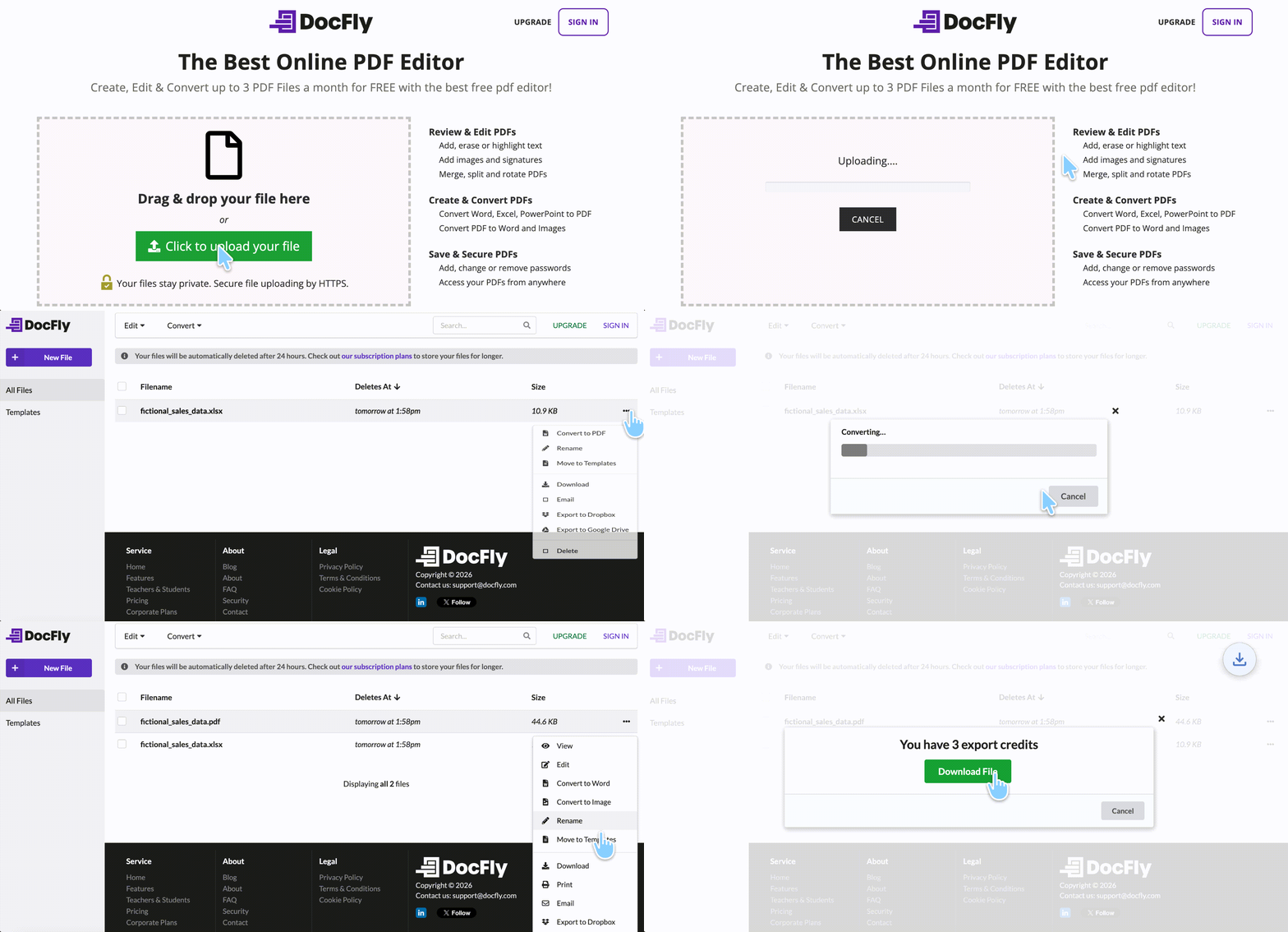
Step 2. After the file is uploaded successfully, hit the “three dots” next to the file and choose the Convert to PDF option.
Step 3. Click to open the converted PDF file to enter the Form Creator tab and drop in text fields, checkboxes, date fields, or signature fields.
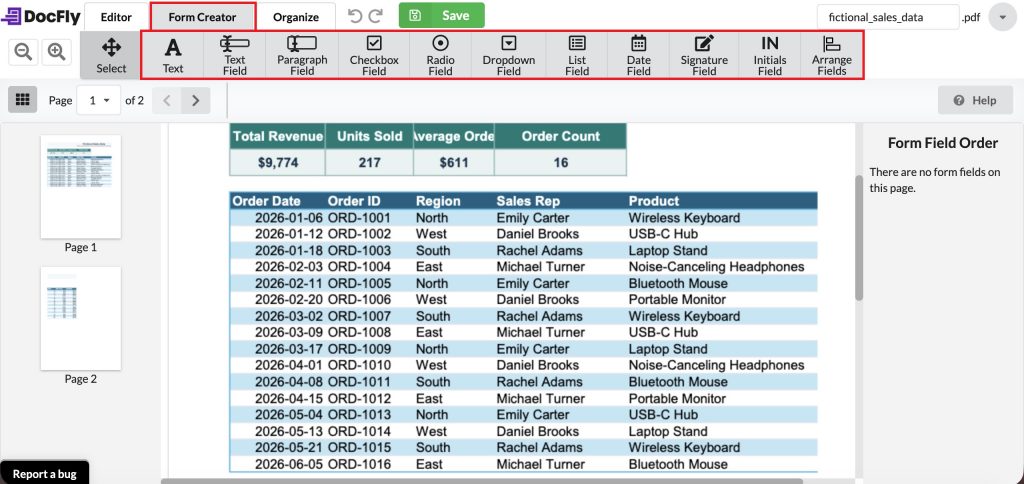
Step 4. Download the finished form.
Know the limits before you commit: DocFly's free plan allows 3 exports per month, and every file is uploaded to its cloud (hosted on Amazon), so skip it for contracts, payroll, or anything confidential. Paid plans run US$3.99/month billed annually, or US$7.99/month billed monthly. For a closer look, see our walkthrough on how to fill a PDF with DocFly.
Part 3. Fill the Form on iPhone & Android
Here is the boundary worth knowing: on mobile, UPDF can fill a PDF that already has form fields, and can add text or checkmarks onto a flat (non-interactive) PDF—but creating the fillable fields from an Excel layout is a desktop job. Build the form on Windows or Mac, then fill and return it from your phone.
On iPhone:
- Open the email, tap the PDF attachment, and choose Share → Open in UPDF.
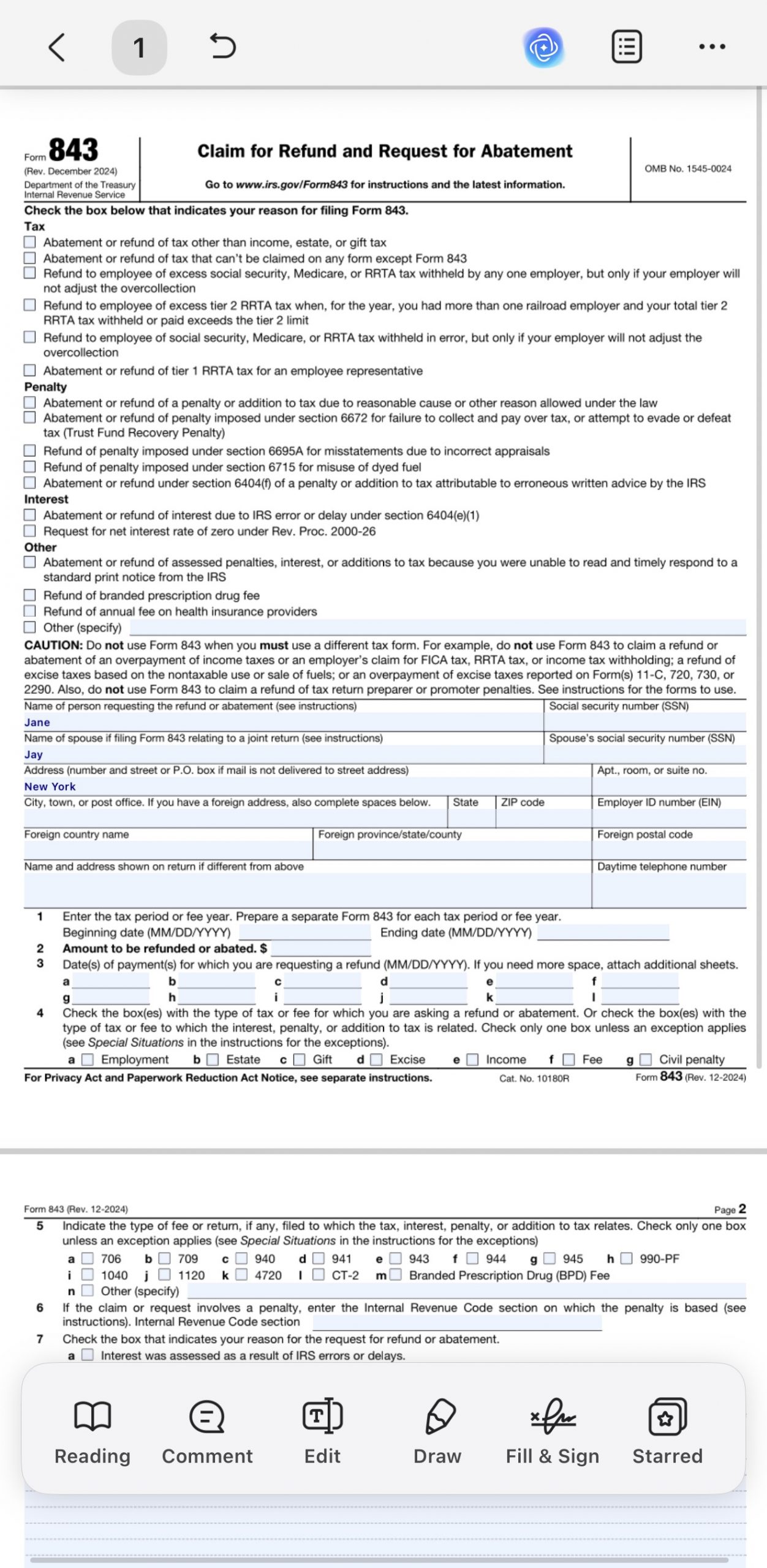
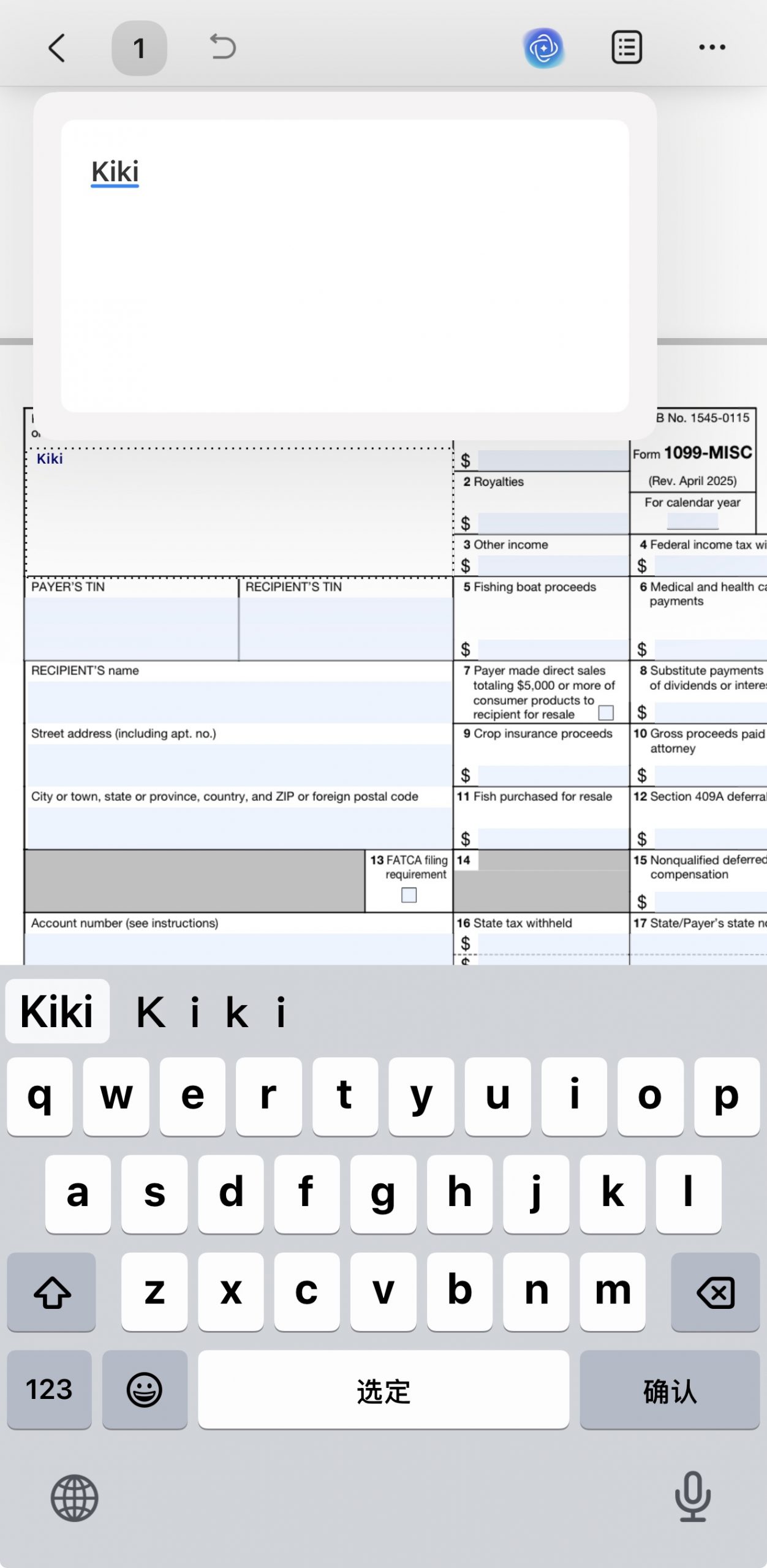
- Tap Fill & Sign—UPDF detects the existing fields.
- Tap any field and type; add a signature where needed.
- Save, or share it back by email or a cloud link.
Part 4. Edge Cases
- Recognition finds no fields. Your original sheet is a purely visual table with no real input cells. Skip recognition and add fields manually under Form mode.
- Fields land in the wrong spot. Merged cells or a stacked header can push recognized fields off their blanks. Select the stray field and nudge it with the arrow keys instead of dragging.
- A formula field shows nothing. Check the calculation order and confirm the fields you reference are named exactly—UPDF calculates by field name, so a typo breaks the sum.
- A very large sheet recognizes slowly or misses rows. Split the workbook into sections, convert and recognize each, then merge the PDFs.
Part 5. FAQs
1. Can I keep Excel formulas working after converting to a fillable PDF?
Not automatically—the conversion drops the spreadsheet's live formulas. You rebuild them on the PDF using Properties → Calculate on a numeric field, which restores sums, products, and totals that update as the form is filled.
2. How do I create a fillable PDF from Excel using Adobe Acrobat?
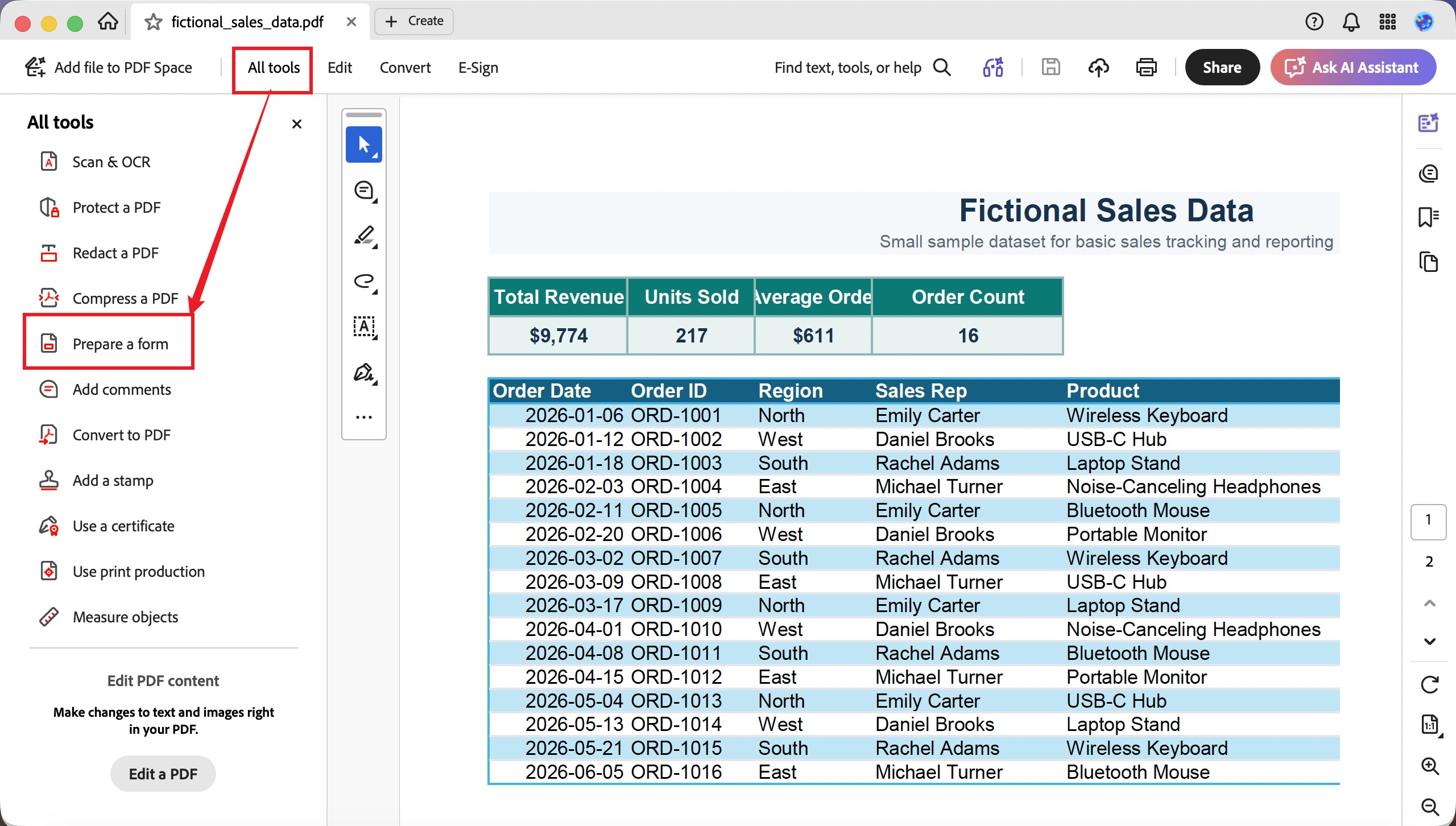
n Acrobat, open All Tools → Prepare a Form, choose your Excel file, and Acrobat converts it and auto-detects fields. Add or adjust fields, then save. Acrobat Pro runs about US$239.88/year, so for occasional form building the free or lower-cost tools above cover the same job.
3. Will Excel dropdowns automatically become PDF dropdown fields?
Do not assume they will. After converting and recognizing fields, inspect each dropdown and add or adjust a PDF list field manually where needed. Test the finished form before sending it to others.
Conclusion
Creating a fillable PDF from Excel comes down to three moves: convert the sheet, recognize or add the form fields, and—if numbers matter—rebuild the formulas with Calculate. UPDF does all three in one app and adds tools like the AI Editing Suite for fixing text after the fact, while a browser option like DocFly covers the occasional, non-sensitive job. Download UPDF for free to turn your first Excel sheet into a working fillable form—installation is free, and Pro features are there when you need unlimited conversions or watermark-free export.
Windows • macOS • iOS • Android 100% secure








 Enid Brown
 Enola Miller

 Enrica Taylor