 UPDF
UPDF
 UPDF for Windows
 UPDF for Mac
 UPDF for iPhone/iPad
 UPDF for Android
 Nomostar
 UPDF AI Online
 UPDF Sign
 IvyCraft
 Edit PDF
 Annotate PDF
 Create PDF
 PDF Form
 Edit links
 Convert PDF
 OCR
OCR PDF to Word
 PDF to Image
 PDF to Excel
 Organize PDF
 Merge PDF
 Split PDF
 Crop PDF
 Rotate PDF
 Protect PDF
 Sign PDF
 Redact PDF
 Sanitize PDF
 Remove Security
 Read PDF
 UPDF Cloud
 Compress PDF
 Print PDF
 Batch Process
 About UPDF AI
 UPDF AI Solutions
 AI User Guide
 FAQ about UPDF AI
 Summarize PDF
 Translate PDF
 Chat with PDF
 Chat with AI
 Chat with image
 PDF to Mind Map
 Explain PDF
 PDF AI Tools
 Image AI Tools
 AI Chat Tools
 AI Writing Tools
 AI Study Tools
 AI Working Tools
 Other AI Tools
 AI Bookmark Generation
 AI Bookmark Summary
 AI Watermark Generation
 AI Background Generation
 AI Sticker Generation
 AI Stamp Generation
 AI Editing Suite
 UPDF Copilot
 AI Page Management
 AI Semantic Search
 PDF to Word
 PDF to Excel
 PDF to PowerPoint
 Enterprise Solution
 Enterprise Sign
 Enterprise AI
 Enterprise Plan
 Enterprise User Guide
 Enterprise Webinar
 IT
IT Education
 Construction
 Financial Service
 Healthcare
 Insurance
 Legal
Legal Manufacturing
 Government
 Researchers & PhDs
 Solopreneurs & Freelancers
 Lawyers & Legal Professionals
 Real Estate Agents & Brokers
 Education Solution
 Customer Stories
 User Guide
 UPDF Tricks
 FAQs
FAQs UPDF Reviews
 Download Center
 Blog
Blog Newsroom
 Tech Spec
 Updates
 UPDF vs. Adobe Acrobat
 UPDF vs. Foxit
 UPDF vs. PDF Expert

Trying to insert a page break in a PDF is not as straightforward as doing it in Word. PDFs use a fixed page layout, so they normally cannot create a Word-style break that automatically sends the following content to the next page. In practice, this search can mean 4 different things, depending on the result you need. So, match your goal to the method before using the tool:
- Add a blank page between existing pages to create extra space.
- Divide an overly long PDF page into multiple standard-sized pages.
- Create a new page and manually move a paragraph onto that page.
- Go back to the original Word, Excel, or HTML file when incorrect pagination affects the entire document.
These options solve different page-layout problems rather than producing the same type of page break. The sections below show when and how to use each one.
Part 1. Can You Insert a Page Break in a PDF?
PDFs keep text and other content fixed at specific positions across individual document pages. Word uses reflowable content, letting paragraphs shift automatically after inserting a new page break. Following headings, tables, and page numbers also move forward without requiring separate manual adjustments.
Knowing how to add a page break in a PDF therefore requires another approach. The table below shows which method works best for the page change you need:
| Your Goal | Recommended Solution |
| Add a Page Between 2 Existing Pages | Insert a blank page |
| Divide One Long Page | Split the PDF page |
| Make a Short Paragraph Begin on The Next Page | Insert a page and move the content manually |
| Fix Pagination Throughout the Document | Edit the Word, Excel, or HTML source file |
| Add a Page With Adobe Acrobat | Insert a blank page through Organize Pages |
Each method changes PDF page structure without affecting the document’s text flow. Explore more page management options in this guide to organize PDF pages.
Keep the surrounding pages in view as you change the structure of the file. For a visual introduction to the tools, see the video on organizing PDF pages in UPDF below.
Part 2. Method 1. Insert a Blank Page in a PDF with UPDF
UPDF makes it simple to insert a blank page in PDF files when extra space helps. This approach works well when contracts need separate appendix sheets between existing document pages. Reports can also gain clean divider pages before starting important new sections or chapters. Now, follow the steps below to add a blank page using UPDF:
Step 1. Once you import your PDF into UPDF, press the "Organize Pages" option in the top left corner.
Step 2. Then, select the page your new page should follow, press "Insert" at the top, and choose "Blank Page."
Step 3. Pick a "Page Size," "Orientation," and "Location." Then, press "Insert." See the added page in the thumbnail grid and save the PDF.
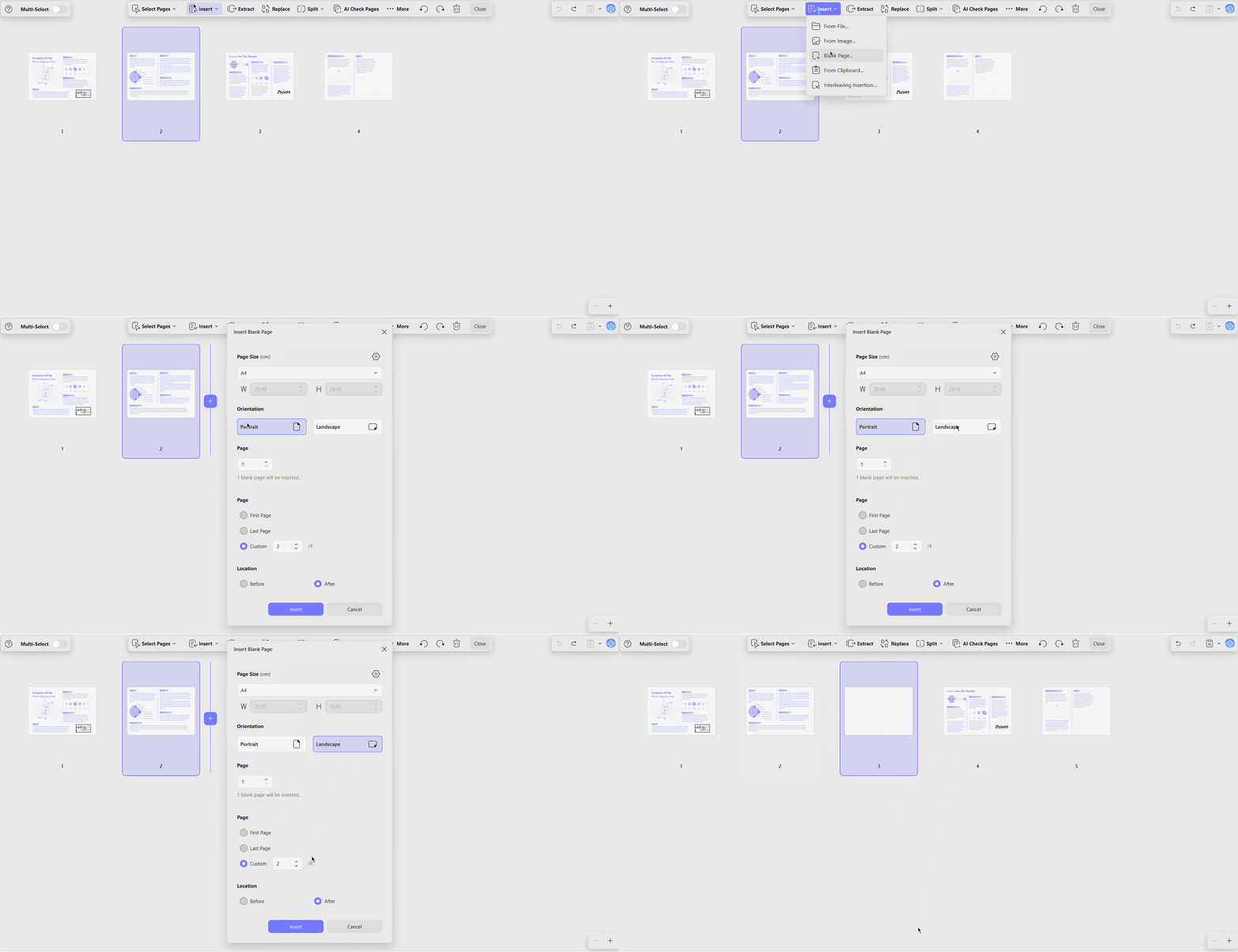
The Parameters Available
When adding a new page, these settings help you control its appearance and placement:
- Page Size: Select default, A1, A2, A3, A4, A5, or enter custom width and height. The default setting keeps the page size consistent with surrounding pages.
- Orientation: Set the blank page to portrait or landscape based on your document layout.
- Quantity: Add several blank pages in a single operation instead of inserting them individually.
- Position: Place new pages first, last, immediately before, or immediately after your selected page.
Mismatched sizing creates inconsistent margins and scaling, especially when combining A5 pages with A4 documents. UPDF supports blank-page insertion across Windows, macOS, iOS, and Android, with controls varying by platform. Free users can organize PDF pages, but watermark-free saving requires upgrading to UPDF Pro afterward.
Learn more about positioning, sizing, and blank-page alternatives in this guide to insert a blank page into a PDF.
Adding, splitting, or reordering pages without disturbing the rest of the document? Get UPDF free and handle all three in one workspace.
Windows • macOS • iOS • Android 100% secure
Part 3. Method 2. Split a Long PDF Page into Two or More Pages
Long screenshots, web pages, and posters often become oversized pages after conversion into PDFs. Users searching how to insert a page break in PDF may actually need splitting for easier printing. Go through the steps below to split a long PDF page using UPDF:
Step 1. On UPDF, press "Tools" and choose the "Split" feature.
Step 2. Then, click the "+" icon in vertical or horizontal orientation to add a split line.
Step 3. Next, drag the line with your mouse so the division does not disturb the images or text. Once done, press "Apply" at the top and save the finalized PDF.
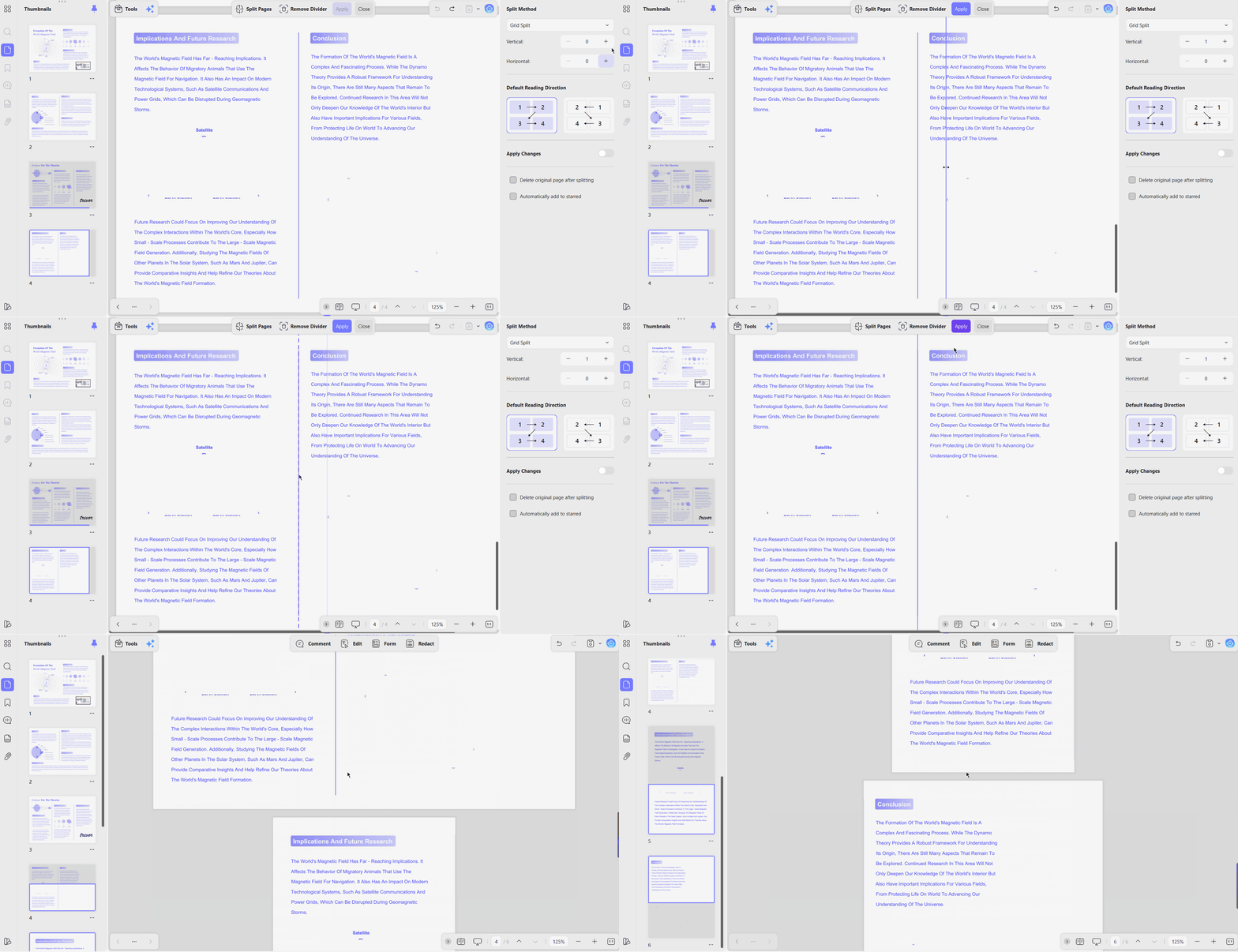
Dragging the split line freely helps place each cut exactly where the content requires. This prevents headings from being separated from paragraphs when a long page has uneven content.
- Multiple split lines can be added to divide one page into several pages.
- Grid-based or equal-sized splitting options help create consistent page sections.
- Splitting can apply to the current page, selected pages, or supported page ranges.
- The original page can be kept or removed depending on available settings.
- Text, images, and visual quality remain consistent after splitting.
- Page-splitting features and controls may differ across platforms and UPDF versions.
Splitting divides the existing page, so content crossing a split line gets visually cut apart. Learn more about this process in our guide on how to split a PDF page in half.
Part 4. Method 3. Move a Paragraph to the Next PDF Page
Some paragraphs may need to start on fresh pages instead of staying near the bottom of a page. Creating a page break in PDF can achieve this appearance through UPDF editing tools. However, UPDF requires you to move the selected paragraph manually instead of automatically pushing content forward. Follow the simple steps below to move your paragraph onto the next PDF page:
Step 1. Add a new blank page using Method 1 or confirm the next page has enough space.
Step 2. Go to the "Edit" model, choose "Insert & Edit Text," and select the paragraph you want to relocate.
Step 3. Then, move the paragraph to the next page and position it where the layout requires.
Step 4. Verify the font, spacing, and layout. Then, save the edited PDF.
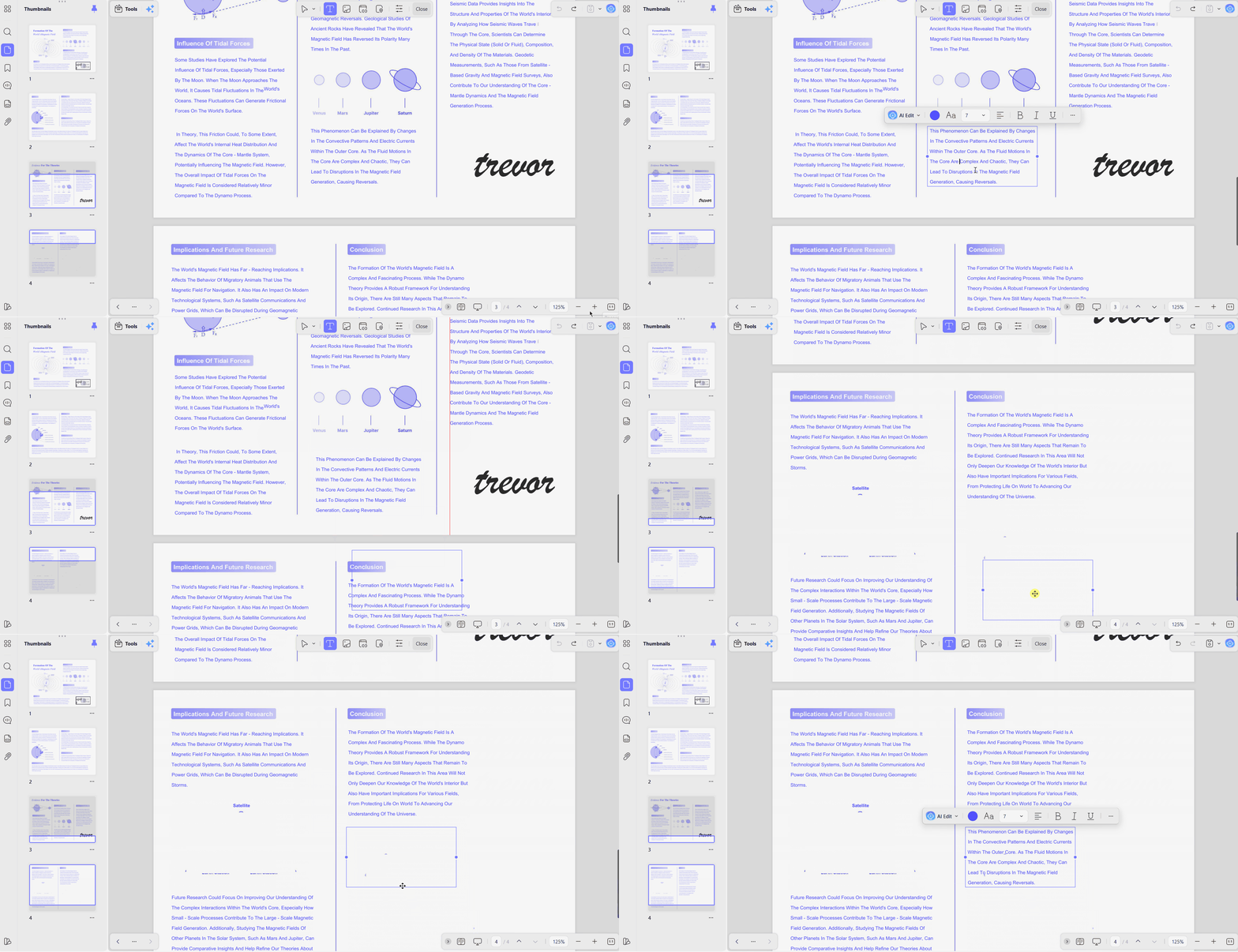
Consider the limitations before using this method, especially when working with longer PDF documents:
- Best suited for moving one paragraph or a few elements, not structural changes.
- Longer documents can require repeated manual adjustments across multiple pages.
- Editing the original source file is faster when changes affect many subsequent pages.
- Scanned PDFs require OCR before you can select, edit, or move text.
UPDF generally preserves font, size, and spacing when editable text moves between PDF pages. Creating the destination page first provides cleaner placement than fitting content onto existing pages. Explore every insertion option in this guide to add pages to an existing PDF.
Part 5. Method 4. Insert a Page in Adobe Acrobat
Users searching how to insert a page break in Adobe PDF face similar fixed-layout limitations. Adobe Acrobat can insert new pages, which often provides the page break users actually need. To insert a new page in Adobe Acrobat, follow the simple steps outlined below:
Step 1. Once you open a PDF in Adobe Acrobat, select "All Tools" and choose "Organize Pages."
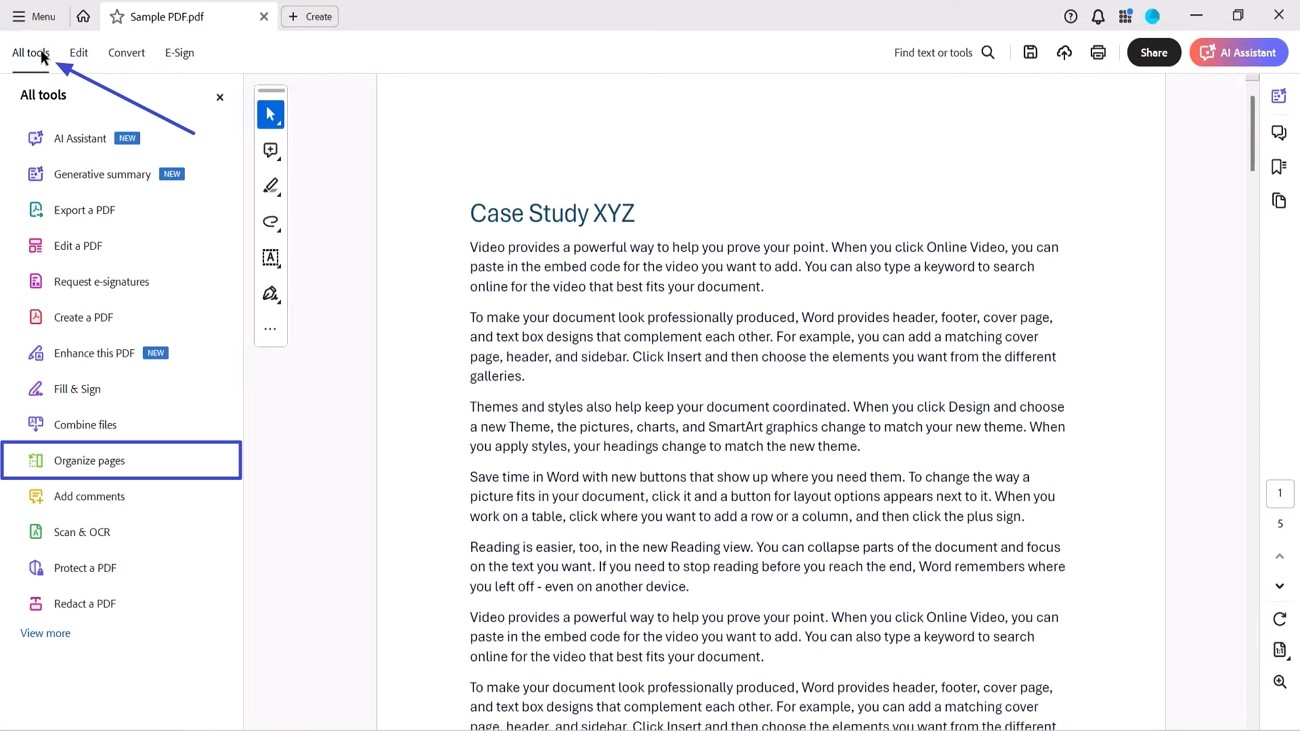
Step 2. Next, select the page after which you want to add a new page. Choose "Insert" and press "Blank Page."
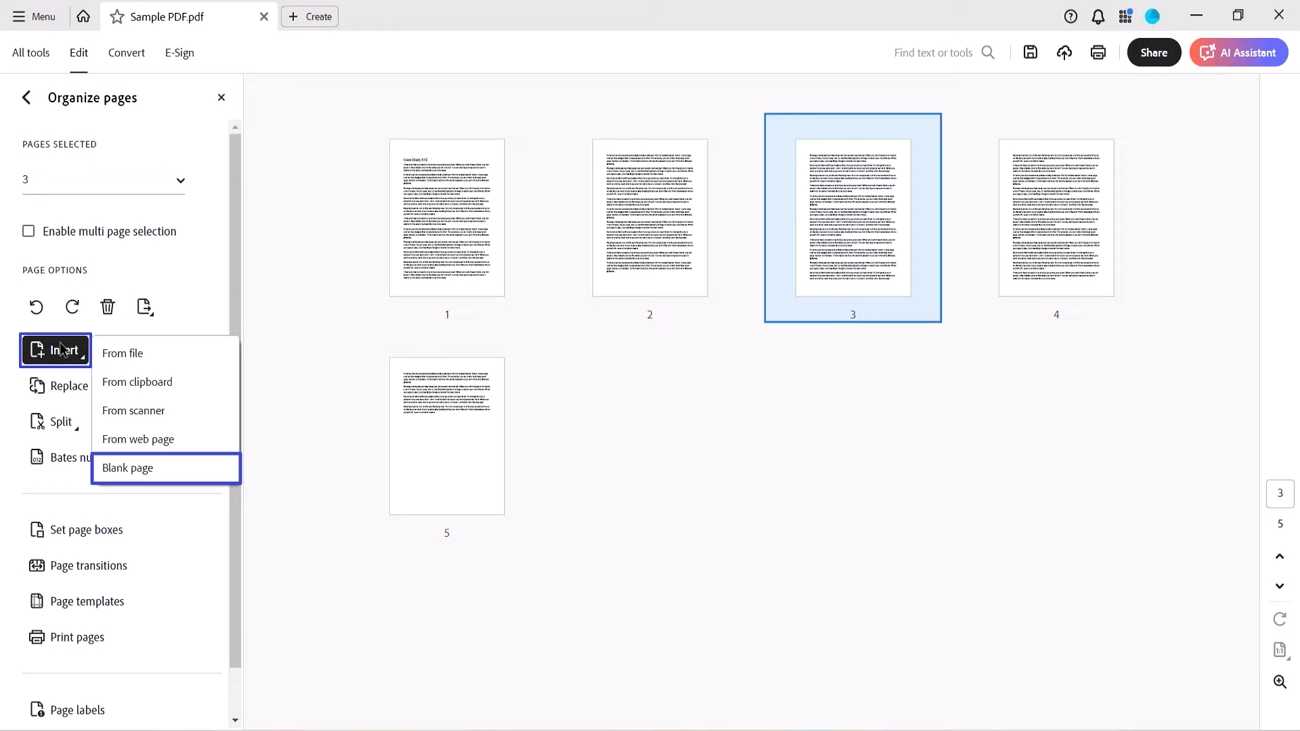
Step 3. Specify the location, then press "OK" to insert the page.
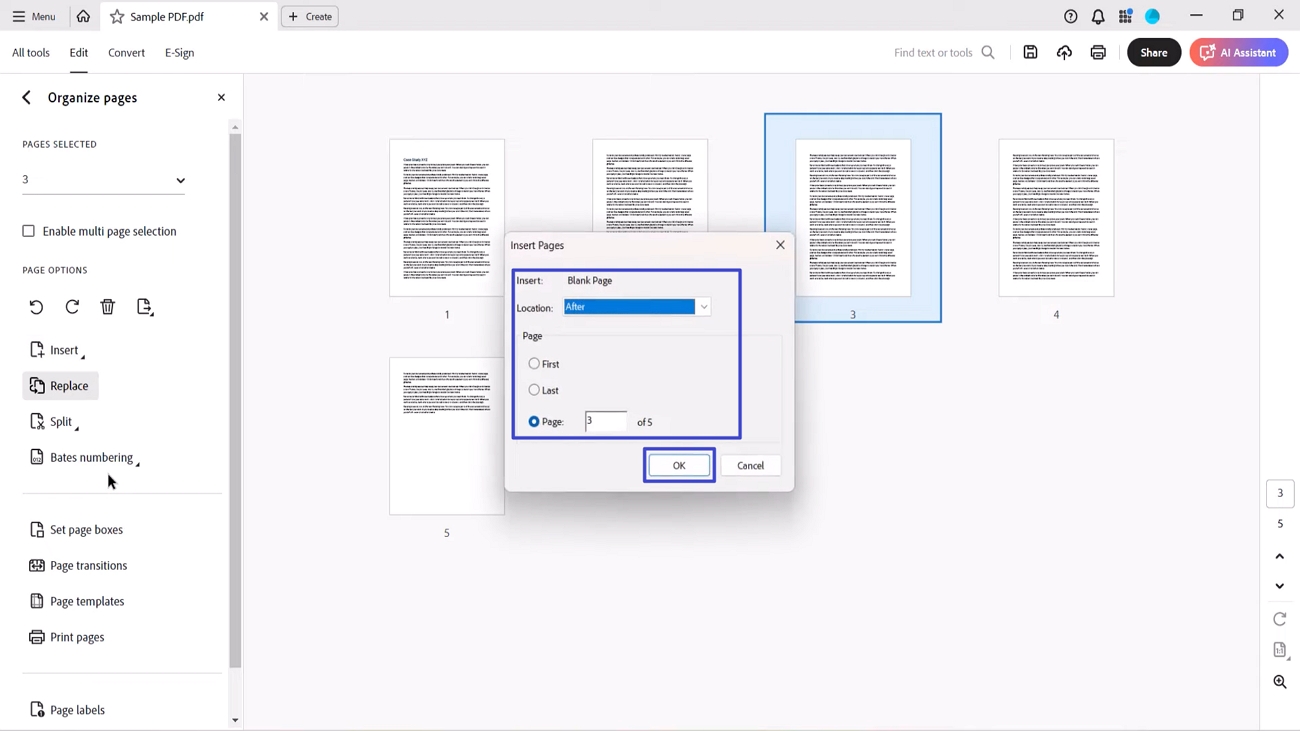
Pages from other files import similarly, covering separate appendices and signed document sheets easily. Even Acrobat 2024 provides no automatic page break to move the following content forward. Acrobat also cannot split one long PDF page into two using built-in tools directly. Adobe Community Experts confirm this limitation, suggesting Crop tools or third-party scripts as workarounds.
Acrobat Standard currently costs $14.99 monthly with annual billing, while Pro costs $19.99 monthly. Both plans include document organization, while Adobe specifically promotes page insertion with Acrobat Pro. Users needing page insertion occasionally may find a recurring Acrobat subscription difficult to justify. See the complete workflow for adding a page in Adobe Acrobat before choosing a plan.
Part 6. When You Should Edit the Original Word, Excel, or HTML File
Fixing every page break in PDF directly can waste time when pagination problems affect several pages. Return to the source document when any of these issues appear:
- Many paragraphs need repaginating, not just one or two.
- A table splits incorrectly across two different pages.
- A heading becomes separated from the paragraph below it.
- Headers, footers, or page numbers appear in incorrect positions.
- A webpage gets divided awkwardly during PDF export.
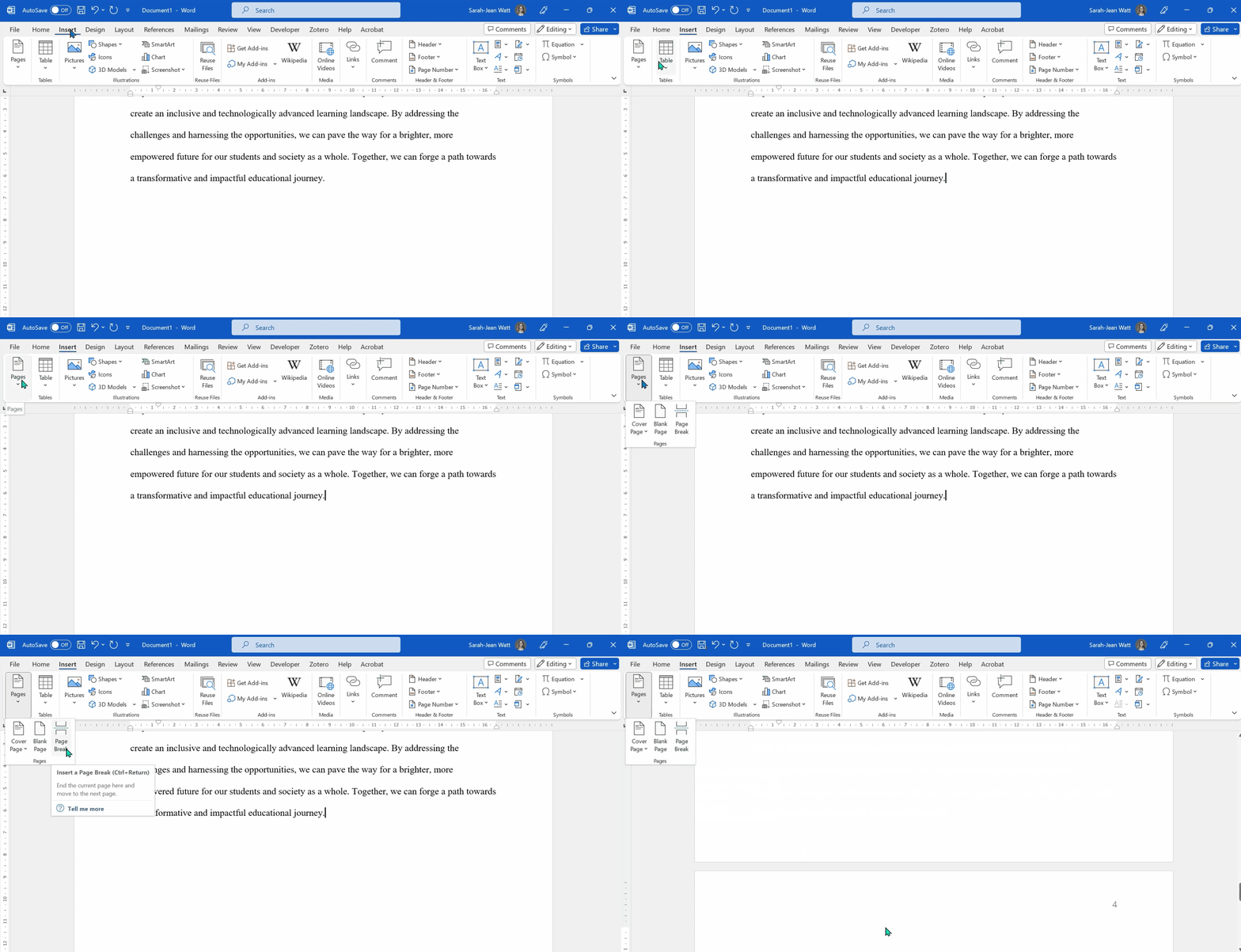
The remedy is to adjust the page size, margins, print area, or page-break settings in the source file, then export to PDF again. Everything downstream repositions automatically, which is exactly what the PDF cannot do.
If a few pages still need attention after re-exporting, UPDF handles the remainder through insertion, removal, splitting, or rearranging. Mismatched paper sizes are a frequent culprit at this stage, and the fix is described under change the paper size of a PDF.
Part 7. How to Choose the Right Method
To choose the right method for PDF page issues, look at the table below:
| Method | Best For | Automatically Reflows Text | Main Limitation |
| Insert a Blank Page with UPDF | Adding content or separating existing sheets | No | Existing content does not move automatically |
| Split a Page with UPDF | Long screenshots and scanned long pages | No | Divides the page rather than repaginating paragraphs |
| Move a Paragraph Manually with UPDF | Small text or layout adjustments | No | Inefficient for long documents |
| Insert a Page with Adobe Acrobat | Acrobat subscribers | No | Does not create Word-style automatic pagination |
| Edit the Source File | Extensive document repagination | Yes | Requires access to the original file |
Most methods keep existing content fixed, so choosing the right approach avoids unnecessary adjustments. For page-order problems instead, use this guide to rearrange PDF pages effectively.
FAQs About Inserting Page Breaks in PDFs
Can I insert a page break in a PDF as I do in Word?
No, a PDF stores content at fixed coordinates, so it has no instruction to push following material onto the next page. You can insert a blank page, split an existing page, or move content manually, but none of those reflow the document automatically.
How do I insert a blank page between two PDF pages?
Open your PDF in UPDF, then enter Organize Pages and choose the Blank Page option. Set page size, orientation, quantity, insertion position, then save the updated PDF file afterward.
Can Adobe Acrobat insert a page break?
Adobe Acrobat inserts blank pages or imported pages through the Organize Pages tool easily. However, it cannot create Word-style breaks that automatically repaginate following PDF content afterward.
How can I split one long PDF page into two pages?
Use UPDF's dedicated Split tool when one oversized PDF page needs dividing into sections. Add a split line, position it carefully, then save the divided PDF pages afterward.
Why does my PDF have incorrect page breaks after being exported from Word?
Incorrect pagination usually starts in Word, while PDF export simply preserves those layout problems. Adjust margins, page size, or break settings in Word, then export the document again.
Final Verdict
To conclude, the best way to insert a page break in a PDF depends on the layout change you need. Insert a blank page for extra space, split oversized pages for easier printing, or move small sections manually. For widespread pagination problems, edit the original source file and export it again. UPDF provides the most flexible option for handling common PDF page adjustments.
Windows • macOS • iOS • Android 100% secure
Testing Information: Testing was completed on September 2, 2026, using Windows and UPDF V2.5.
Blank-page insertion, page splitting, and short-text movement were each tested separately in UPDF. Adobe findings were checked against official help pages and relevant Adobe Community discussions. Feature availability, subscription requirements, and pricing may change after future software updates.





 Enola Miller
 Grace Curry
 Enya Moore