 UPDF
 UPDF for Windows
 UPDF for Mac
 UPDF for iPhone/iPad
 UPDF for Android
 Nomostar
 UPDF AI Online
 UPDF Sign
 IvyCraft
 Edit PDF
 Annotate PDF
 Create PDF
 PDF Form
 Edit links
 Convert PDF
 OCR
 PDF to Word
 PDF to Image
 PDF to Excel
 Organize PDF
 Merge PDF
 Split PDF
 Crop PDF
 Rotate PDF
 Protect PDF
 Sign PDF
 Redact PDF
 Sanitize PDF
 Remove Security
 Read PDF
 UPDF Cloud
 Compress PDF
 Print PDF
 Batch Process

 About UPDF AI
 UPDF AI Solutions
 AI User Guide
 FAQ about UPDF AI
 Summarize PDF
 Translate PDF
 Chat with PDF
 Chat with AI
 Chat with image
 PDF to Mind Map
 Explain PDF
 PDF AI Tools
 Image AI Tools
 AI Chat Tools
 AI Writing Tools
 AI Study Tools
 AI Working Tools
 Other AI Tools
 AI Bookmark Generation
 AI Bookmark Summary
 AI Watermark Generation
 AI Background Generation
 AI Sticker Generation
 AI Stamp Generation
 AI Editing Suite
 UPDF Copilot
 AI Page Management
 AI Semantic Search
 PDF to Word
 PDF to Excel
 PDF to PowerPoint
 Enterprise Solution
 Enterprise Sign
 Enterprise AI
 Enterprise Plan
 Enterprise User Guide
 Enterprise Webinar
 IT
 Education
 Construction
 Financial Service
 Healthcare
 Insurance
 Legal
 Manufacturing
 Government
 Researchers & PhDs
 Solopreneurs & Freelancers
 Lawyers & Legal Professionals
 Real Estate Agents & Brokers
 Education Solution
 Customer Stories
 User Guide
 UPDF Tricks
 FAQs
 UPDF Reviews
 Download Center
 Blog
 Newsroom
 Tech Spec
 Updates
 UPDF vs. Adobe Acrobat
 UPDF vs. Foxit
 UPDF vs. PDF Expert


Quick Answer:
Can you read a webpage but cannot select or copy its text? The right solution depends on what is blocking you: a disabled right-click menu, a script that intercepts copying, selection restrictions, or text displayed as an image.
Start with the browser methods below. If you need a saved document or text from screenshots, move on to PDF extraction or OCR.
Part 1. Why Can’t I Copy Text from This Website?
A webpage can block selection, right-clicking, and copying separately. Text may also be part of an image rather than selectable webpage content. Match the symptom below to a suitable starting point.
| What happens? | What to try first |
|---|---|
| Text is selectable, but the right-click menu is blocked | Use the keyboard copy shortcut |
| You cannot select the article text | Try reading mode |
| You want a saved copy of the article | Save as PDF and inspect the result |
| The words are inside an image or screenshot | Use OCR |
| A script appears to interrupt copying | Temporarily disable JavaScript |
| You regularly encounter selection restrictions | Consider a copy-enabling extension |
A technical copying restriction does not determine how the content may be reused. Check the source’s terms and retain attribution when quoting it.
Part 2. How to Copy Text from a Protected Web Page
Method 1. Use the Keyboard Copy Shortcut
If you can select the text but cannot open the right-click menu, select the passage and press Ctrl+C on Windows or Command+C on Mac. Paste it into a text editor to check the result.
This helps when only the context menu is blocked. If the site also prevents selection or intercepts copying, try another method below.
Method 2. Try Reading Mode
For article-style pages, reading mode may provide a simpler version of the text.
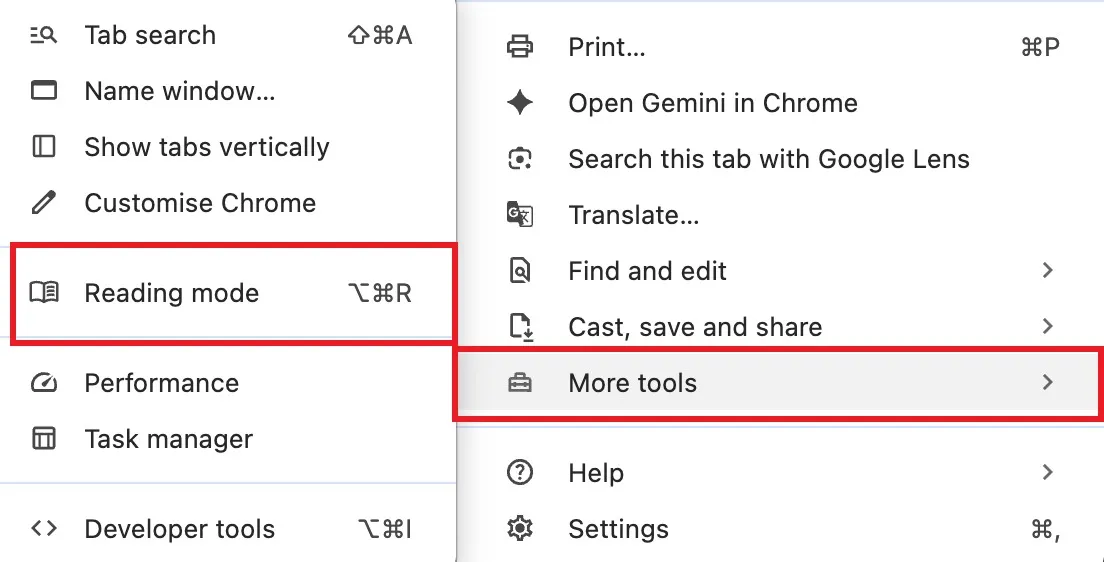
- In Chrome on a computer, open the three-dot menu and choose More tools > Reading mode.
- If the article appears, try selecting and copying the passage from that view.
Reading mode is not available for every website and may omit interactive or embedded content. Check the copied passage against the original.
Method 3. Save the Webpage as a PDF
Saving a page as a PDF can provide another way to select its text and keep a local reference copy.
- Open the webpage and make sure the passage you need has loaded.
- Press Ctrl+P on Windows or Command+P on Mac, or choose Print from Chrome’s three-dot menu.
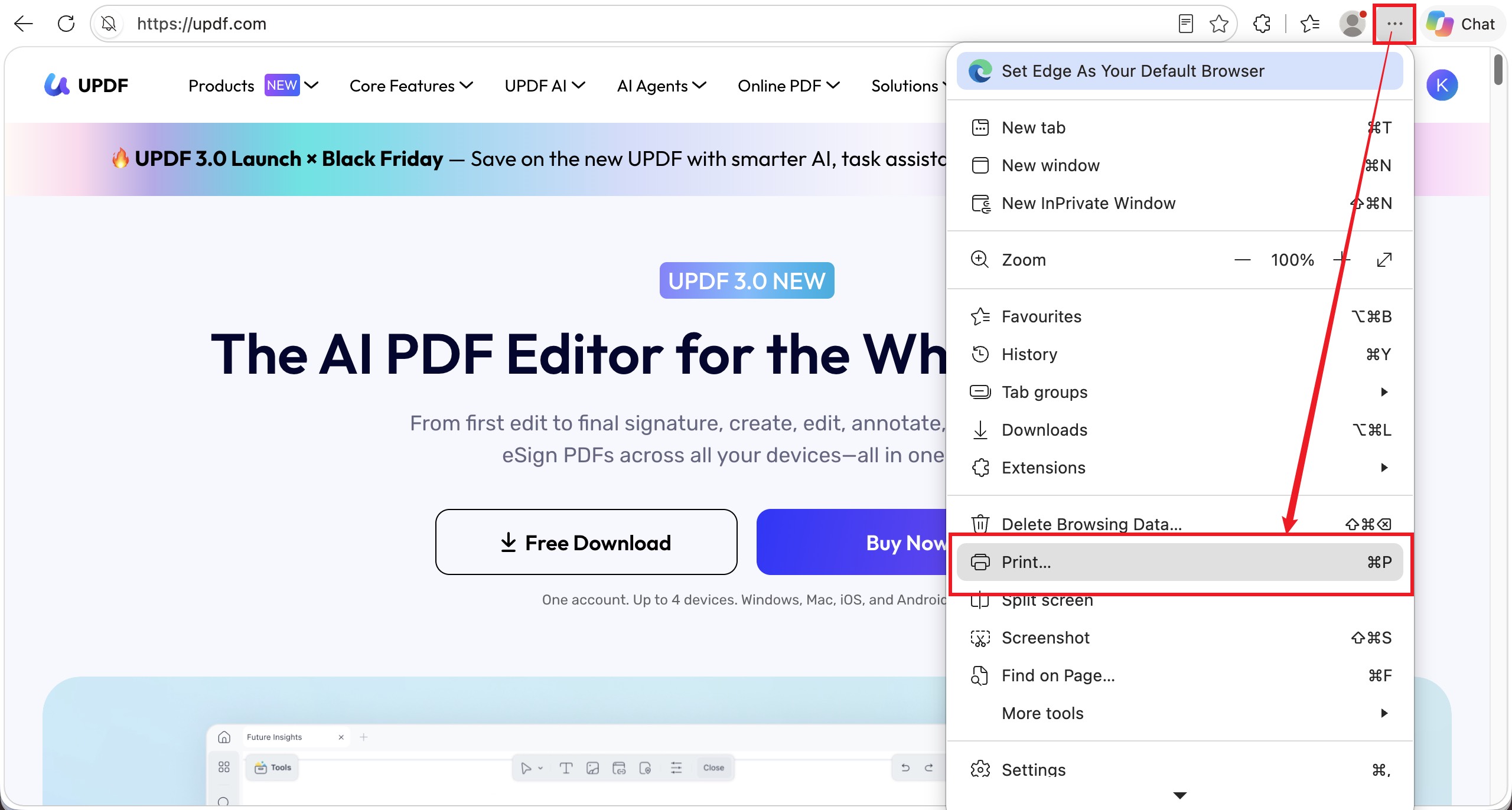
In Chrome’s print dialog, choose Save as PDF as the destination. Review the preview, then click Save.
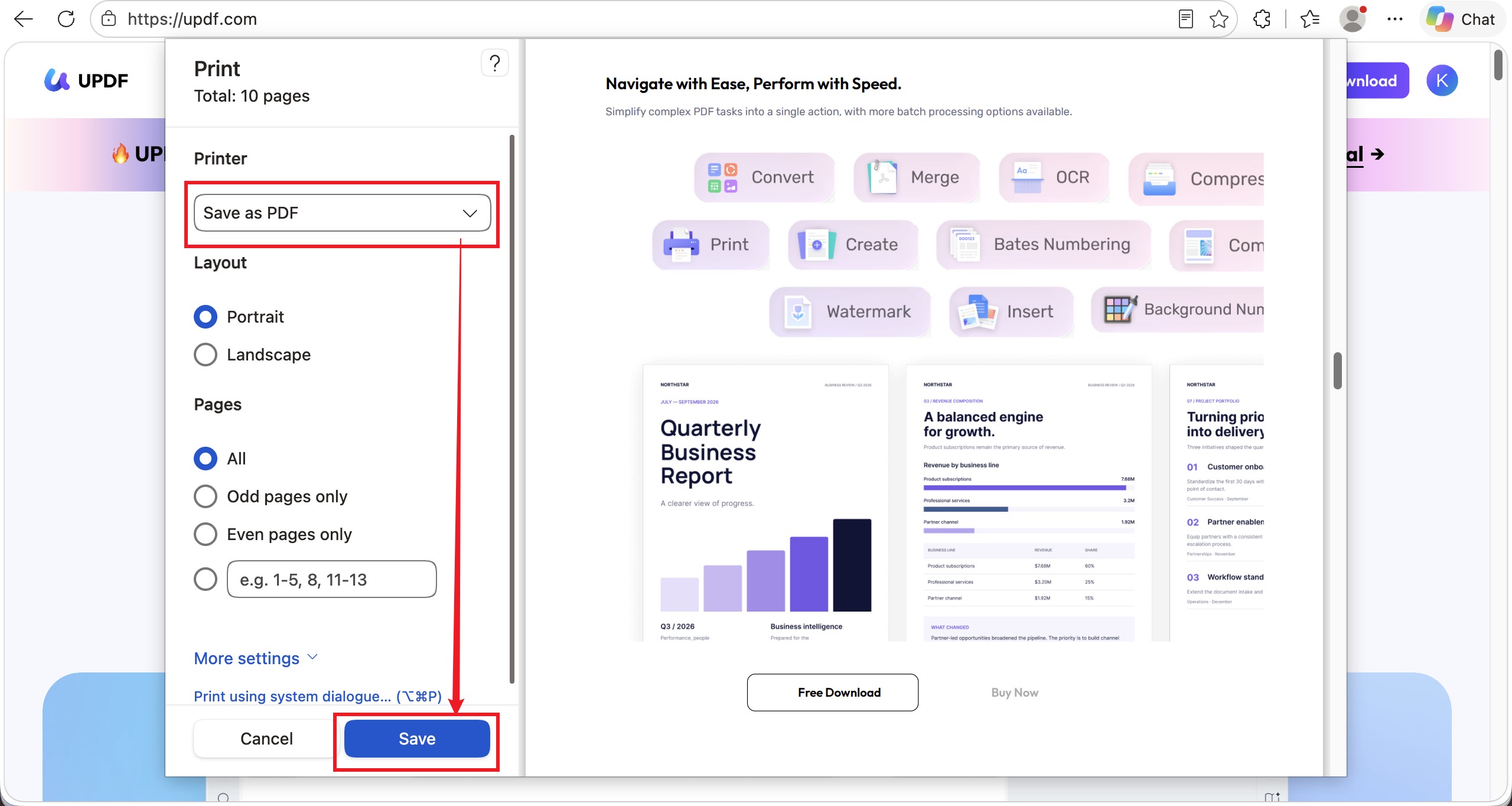
Open the PDF and try selecting and copying the text. Check that the saved file contains the passage you need: a printout is not guaranteed to include every part of a webpage. If the text is selectable, you can copy it without converting the PDF. If it is image-only, use OCR.
Optional: Export the Saved PDF to a Text File
If you need a TXT file rather than a short copied passage, open the saved PDF in UPDF. Under Tools, open the PDF conversion options and select Text (.txt). Set the page range and complete the export.
Windows • macOS • iOS • Android 100% secure
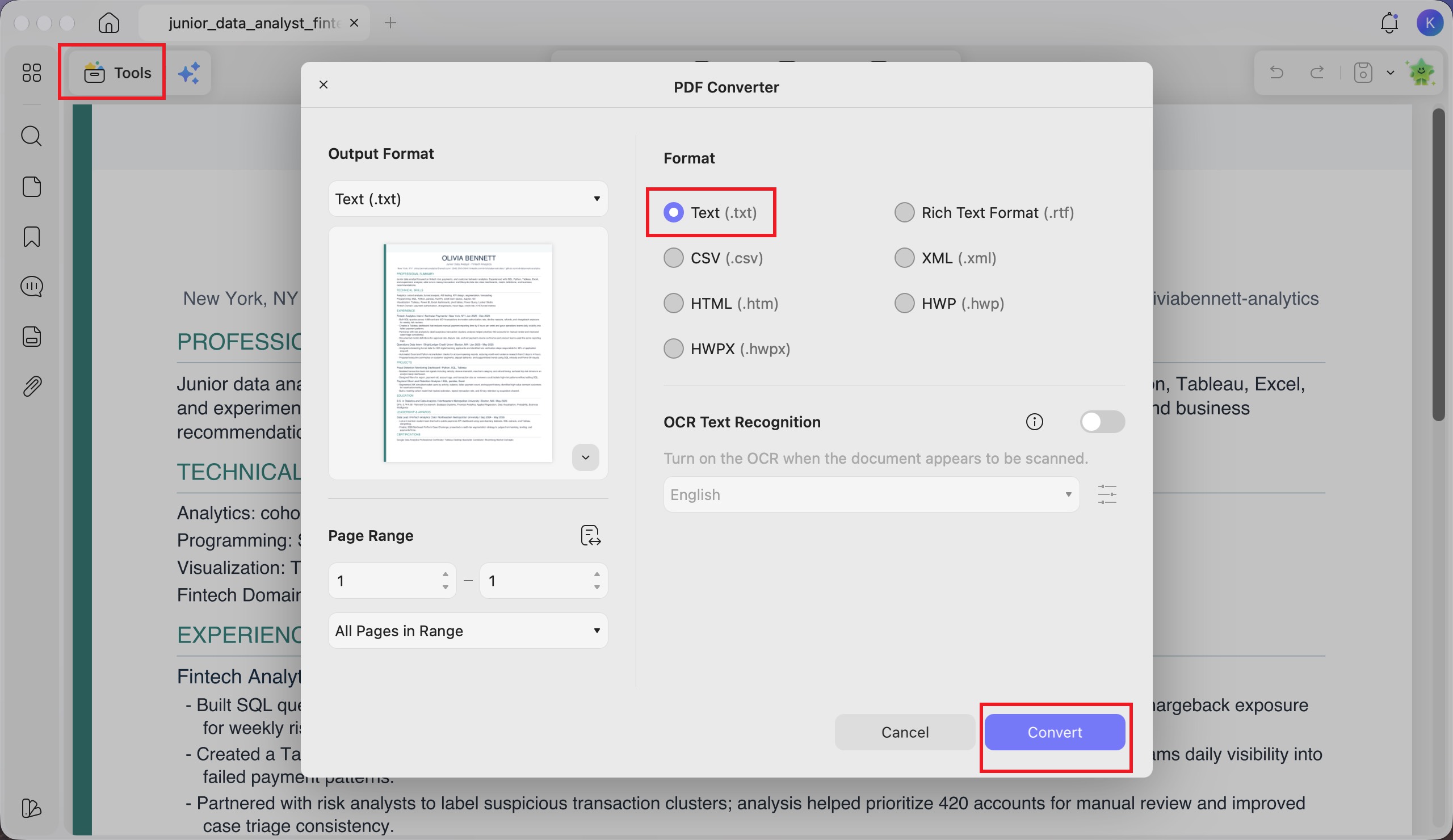
For one PDF containing several pages, use the page-range setting. For several separate PDFs, use UPDF’s batch conversion tool. Conversion extracts content from the files you add; it does not collect webpages from their URLs.
Method 4. Copy Text from a Screenshot with OCR
If the words are displayed as an image, use optical character recognition (OCR) to turn the visible text into a selection you can copy.
For a short passage, try your computer’s built-in tools:
Windows 11: Capture the passage with Snipping Tool, open Text actions, and copy the recognized text.
Mac: Open the screenshot in Preview. Where Live Text is supported, select the recognized words and choose Copy Text.
For a PDF-based workflow in UPDF:
- Use UPDF’s image-to-PDF creation option to turn the screenshot into a PDF.
- Open the PDF and select Tools > OCR. Install the OCR component if prompted.
- Choose Searchable PDF Only, set the document language and page range, and run OCR.
- Open the processed PDF, select the recognized text, and copy it.
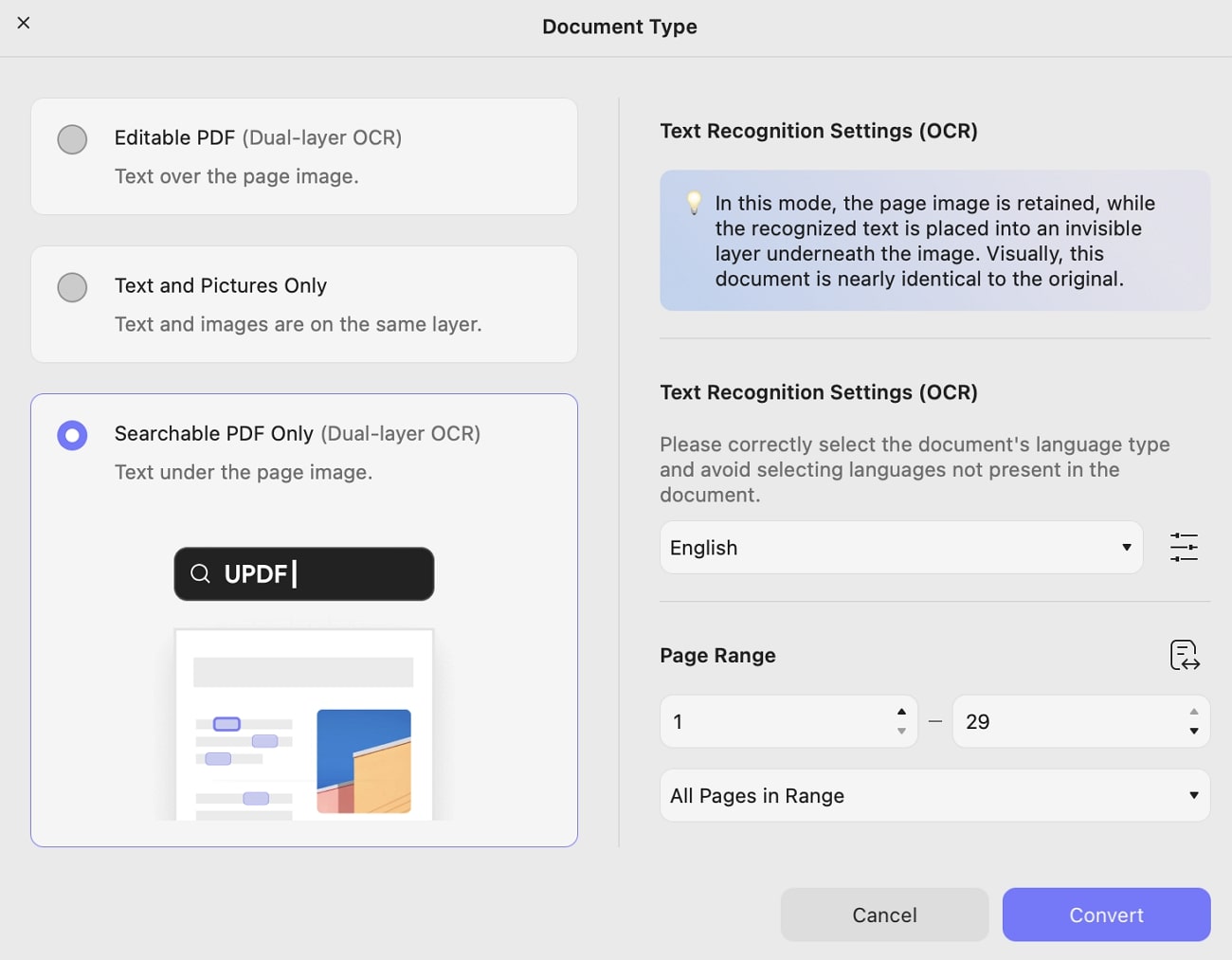
On Mac, UPDF OCR currently requires an Apple silicon Mac and the version downloaded from the UPDF website. It is not available on Intel Macs or in the Mac App Store version.
Windows • macOS • iOS • Android 100% secure
Proofread the result, especially names, numbers, punctuation, and text arranged in columns.
Method 5. Temporarily Disable JavaScript in Chrome
If a script interrupts selection or copying, temporarily disabling JavaScript may help. It will not remove CSS selection restrictions or recognize text inside images, and some pages may stop displaying their content.
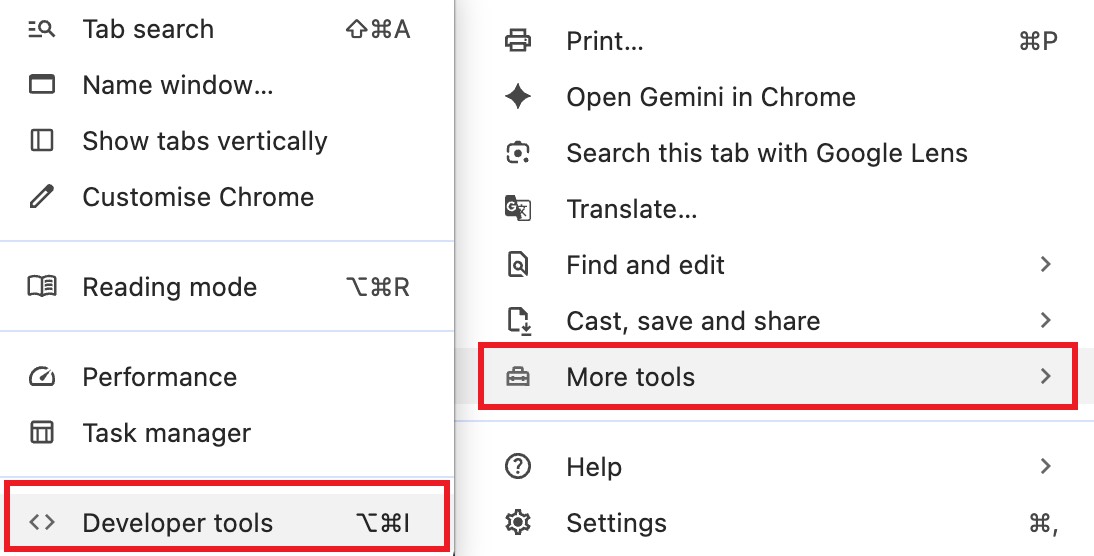
- Open Chrome’s three-dot menu and choose More tools > Developer tools.
- With DevTools open, press Ctrl+Shift+P on Windows or Command+Shift+P on Mac.
- Type Disable JavaScript, select the command, and press Enter.
- Reload the page and try copying the visible text.
- When finished, run Enable JavaScript from the same command menu, close DevTools, and reload the page.

Chrome applies this temporary setting to the tab while DevTools remains open. If reloading removes the content you need, restore JavaScript and try another method.
Method 6. Try a Copy-Enabling Browser Extension
If you frequently encounter blocked selection or right-click menus, a copy-enabling extension may help. The extension linked here is listed as Allow Copy - Select & Enable Right Click in the Chrome Web Store.
Install it from its official store listing, review the requested permissions, and follow its controls to enable copying on the page. Limit site access where Chrome and the extension allow it.
Results depend on how the website implements its restrictions. An extension cannot turn image-only text into selectable text or retrieve content that has not loaded. If it does not help, try reading mode, PDF extraction, or screenshot OCR.
Part 3. Frequently Asked Questions
1. How can I paste copied text without the webpage’s formatting?
Use the destination app’s Paste as plain text or Paste and Match Style command, if available. Alternatively, paste into a plain-text editor first, then copy it into your document. Review paragraph breaks and lists afterward.
2. Will a TXT export preserve the webpage’s original layout?
A TXT file stores plain text rather than the original page design. Keep the saved PDF alongside the TXT file if you need a visual reference. Check the reading order after export, particularly for columns and tables.
Conclusion
Start with a keyboard shortcut or reading mode when you only need a short passage. Save as PDF when you also want a reference copy, and use OCR when the words are part of an image.
UPDF is an option when you need PDF-to-text conversion or searchable PDFs from screenshots. Whichever method you use, compare the extracted text with the original and keep the source URL for reference.
Windows • macOS • iOS • Android 100% secure






 Enya Moore

 Enid Brown

 Enola Davis
 Enrica Taylor
