 UPDF
 UPDF for Windows
 UPDF for Mac
 UPDF for iPhone/iPad
 UPDF for Android
 Nomostar
 UPDF AI Online
 UPDF Sign
 IvyCraft
 Edit PDF
 Annotate PDF
 Create PDF
 PDF Form
 Edit links
 Convert PDF
 OCR
 PDF to Word
 PDF to Image
 PDF to Excel
 Organize PDF
 Merge PDF
 Split PDF
 Crop PDF
 Rotate PDF
 Protect PDF
 Sign PDF
 Redact PDF
 Sanitize PDF
 Remove Security
 Read PDF
 UPDF Cloud
 Compress PDF
 Print PDF
 Batch Process

 About UPDF AI
 UPDF AI Solutions
 AI User Guide
 FAQ about UPDF AI
 Summarize PDF
 Translate PDF
 Chat with PDF
 Chat with AI
 Chat with image
 PDF to Mind Map
 Explain PDF
 PDF AI Tools
 Image AI Tools
 AI Chat Tools
 AI Writing Tools
 AI Study Tools
 AI Working Tools
 Other AI Tools
 AI Bookmark Generation
 AI Bookmark Summary
 AI Watermark Generation
 AI Background Generation
 AI Sticker Generation
 AI Stamp Generation
 AI Editing Suite
 UPDF Copilot
 AI Page Management
 AI Semantic Search
 PDF to Word
 PDF to Excel
 PDF to PowerPoint
 Enterprise Solution
 Enterprise Sign
 Enterprise AI
 Enterprise Plan
 Enterprise User Guide
 Enterprise Webinar
 IT
 Education
 Construction
 Financial Service
 Healthcare
 Insurance
 Legal
 Manufacturing
 Government
 Researchers & PhDs
 Solopreneurs & Freelancers
 Lawyers & Legal Professionals
 Real Estate Agents & Brokers
 Education Solution
 Customer Stories
 User Guide
 UPDF Tricks
 FAQs
 UPDF Reviews
 Download Center
 Blog
 Newsroom
 Tech Spec
 Updates
 UPDF vs. Adobe Acrobat
 UPDF vs. Foxit
 UPDF vs. PDF Expert


Quick Answer
Windows • macOS • iOS • Android 100% secure
The best PDF reader for Chromebook depends on the task—not the longest feature list. The table below helps you choose quickly, followed by current instructions and five practical options for ChromeOS.
| Your task | Best starting point | Why |
|---|---|---|
| Open, search, zoom, and print a PDF | ChromeOS Gallery / Chrome viewer | Built in and free |
| Highlight, add text, fill a form, or draw a signature | ChromeOS Gallery | Handles common markup without another app |
| Edit existing PDF text or images | UPDF for Android | More complete editing on compatible Chromebooks |
| Work in a browser on a managed Chromebook | Adobe Acrobat extension or Kami | No Android app required, subject to administrator policy |
| Edit online without installing an app | Soda PDF Online | Browser-based workflow |
Part 1. Does Chromebook Have a Built-in PDF Reader?
Yes. ChromeOS can open PDFs from the Files app, while a PDF opened from a website normally appears in Chrome's built-in viewer. For a downloaded file, double-click it in Files to open it with Gallery. Google currently documents support for viewing, completing PDF forms, adding text annotations, highlighting, drawing a signature, rotating pages, and changing page order.
ChromeOS has improved considerably, so an older claim that its built-in viewer is strictly read-only is no longer accurate. It is sufficient for many everyday reading and school tasks.
| PDF task | Built-in support | Important limit |
|---|---|---|
| Read, search, zoom, navigate, print | Yes | Some complex or damaged PDFs may still fail to render correctly |
| Highlight and add text | Yes, in Gallery | Not the same as changing the PDF's original text |
| Fill an existing PDF form | Yes | Dynamic XFA or unusual forms may require another application |
| Draw and reuse a signature | Yes | This is a visual signature, not necessarily a certificate-based digital signature |
| Rotate and reorder pages | Yes | Advanced page operations remain limited |
| Edit existing text or images | No | Use a full PDF editor |
| Convert, compress, redact, or batch-process | Limited or unavailable | Use a dedicated app or online tool |
How to Open and Mark Up a PDF on Chromebook
- Open the Files app and locate the PDF in Downloads, Google Drive, or another folder.
- Double-click the PDF to open it in Gallery. A PDF link on a web page may open in Chrome instead.
- Use the side panel to navigate pages. Select the text, drawing, or signature controls when you need to mark up the file.
- Save a copy and reopen it before sending the document, especially if it contains form entries or annotations.
Do You Need Another PDF Reader?
If PDFs always open in the browser or download unexpectedly, see why PDFs open in Chrome and how to change the behavior.
Part 2. 5 Best PDF Readers for Chromebook
These options cover the four ways software can run on ChromeOS: a built-in app, an Android app, a Chrome extension, or a web application. Features and administrator policies can vary, so check your Chromebook before installing anything.
| Tool | Runs as | Offline | Best for | Main limitation |
|---|---|---|---|---|
| ChromeOS Gallery | Built-in app | Yes | Reading, forms, signatures, basic markup | Cannot edit existing PDF text or images |
| UPDF | Android app on supported Chromebooks | Yes for many PDF tasks | Editing, annotation, OCR, conversion, page work, AI | Requires Google Play support; some features require Pro or AI |
| Adobe Acrobat | Chrome extension / web services | Limited | Filling, signing, comments, Adobe workflows | Advanced tools may require an account or subscription |
| Kami | Web app / extension | Varies by workflow | Classroom annotation and collaboration | Advanced features depend on the plan and school setup |
| Soda PDF Online | Web app | No | Occasional browser-based editing | Requires uploading the document; limits vary by plan |
1. ChromeOS Gallery — Best Free Built-in Option
Best for
Gallery should be your first choice because it is already available and handles more than simple viewing. Its current PDF tools cover common student, personal, and administrative tasks without uploading the document to a third-party server.
Pros
- Included with ChromeOS and works with local files
- Supports highlights, text annotations, form filling, and drawn signatures
- Can rotate and reorder pages
- No additional account or subscription
Cons
- Does not truly edit existing PDF text or images
- No full conversion, redaction, compression, or batch workflow
- Compatibility can vary with complex forms and PDFs
Verdict: Use Gallery until a specific missing feature gives you a reason to install something else.
2. UPDF for Android — Best All-in-One Option on Compatible Chromebooks
Best for
UPDF does not offer a separate ChromeOS edition. Instead, compatible Chromebooks can run UPDF for Android. Before downloading, open Settings > Apps and look for Google Play preferences. If the option is missing—or your school or employer has disabled it—use Gallery, an approved extension, or a browser-based method instead.
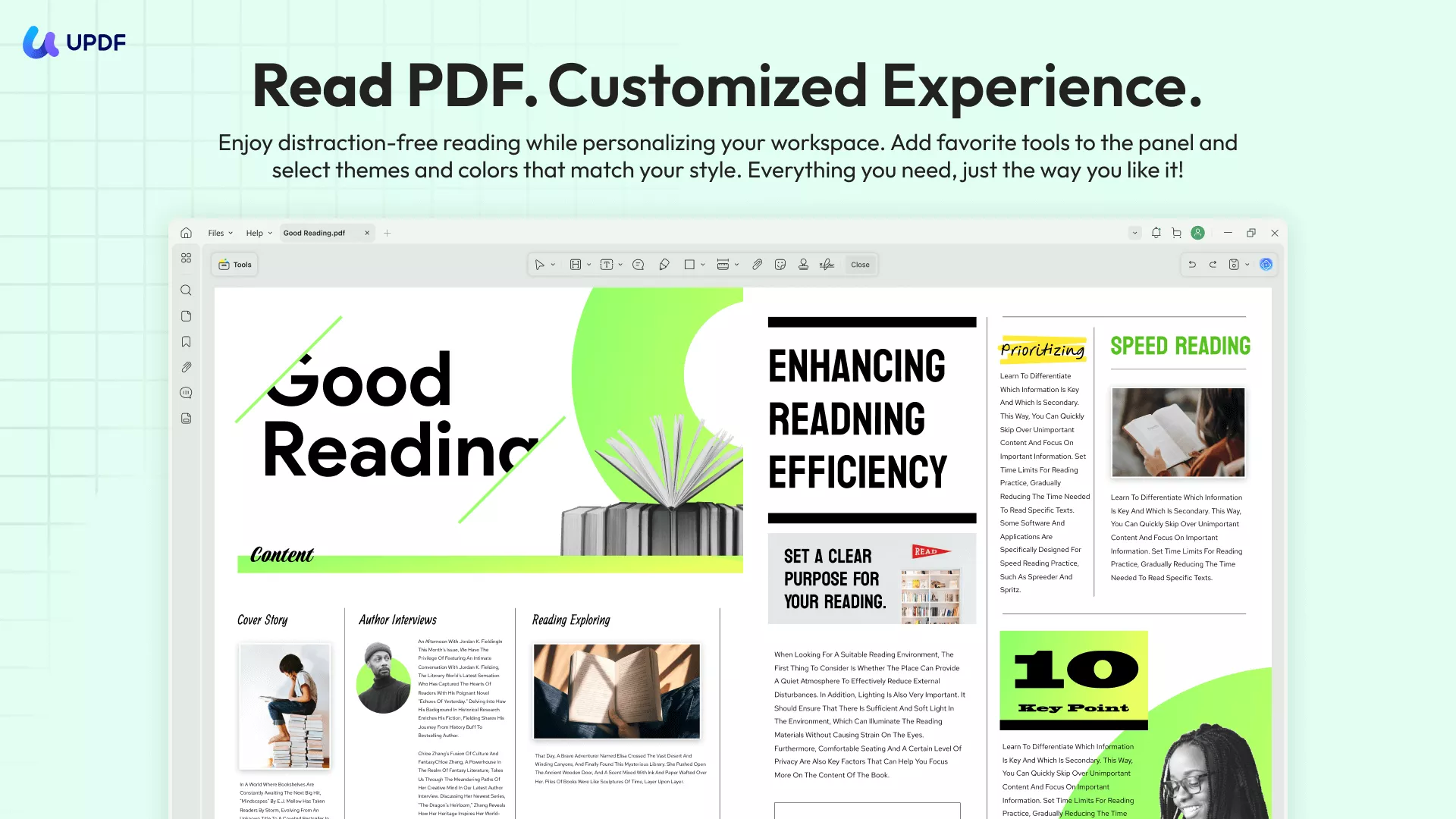
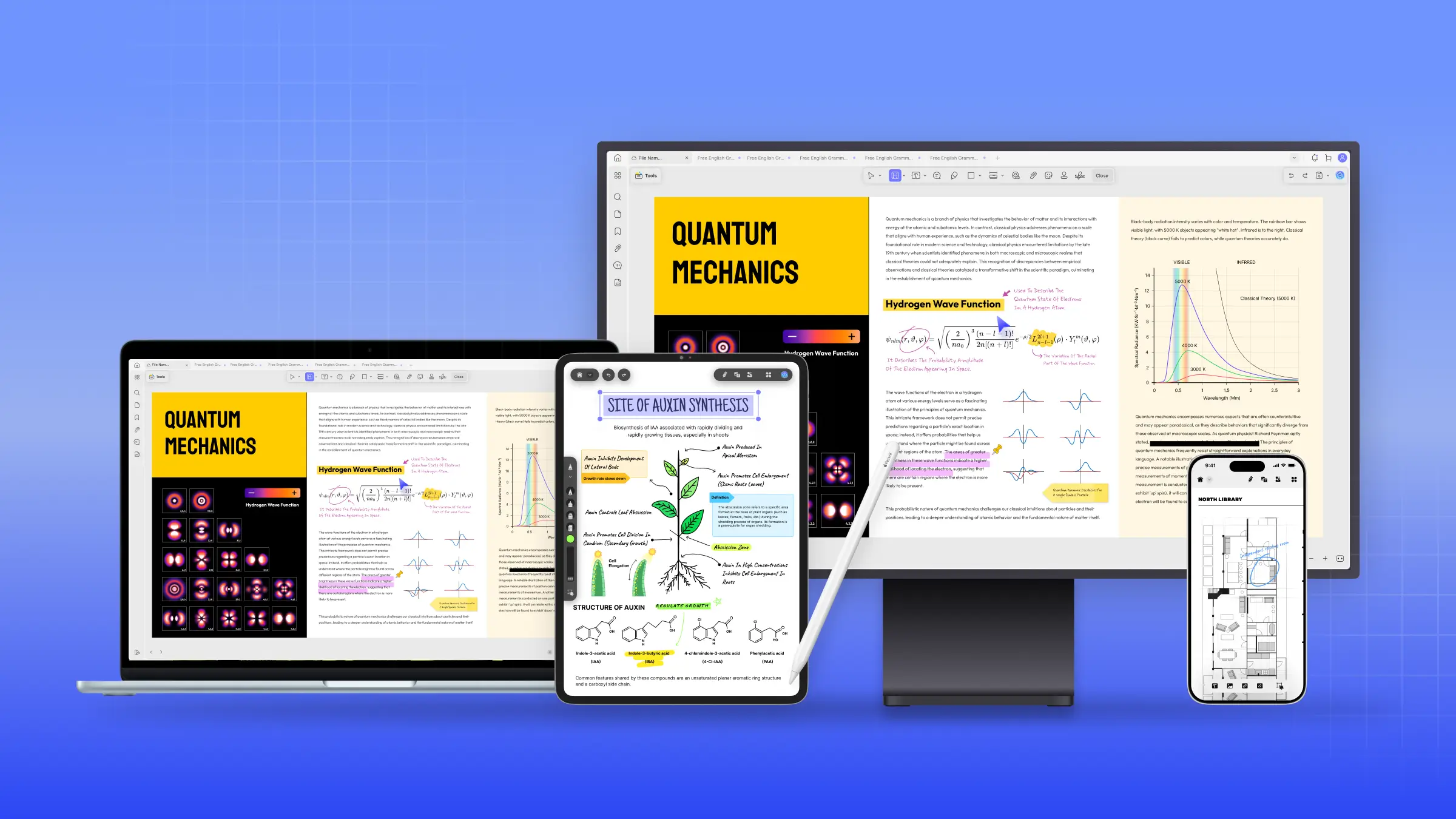
For a reader who has outgrown Gallery, the advantage is continuity: open and search a PDF, apply highlights, underlines, strikethrough, notes, shapes, stamps, and freehand marks, then move into editing, conversion, compression, OCR, or page organization without switching among several extensions. AI tools can summarize a long file, explain selected material, translate content, and answer document-based questions. For a broader look at the reading experience, see the UPDF PDF reader.
Pros
- Reads and annotates PDFs with a full markup toolkit
- Can edit original text and images rather than only adding text boxes
- Includes OCR, conversion, compression, page organization, and AI-assisted reading
- Works with local files and supports cross-device workflows
- The newest 3.0 version offers a scenario assistant for reading a research paper
Cons
- Not every Chromebook supports Android apps
- Managed school or work devices may block Google Play
If your device is compatible, download UPDF free and test it with a copy of your own PDF before committing to a paid plan.
Windows • macOS • iOS • Android 100% secure
For detailed instructions on changing original content, use the dedicated guide to editing a PDF on Chromebook.
3. Adobe Acrobat for Chrome — Best for Adobe Workflows
Best for
The official Adobe Acrobat Chrome extension is convenient on devices where Android apps are unavailable. According to its current Chrome Web Store listing, it can add text or drawings and fill and sign forms. More advanced editing, conversion, and account-connected services may require sign-in or a paid Acrobat plan.
Pros
- Works inside Chrome and supports local PDF access when permission is enabled
- Good fit for existing Adobe users
- Covers common form, signature, and comment tasks
Cons
- Requires installing an extension and granting file access
- Advanced functions may open web services or require a subscription
- School administrators may block extensions
Read the separate guide to Adobe Reader for Chromebook before choosing between Adobe's extension and an Android alternative.
4. Kami — Best for Classroom Annotation and Collaboration
Best for
Kami is designed around educational annotation rather than deep PDF production. It is most useful when a class already uses the service and the administrator has approved it. The exact tools, integrations, and offline behavior depend on the account and school plan, so confirm them before assigning a workflow to students.
Pros
- Strong focus on assignments, feedback, and classroom collaboration
- Browser-based access suits many Chromebook deployments
- Useful annotation and comment tools
Cons
- Not intended for full editing of original PDF content
- Advanced features and integrations vary by plan
- School account policies control availability
5. Soda PDF Online — Best for Occasional Browser Editing
Best for
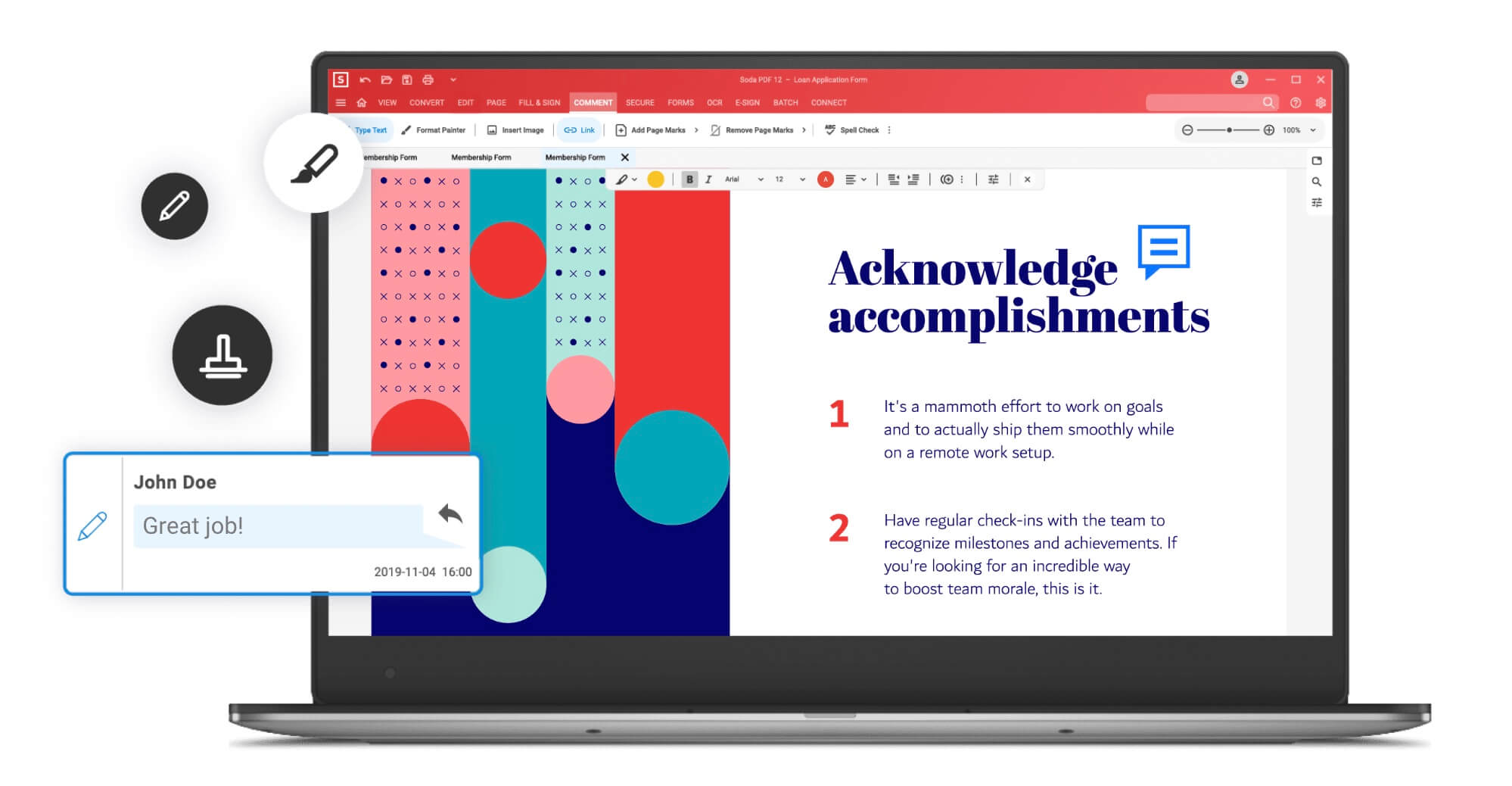
Soda PDF offers browser-based PDF tools, so it can work on ChromeOS without an Android app. This is convenient for one-off editing or conversion, but the document must be uploaded and free access is limited. Check the current plan and file restrictions at the time you use it.
Pros
- No local application required
- Offers multiple browser-based PDF tools
- Useful for occasional work across different devices
Cons
- Requires an internet connection and file upload
- Free use and output options may be limited
- Not the preferred choice for confidential or regulated documents
Part 3. How to Use UPDF on a Chromebook
Use this route only when the Chromebook supports Google Play and the account is permitted to install Android apps.
- Open Settings > Apps. If you see Google Play preferences, enable Google Play and accept Google's setup prompts. If the option is absent, the Chromebook is not compatible or an administrator has disabled it.
- Open Google Play, search for UPDF, confirm that the publisher and app listing are correct, and install it.
- Launch UPDF and open a copy of your PDF from local storage or an available cloud location.
- Choose the tool that matches the task: Reader or Comment for review, Edit for existing content, OCR for an image-only scan, Organize for page changes, or AI for document questions.
- Save the result and reopen it in Gallery or Chrome to confirm that text, form entries, annotations, and page order appear correctly.
Managed Chromebook?
Part 4. Which Chromebook PDF Reader Should You Choose?
- Choose Gallery for free offline reading, form filling, highlighting, basic text additions, signatures, and simple page changes.
- Choose UPDF when Google Play is available and you need editing, OCR, conversion, advanced page work, or AI in the same app.
- Choose Adobe Acrobat for Chrome when you already rely on Adobe services or cannot install Android apps.
- Choose Kami when classroom collaboration matters more than editing original PDF content.
- Choose Soda PDF Online for an occasional non-sensitive browser task when installation is not possible.
If you are still comparing apps across platforms, review the broader guide to the best free PDF readers. If your main need is changing original content in Chrome, compare the options in the Chrome PDF editor guide.
For compatible Chromebooks, UPDF is worth trying when Gallery has become too limited. Download it free, test it with a duplicate file, and visit the UPDF pricing page only if the advanced workflow fits your needs.
Windows • macOS • iOS • Android 100% secure
FAQs About PDF Readers for Chromebook
1. Does Chromebook Have a Free PDF Reader?
Yes. ChromeOS includes PDF viewing through Chrome and the Gallery app. Gallery can also highlight text, add text annotations, fill supported forms, draw signatures, and perform basic page operations, so many users do not need another reader.
2. What Is the Best PDF Reader for Chromebook?
ChromeOS Gallery is the best starting point for ordinary reading and markup because it is built in and free. On a Chromebook that supports Google Play, UPDF for Android is a stronger choice when you need editing, OCR, conversion, advanced page management, or AI tools.
3. Can I Edit a PDF on a Chromebook?
Yes, but editing can mean different things. Gallery can add text, highlights, drawings, signatures, and form entries. To change existing PDF text or images, use a compatible Android PDF editor such as UPDF or a suitable web application.
4. Can Every Chromebook Install Android PDF Apps?
No. Google Play is available only on supported Chromebooks, and a school or employer may disable it. Check Settings > Apps for Google Play preferences. If the option is absent, use Gallery or an administrator-approved browser tool.
5. Can I Read PDFs Offline on Chromebook?
Yes. A PDF stored locally can be opened offline in Gallery. Compatible Android apps can also handle many local PDF tasks offline, although AI and cloud features generally require an internet connection.
Final Words
You may not need to download a PDF reader for Chromebook at all. Start with Gallery for everyday reading, forms, highlighting, signatures, and simple page changes. If you reach a genuine limitation, choose the least complicated option that solves it. On Google Play-compatible Chromebooks, UPDF for Android provides the broadest workflow in this comparison, while extensions and online tools remain useful when app installation is unavailable.





 Enola Miller
 Enid Brown