 UPDF
UPDF
 UPDF for Windows
 UPDF for Mac
 UPDF for iPhone/iPad
 UPDF for Android
 Nomostar
 UPDF AI Online
 UPDF Sign
 IvyCraft
 Edit PDF
 Annotate PDF
 Create PDF
 PDF Form
 Edit links
 Convert PDF
 OCR
OCR PDF to Word
 PDF to Image
 PDF to Excel
 Organize PDF
 Merge PDF
 Split PDF
 Crop PDF
 Rotate PDF
 Protect PDF
 Sign PDF
 Redact PDF
 Sanitize PDF
 Remove Security
 Read PDF
 UPDF Cloud
 Compress PDF
 Print PDF
 Batch Process
 About UPDF AI
 UPDF AI Solutions
 AI User Guide
 FAQ about UPDF AI
 Summarize PDF
 Translate PDF
 Chat with PDF
 Chat with AI
 Chat with image
 PDF to Mind Map
 Explain PDF
 PDF AI Tools
 Image AI Tools
 AI Chat Tools
 AI Writing Tools
 AI Study Tools
 AI Working Tools
 Other AI Tools
 AI Bookmark Generation
 AI Bookmark Summary
 AI Watermark Generation
 AI Background Generation
 AI Sticker Generation
 AI Stamp Generation
 AI Editing Suite
 UPDF Copilot
 AI Page Management
 AI Semantic Search
 PDF to Word
 PDF to Excel
 PDF to PowerPoint
 Enterprise Solution
 Enterprise Sign
 Enterprise AI
 Enterprise Plan
 Enterprise User Guide
 Enterprise Webinar
 IT
IT Education
 Construction
 Financial Service
 Healthcare
 Insurance
 Legal
Legal Manufacturing
 Government
 Researchers & PhDs
 Solopreneurs & Freelancers
 Lawyers & Legal Professionals
 Real Estate Agents & Brokers
 Education Solution
 Customer Stories
 User Guide
 UPDF Tricks
 FAQs
FAQs UPDF Reviews
 Download Center
 Blog
Blog Newsroom
 Tech Spec
 Updates
 UPDF vs. Adobe Acrobat
 UPDF vs. Foxit
 UPDF vs. PDF Expert

In 2026, global supply chains are facing a turning point. The EU's phased DPP rollout has moved to enforcement. Active deadlines are in place, and sector-specific deadlines are coming in 2027.
But what exactly is a Digital Product Passport (DPP)? In short, it is a product's digital record that stores information about its origin, materials, and environmental impact.
To help you stay compliant with DPP rules, this article outlines important compliance deadlines in 2026 and beyond.
Also, every passport requires a system of technical files and supplier documents to support it. UPDF helps you manage this workflow easily with its complete set of AI-driven PDF tools. You can download it now to explore its features for free.
Windows • macOS • iOS • Android 100% secure
Part 1. Are EU Digital Product Passports Mandatory for 2026?
Yes. Under the EU's Ecodesign for Sustainable Products Regulation (ESPR), DPPs are legally required for priority product categories. These include industrial batteries and EV batteries, which must comply by February 2027, followed by textiles, iron, and steel by mid-2027. Meanwhile, full market coverage expands through 2030.
As the first deadlines are now less than one year away, 2026 is the most important operating year for businesses.
The 2025-2026Transition Window
The main Digital Product Passport news in November 2025 was the European Commission's approval of the format for permanent magnet labeling. They also completed important technical standards for product data carriers that can be used to connect a physical product to its digital passport.
Based on this, the DPPs will be linked to products through an NFC chip, QR code, or RFID tag. These must be connected to a cloud-based passport that follows ISO/IEC 15459 standards for global traceability.
As for the Digital Product Passport news in 2026, the EU is expected to launch the central DPP registry on July 19, 2026. This will mark the operational start of the system and a major shift in how products are documented and traded in Europe.
Why 2026 Is the Point of No Return
Many analysts estimate that companies need 12 to 18 months to build the required data systems, supplier workflows, and compliance processes. Therefore, businesses that wait until mid-2026 may struggle to meet the February 2027 battery deadline for EU Digital Product Passports.
This can result in serious consequences such as blocked shipments, fines, and rejection by European retailers or distributors. As a result, 2026 is a crucial year for businesses to comply with DPP standards.
Part 2. Digital Passports in the USA: The Fragmented Landscape
Unlike the EU's unified approach, in the U.S., product tracking rules depend on the industry, are spread across different agencies, and are often voluntary instead of mandatory.
Is There a Digital Passport in the USA?
No, there is no national Digital Product Passport system in the United States. However, the country is building similar tools through industry-specific regulations and voluntary business programs. Some of these are discussed below.
FDA FSMA 204:
In the food sector, the closest U.S. equivalent is FSMA 204. This rule requires suppliers handling high-risk foods to keep electronic and sortable traceability records. They must also provide those records to the FDA within 24 hours when requested.
However, the enforcement deadline was moved from January 20, 2026, to July 20, 2028, after Congress directed the FDA to delay the deadline. Even so, the rule itself has not changed. The delay was granted because coordination across the entire industry across thousands of businesses could not realistically be completed under the original timeline.
Battery Passports:
The EPA is also developing voluntary battery labeling guidelines for small, medium, and large batteries. At the same time, the Global Battery Alliance is running 2026 operational tests for its Battery Passport program with major manufacturers. The program is planned to begin officially in 2027 as a global system for sustainability reporting and certification.
Part 3. Operationalizing Compliance with UPDF Enterprise
To comply with the EU Digital Product Passports, manufacturers must manage thousands of PDFs, such as technical manuals, supplier certificates, and audit reports. However, handling such a huge volume of documents manually can significantly reduce your team's productivity.
UPDF Enterprise offers the perfect solution to this problem. It is an AI-driven PDF editor with a comprehensive set of enterprise-grade PDF tools to handle high-stakes document workflows such as those needed for DPP compliance.
Moreover, with its latest release of UPDF 2.5, it now includes ten autonomous AI Agents to help you automate the most time-consuming parts of technical document processing.
Let's see how these can help you.
Use AI Agents to Extract Important Data
Supplier dossiers for DPP compliance commonly include over 300 pages. Manually searching through these files for details such as material percentages, chemical compositions, or recyclability scores increases the risk of mistakes and takes a lot of time.
Windows • macOS • iOS • Android 100% secure
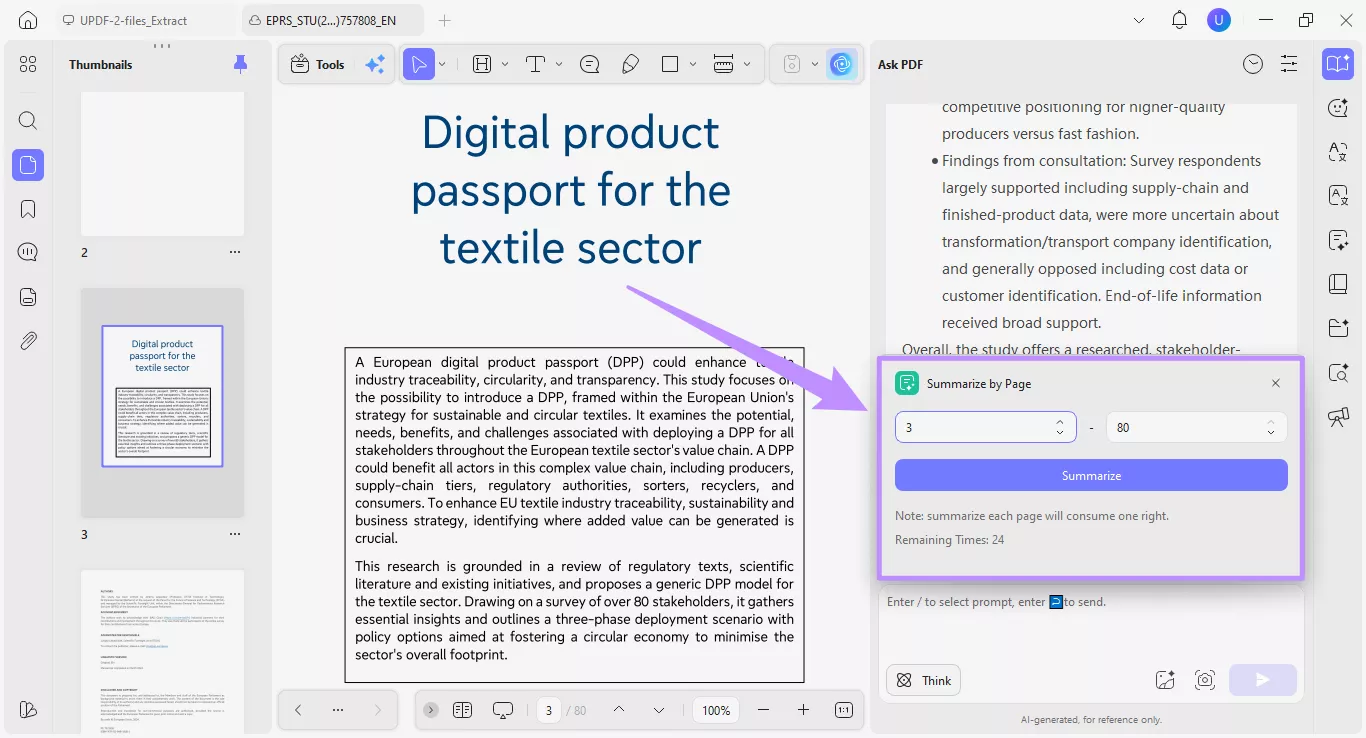
- Summarize PDF: UPDF AI helps you quickly summarize the entire document or specific pages into scannable points. So, you can get a complete picture of the PDF without reading through all the pages.
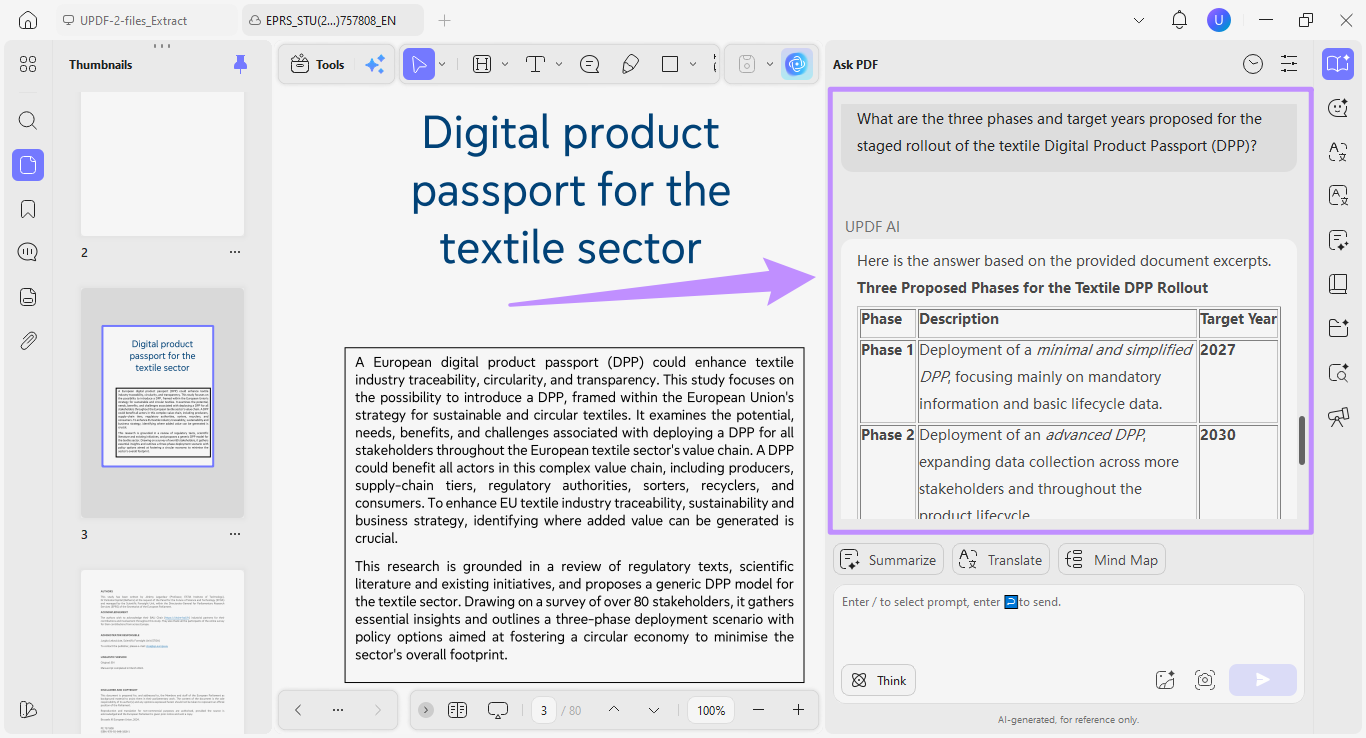
- Extract Key Data Points: You can also accurately extract the exact data that regulators need. Simply enter a prompt in the text box, and UPDF AI will provide the exact answers sourced directly from the document.
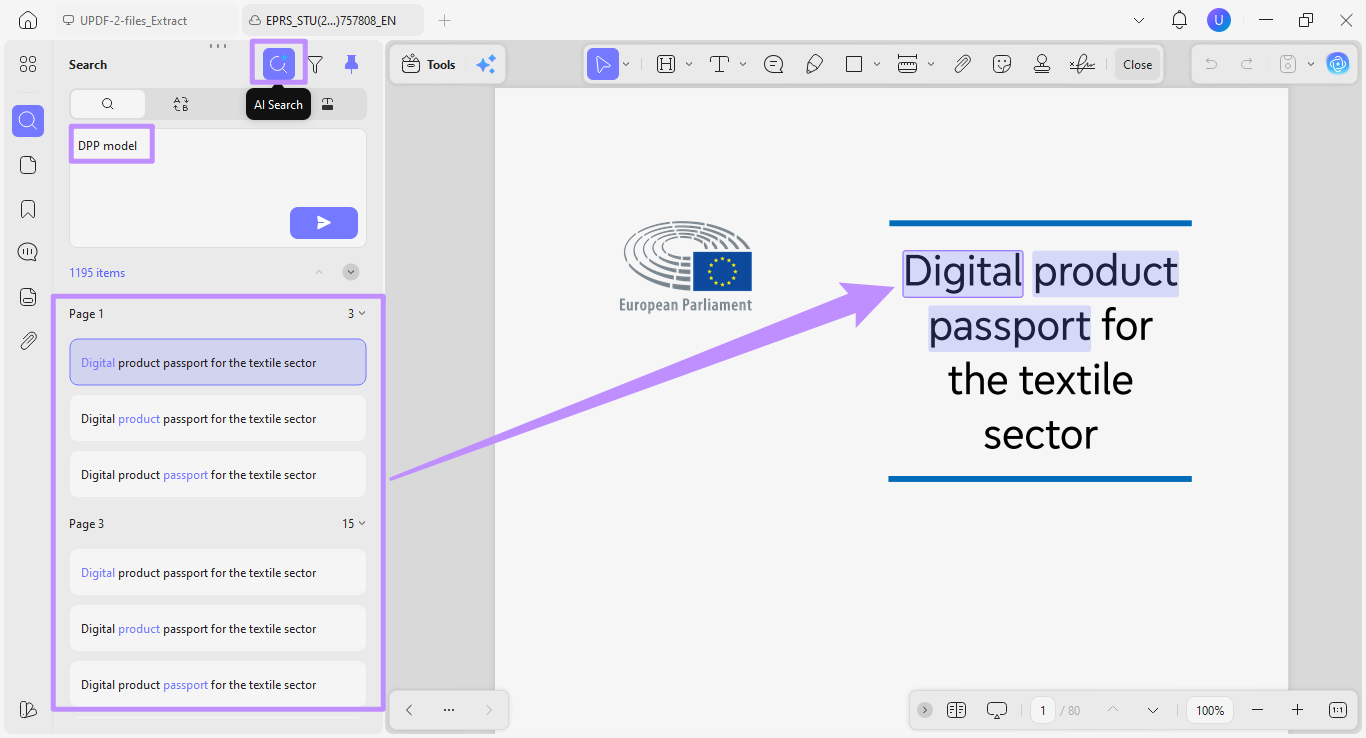
- Search Specific Words or Phrases: You can also use AI Semantic Search to find all instances of certain words and their contextual matches in the PDF.
Redact IP While Staying Transparent
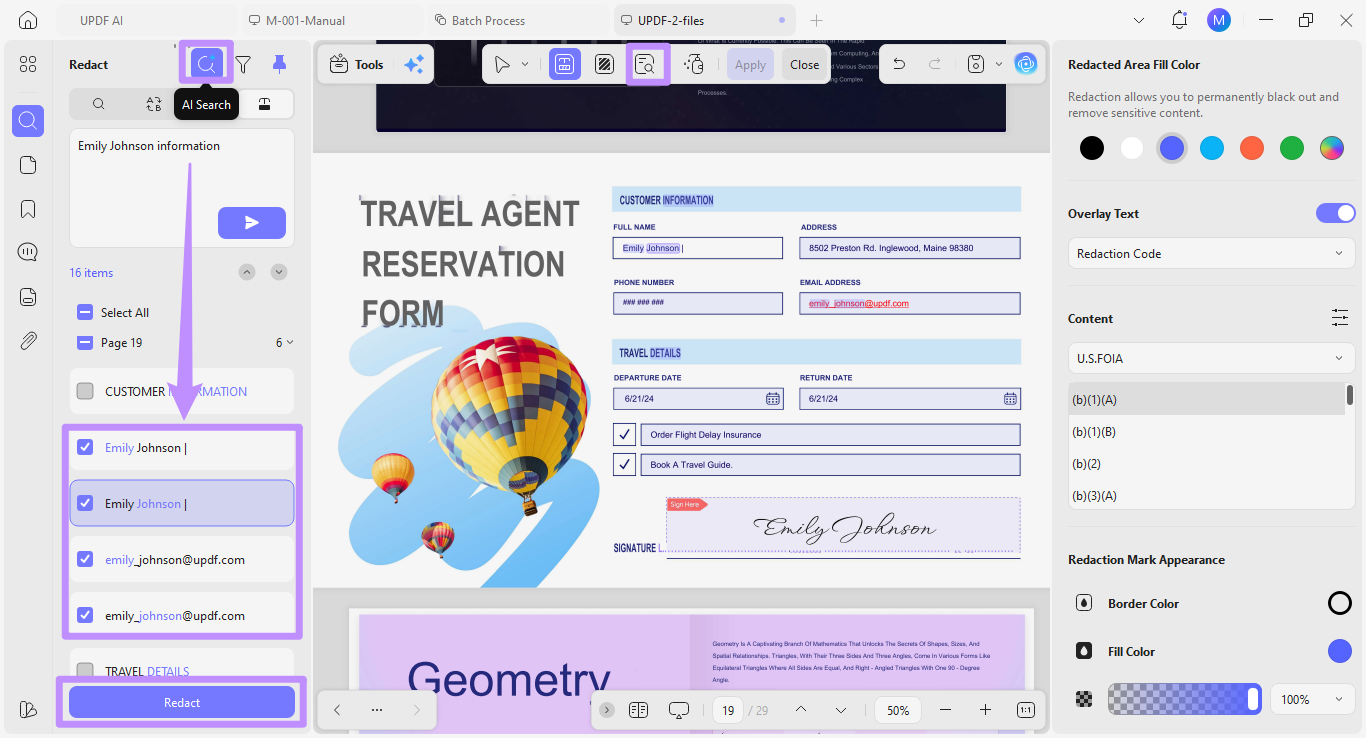
A repair manual that is shared through a public QR code can contain confidential information intended only for internal use. UPDF’s Redaction tool allows teams to permanently remove sensitive intellectual property from a file before it goes public.
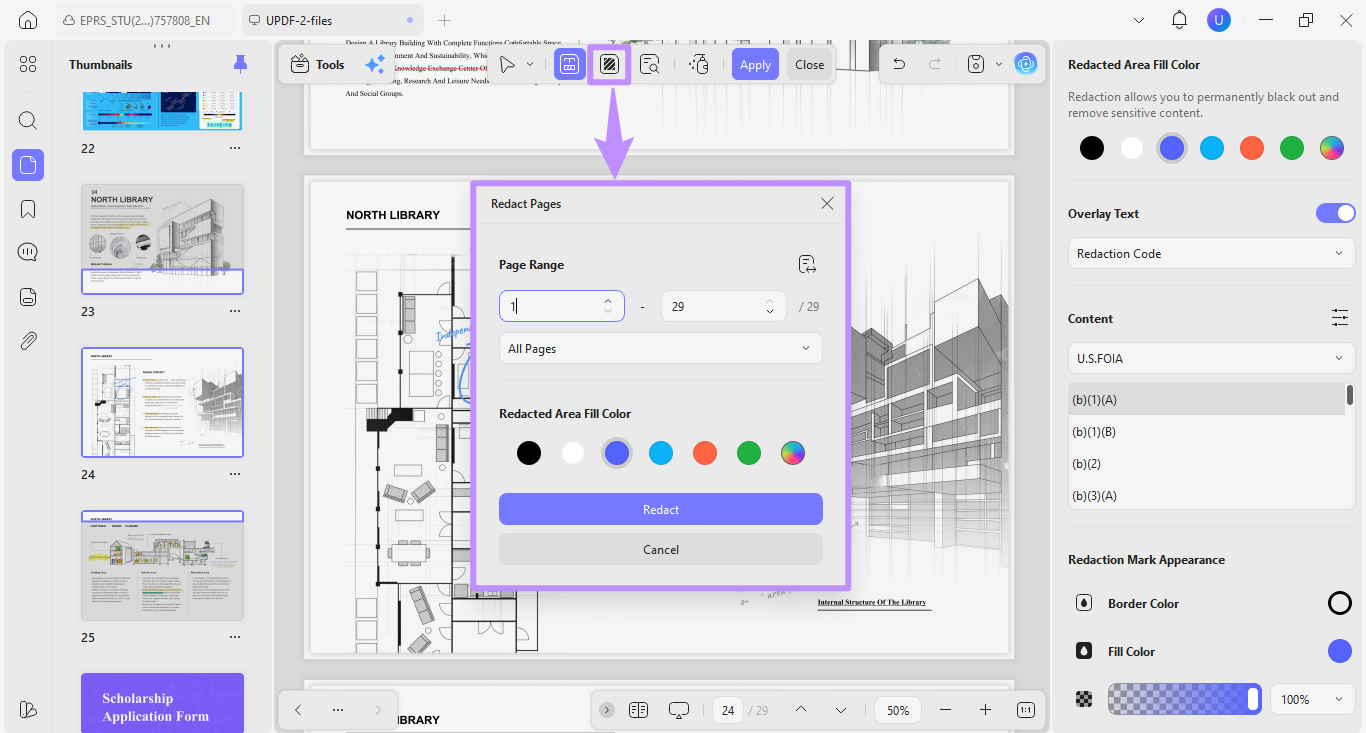
That said, you can redact a PDF in three ways.
- Redact: select text, images, or any areas to mark for redaction.

- Redact Pages: Select a page range to automatically redact entire pages.
- Search & Redact: Find and redact all instances of exact-match keywords or semantic synonyms in the document at once.
Admin Console for Enterprise Teams
In large organizations, IT managers need to handle compliance across multiple departments. Unlike Adobe Acrobat’s hefty subscription model, UPDF Enterprise offers a centralized Admin Console to reassign licenses instantly as team members are added, removed, or moved between departments. This type of flexibility can help you save up to 40% in software cost compared to Acrobat.
To learn how UPDF can fit into broader compliance workflows, you can check our detailed guide on How UPDF Powers Pro-Workflows for Compliance Teams.
You can also watch our video on how UPDF Enterprise can help you simplify complex document management for a visual guide.
Part 4. Brands Leading the Way: Case Studies in 2026
Famous brands across various industries are already adopting the DPPs and setting an example for other businesses to follow. Below is a list of who is ahead and what the business case actually looks like.
1. Fashion & Luxury:
Tod’s has added a Digital Product Passport to its Di Bag using an NFC tag. It allows customers to tap their phone to see verified information about the bag, such as its authenticity, country of origin, and production history. Mugler uses a similar system for its Spiral Curve bags. Each of their bag includes a QR code linked to a blockchain-based digital passport.
2. Industrial and Electronics:
Many brands dealing with batteries and electronics are using DPPs to track and verify environmental data across complex supply chains. This includes carbon emissions from each stage of production, the use of recycled materials, and where each component comes from.
The ROI of Transparency for Brands:
Most of these brands are using DPPs as ongoing communication tools tied directly to each product. So, instead of a one-time label, the passport becomes a permanent digital connection between the brand and the customer after purchase.
When used effectively, this kind of transparency can improve customer trust and increase long-term value for the brand. For a closer look at how this works, you can read our 2026 PDF Efficiency Report.
FAQs
Q1. How do I choose between QR codes or RFID for my DPP?
If you need a low-cost solution, you can choose QR codes as they work with most smartphones and camera apps. Meanwhile, RFID or NFC is great if you need faster scanning without line of sight, longer reading distance, or automated scanning in industrial settings.
Q2. Can I manage DPP documentation across my entire team?
Yes. UPDF Enterprise allows you to manage your entire team from one Admin Console. From the dashboard, you can assign licenses to new members, deactivate departing employees, and reassign freed-up licenses to other users, all without contacting support.
Q3. What is the penalty for non-compliance in 2027?
Under ESPR, each EU Member State can set its own penalties that must be effective and strong enough to discourage non-compliance. This can mean seizure of products, and blocking from government contracts and selling in the EU.
Conclusion
To sum up, the Digital Product Passport is an immediate concern for businesses that want to sell in the EU market. However, as each passport comes with an extensive documentation burden, you need a tool to make it effective.
UPDF makes things easier by offering a single platform to extract, redact, and manage the thousands of technical PDFs. Its Admin Console also keeps license management simple as your team evolves. So get started today. Download UPDF for a smoother DPP compliance workflow.
Windows • macOS • iOS • Android 100% secure









 Enola Miller
 Lizzy Lozano
 Enya Moore
 Enola Davis