 UPDF
UPDF
 UPDF for Windows
 UPDF for Mac
 UPDF for iPhone/iPad
 UPDF for Android
 UPDF AI Online
 UPDF Sign
 Edit PDF
 Annotate PDF
 Create PDF
 PDF Form
 Edit links
 Convert PDF
 OCR
OCR PDF to Word
 PDF to Image
 PDF to Excel
 Organize PDF
 Merge PDF
 Split PDF
 Crop PDF
 Rotate PDF
 Protect PDF
 Sign PDF
 Redact PDF
 Sanitize PDF
 Remove Security
 Read PDF
 UPDF Cloud
 Compress PDF
 Print PDF
 Batch Process
 About UPDF AI
 UPDF AI Solutions
 AI User Guide
 FAQ about UPDF AI
 Summarize PDF
 Translate PDF
 Chat with PDF
 Chat with AI
 Chat with image
 PDF to Mind Map
 Explain PDF
 PDF AI Tools
 Image AI Tools
 AI Chat Tools
 AI Writing Tools
 AI Study Tools
 AI Working Tools
 Other AI Tools
 PDF to Word
 PDF to Excel
 PDF to PowerPoint
 Enterprise Solution
 Enterprise Sign
 Enterprise AI
 Enterprise Plan
 Enterprise User Guide
 Enterprise Webinar
 Banking
 Healthcare
 Insurance
 Legal
Legal Manufacturing
 Government
 Education Solution
 Customer Stories
 User Guide
 UPDF Tricks
 FAQs
FAQs UPDF Reviews
 Download Center
 Blog
Blog Newsroom
 Tech Spec
 Updates
 UPDF vs. Adobe Acrobat
 UPDF vs. Foxit
 UPDF vs. PDF Expert

The NSF GRFP offers $37,000 a year plus a $16,000 education allowance, making it a great source of independent funding.
However, the 2026 cycle has many last-minute changes. Funding is lower than before, and competition is tougher than ever. To win, your personal and research statements must be clear, compelling, and well-formatted. Even small mistakes can cost you the fellowship.
To help you out, this guide explains how the NSF GRFP 2026 works and how you can prepare strong statements.
But first, make sure to download and install UPDF. Its AI tools can help you study winning statement examples and give you an edge over other applicants. Plus, you can get started for free!
Windows • macOS • iOS • Android 100% secure
Part 1. The NSF GRFP 2026 Calendar and Eligibility
For the 2026 award cycle, the NSF GRFP has introduced some major changes to both deadlines and eligibility criteria. Below, I've listed the latest information about these.
Updated Application Deadlines
For years, NSF GRFP has kept the application deadlines in the month of October. While many students were waiting for the official announcements, NSF made last-minute changes and moved the deadlines to November 2025, only a month before the expected dates. With these updates, the official deadlines for each field of study fell into the following dates:
- November 10, 2025: Life Sciences
- November 12, 2025: Computer and Information Science and Engineering; Psychology; Materials Research; Social, Economic, and Behavioral Sciences; STEM Education and Learning
- November 13, 2025: Engineering
- November 14, 2025: Geosciences; Chemistry; Physics, Astronomy, and Mathematical Sciences
The One-Time Application Rule
If you're a student looking to apply for the next cycle of GRFP, you must get familiar with the one-time application rule. According to this, you can submit only one application if you're a graduate student in your first year of graduate study. Similarly, NSF considers students in joint bachelor's-master's programs as graduate students. As a result, they can also apply only once for a GRFP application.
In contrast, undergraduate seniors and bachelor's degree holders who have never enrolled in a graduate program can apply multiple times. However, this flexibility ends once your graduate enrollment starts.
Eligibility Level Categories
NSF GRFP 2026 also categorizes students into four eligibility levels, based on their academic status. This has also undergone some significant changes in 2025. Now, only the following group of students can apply for GRFP.
- Undergraduate seniors in their final year
- Bachelor's degree holders with no graduate enrollment
- Students in joint bachelor's-master's programs who have completed three undergraduate years
- First-year graduate students in their first graduate program with less than one academic year completed. Unlike previous criteria, students in their second graduate year are no longer eligible for GRFP.
Part 2. Deconstructing the "Personal, Relevant Background, and Future Goals" Statement
The Personal, Relevant Background, and Future Goals Statement is a PDF you need to create to address the NSF GRFP 2026 merit review criteria. This includes the Intellectual Merit and Broader Impacts. This is your opportunity to showcase why you deserve the fellowship. But it can be quite challenging.
The Challenge of Preparing a 3-Page Narrative
The statement must consist of 3 pages with clear headings for Intellectual Merit and Broader Impacts. At the same time, you must address both criteria with a single personal story.
According to NSF, the goal of the statement is to find future STEM leaders, not only strong researchers. Therefore, make sure that it shows your leadership and collaboration skills alongside academic excellence. But avoid monotony. Use personal anecdotes that give your statement a personality and humanize it. Moreover, use one consistent theme to connect your background, research interests, and career goals.
How UPDF AI Can Help?
It requires a lot of precision to write a convincing statement that pushes NSF to believe you deserve the fellowship. UPDF AI can help you simplify this complex process.
It allows you to upload successful statement examples to its AI assistant. Then, you can ask it to analyze important patterns that can help you improve your own application. Moreover, UPDF AI can adjust your writing's tone and verify that it aligns perfectly with the NSF's criteria.
Let's see how to prepare your personal statement for NSF GRFP 2026.
Step 1. Analyze Successful Samples:
Download a successful NSF GRFP personal statement sample from Alex Lang's list. Then install and launch UPDF and click "Open File" to import the sample.
Windows • macOS • iOS • Android 100% secure
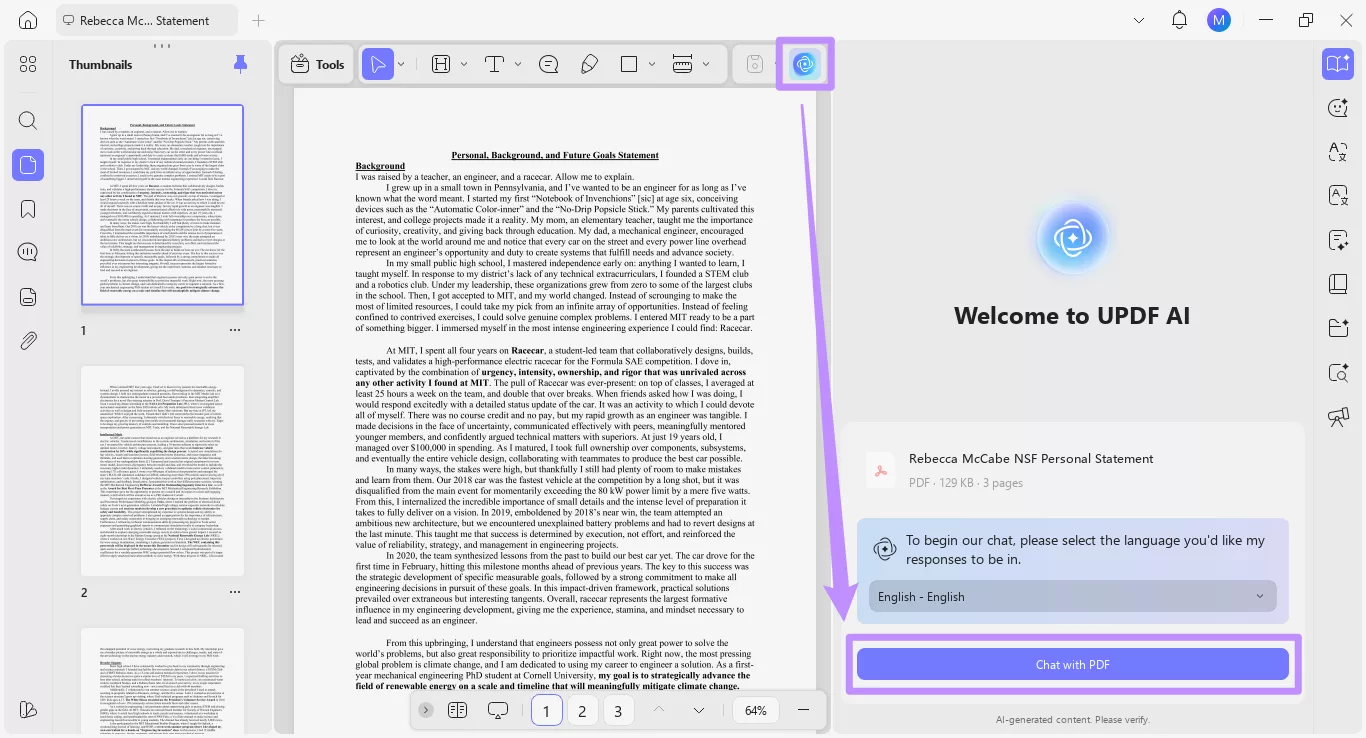
Click the "UPDF AI" icon on the top right and then click the "Chat with PDF" button. This will send the sample PDF to UPDF AI.
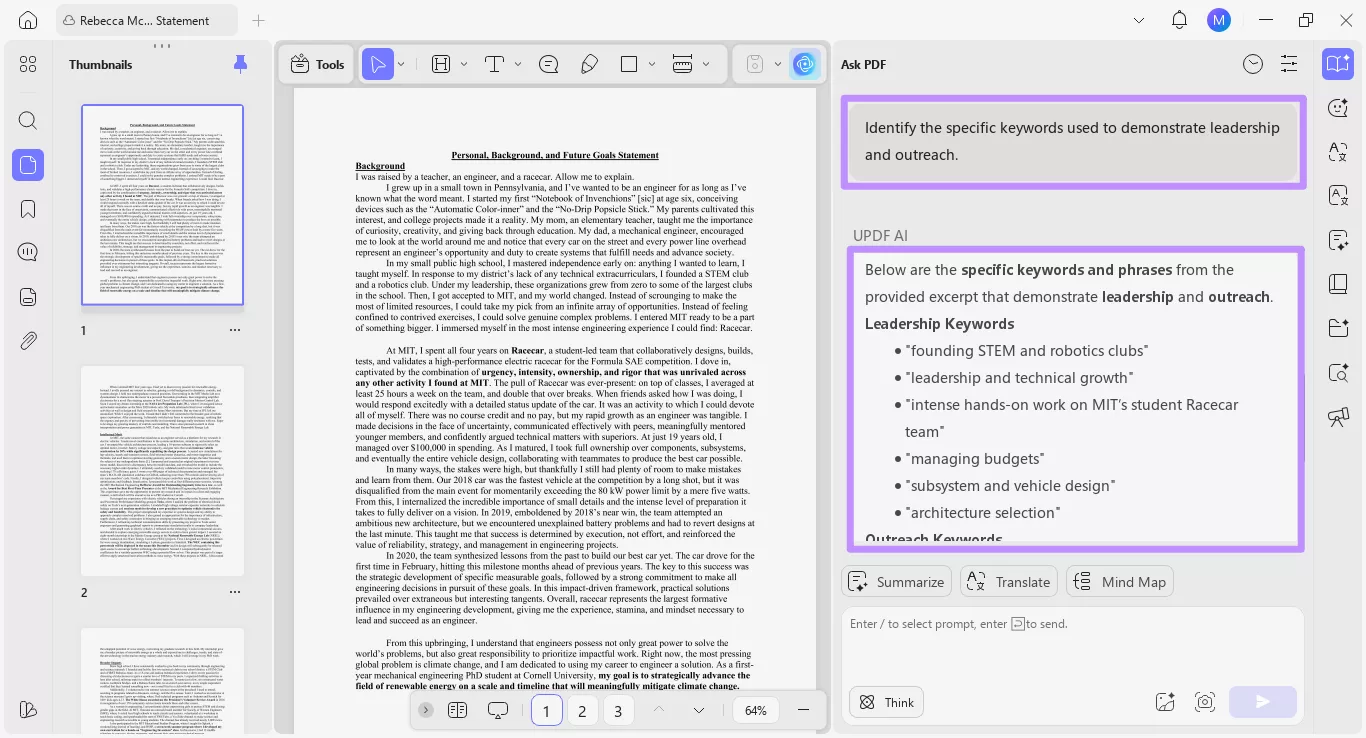
Ask any questions about the PDF, such as "Identify the specific keywords used to demonstrate leadership and outreach." UPDF AI will analyze the document and provide a detailed explanation.
Step 2. Adjust Tone and Language:
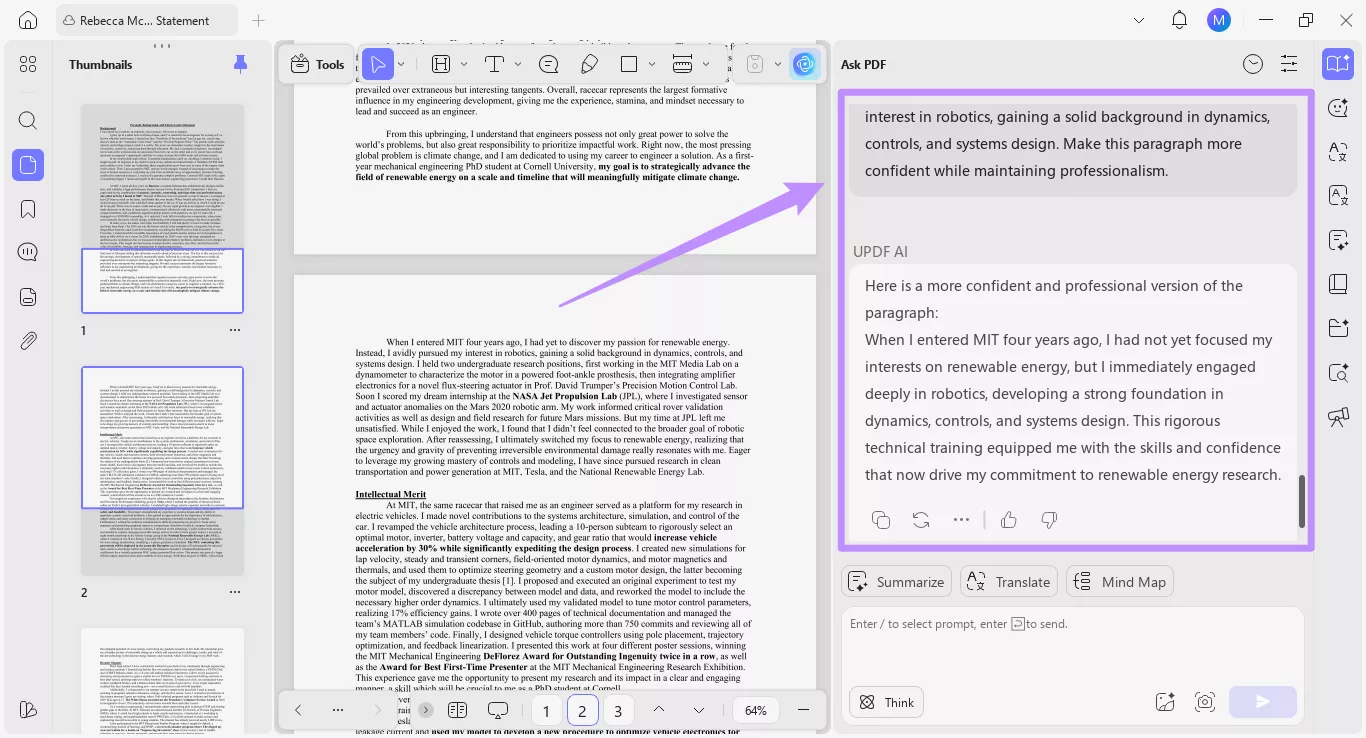
When writing your own statement, UPDF AI can help you make it more convincing. To do this, paste sections of your draft in the prompt box and request "Make this paragraph more confident while maintaining professionalism." Or ask questions like "How do I make it more authentic?"
Step 3. Verify Structure and Layout:
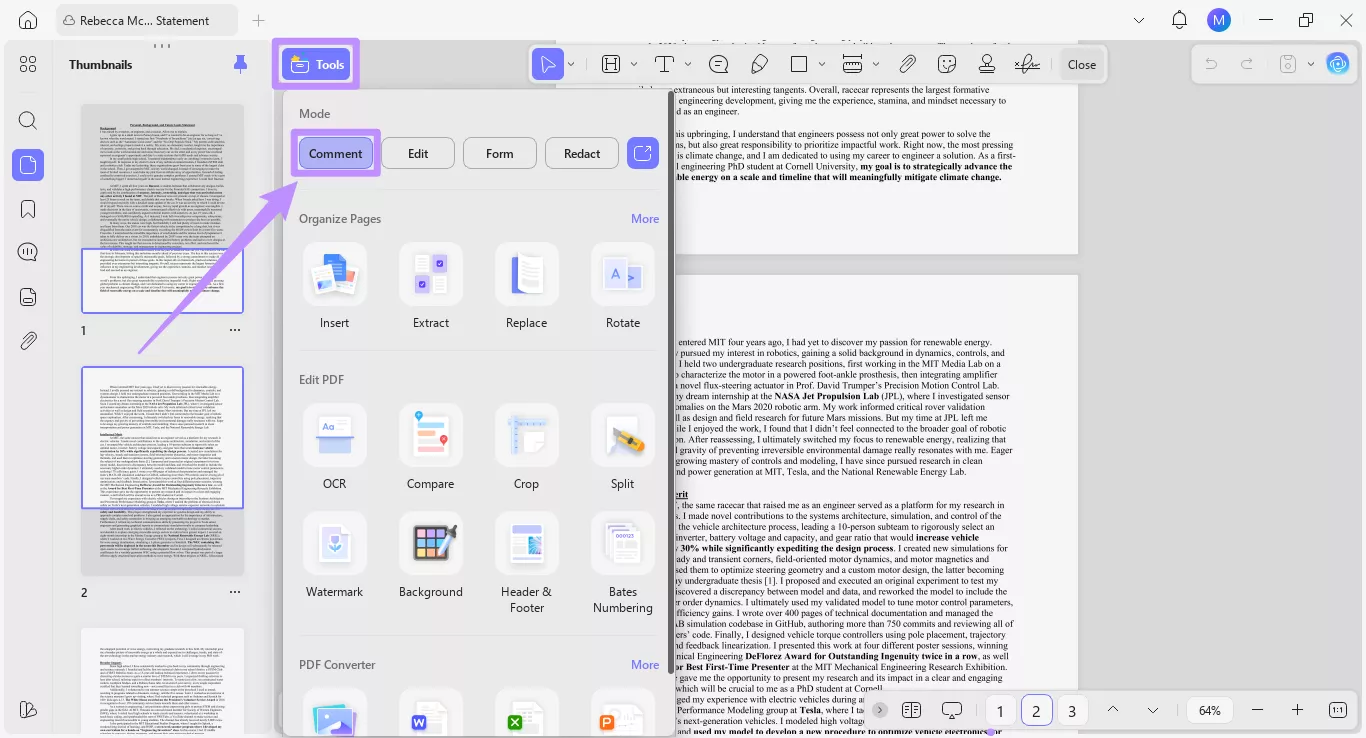
Finally, you can use UPDF's annotation tools to confirm your statement aligns perfectly with the NSF requirements. Simply, go to "Tools" from the top-left and choose the "Comment" mode.
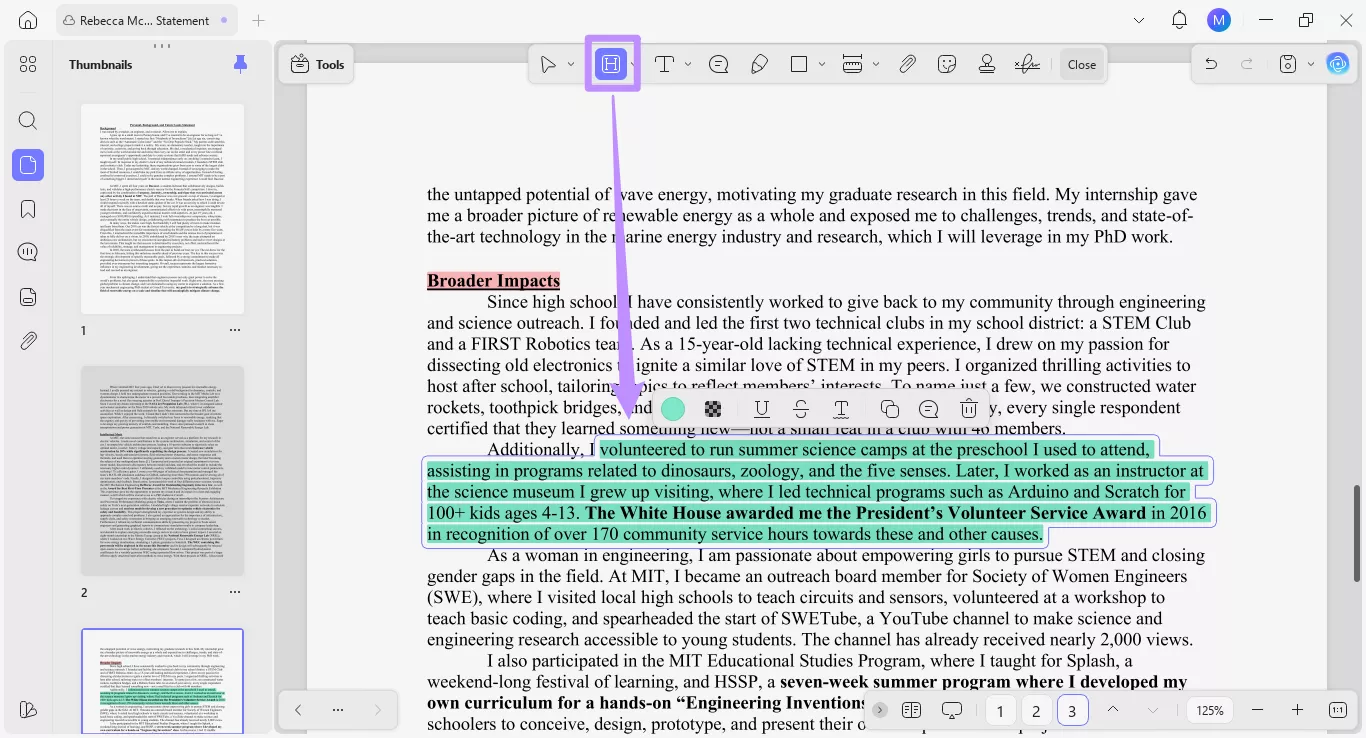
Select the "Highlight" tool from the top toolbar and select the text where you've addressed each NSF criterion.
Part 3. The Formatting War: Mastering the 2-Page Graduate Research Plan
Apart from a personal statement, you must also submit a Graduate Research Plan statement for NSF GRFP 2026. The maximum allowed length for this document is two pages. This means you must include all references, citations, charts, figures, images, and publication lists within this small space.
Think of this document as your opportunity to convince expert reviewers that your research idea is groundbreaking and feasible. To do this, you need to explain your research question and justify why it matters. You will also need to review literature, describe your methodology, present data, and include properly formatted citations.
UPDF: Your Tactical Advantage
Presenting your complete research plan within only two pages can feel challenging. UPDF can help you streamline this process with its comprehensive PDF editing tools. You can use it to format your content according to NSF guidelines, add high-quality images, insert hyperlinks, and more.
Let's look at the exact workflow as an example.
Step 1. Precisely Edit Layout:
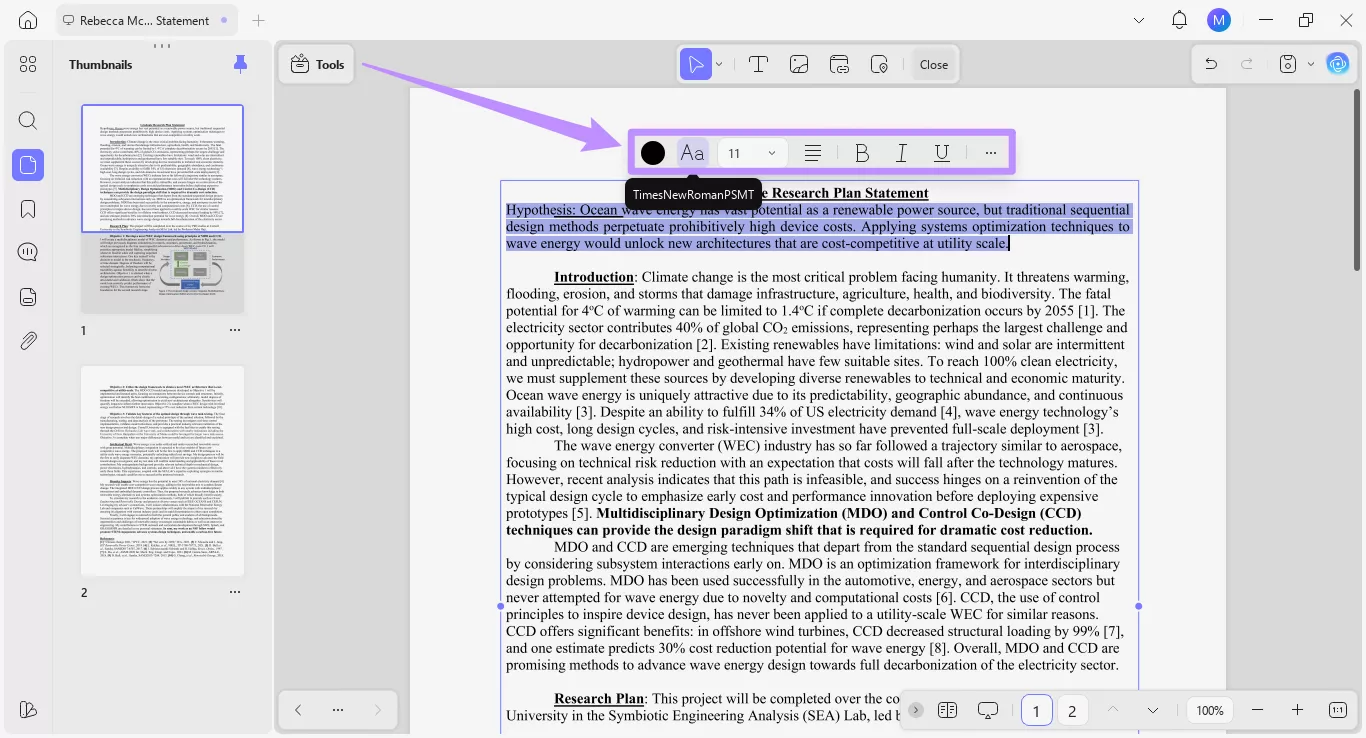
NSF GRFP 202 requires that your statement PDF have 1-inch margins on all sides. Moreover, the text should be 11-point and in Times New Roman font. UPDF's Edit mode can help you adjust text style, alignment, size, font, and more in easy steps.
Windows • macOS • iOS • Android 100% secure
- To do this, click "Tools" from the top and select the "Edit" mode.
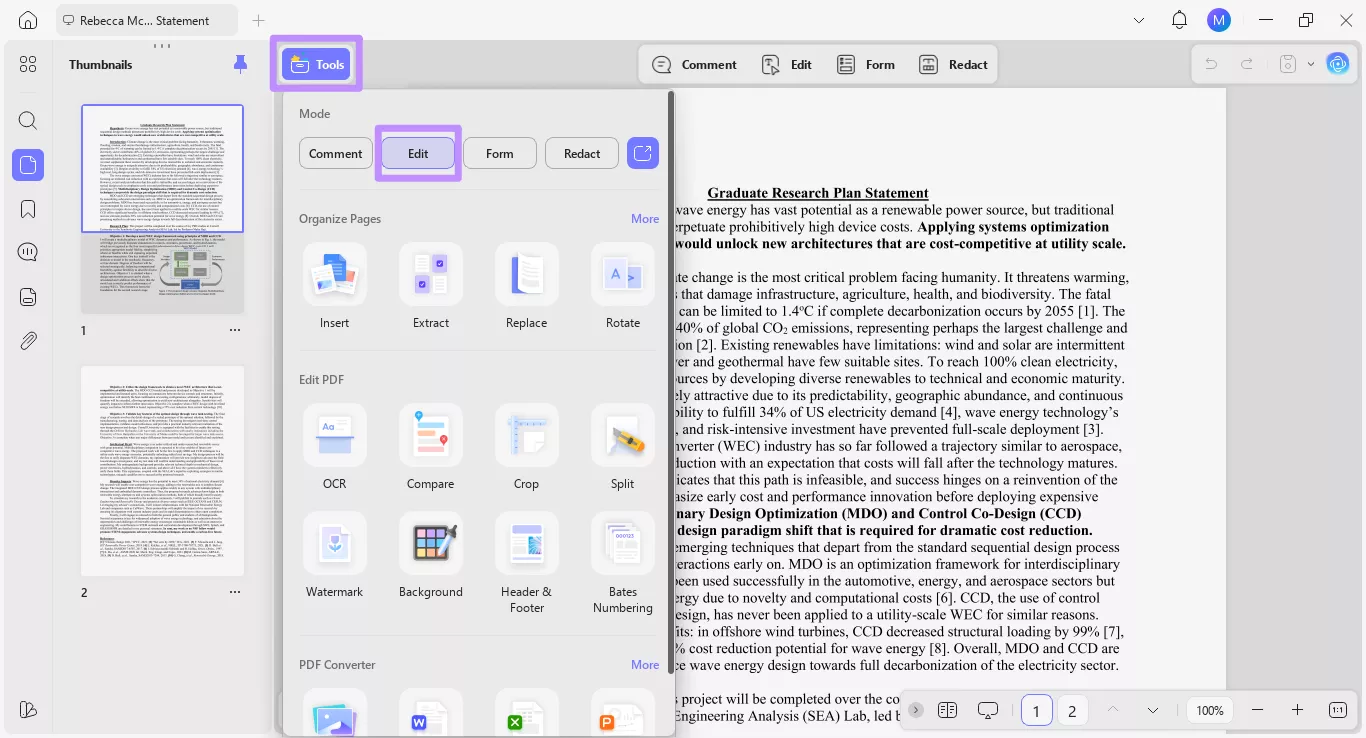
- Select the text you want to modify. Then, adjust the text's font, size, or alignment from the floating toolbar.
Step 2. Add High-Quality Graphics:
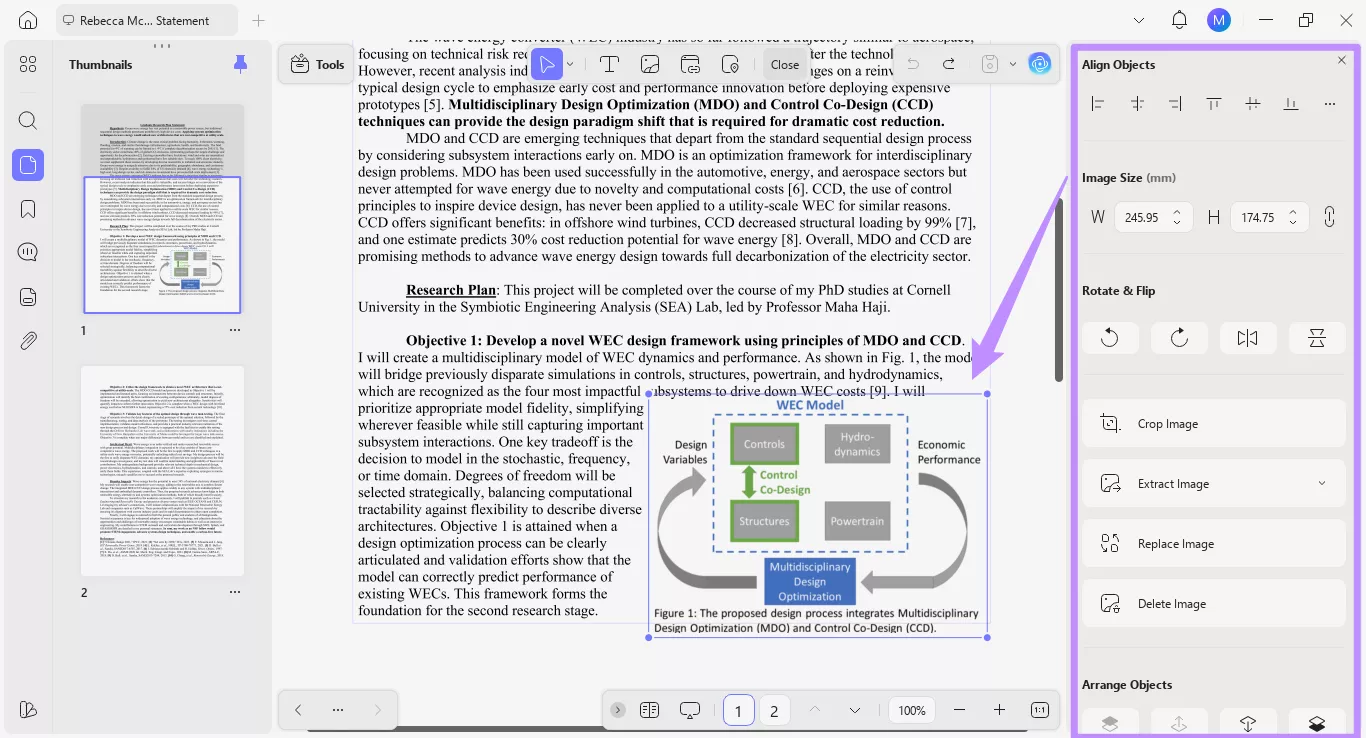
UPDF also allows you to insert high-resolution images, such as diagrams or flowcharts to your statement PDF. Just drag and drop your images into the PDF when in Edit mode. Then, you can add text boxes around the image to save space.
Step 3. Hyperlink References:
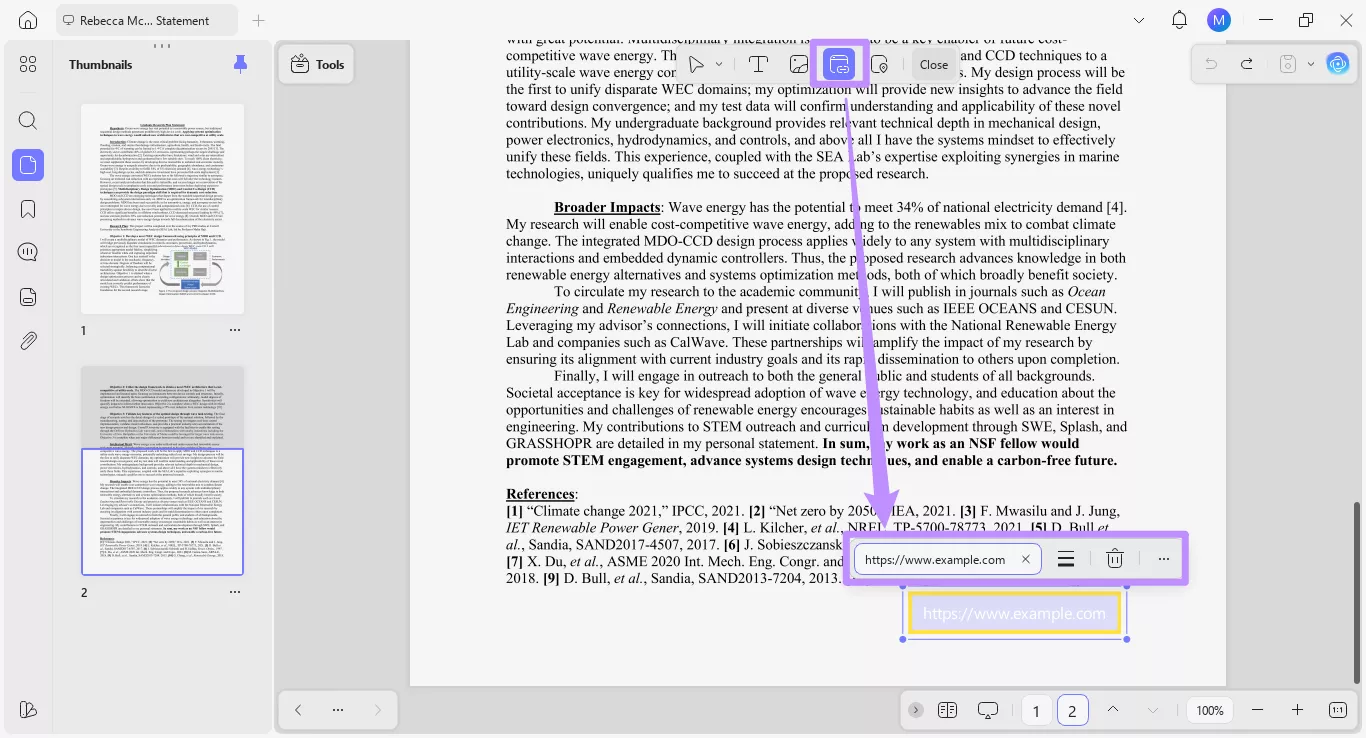
NSF does not recommend adding too many links in your research plan statement. But you may need to add it to your bibliography to format it properly.
- Select the "Insert & Edit Link" option from the toolbar in the Edit mode. Then, click the area where you want to add a link and write the address in the URL box.
Step 4. Audit for Compliance:
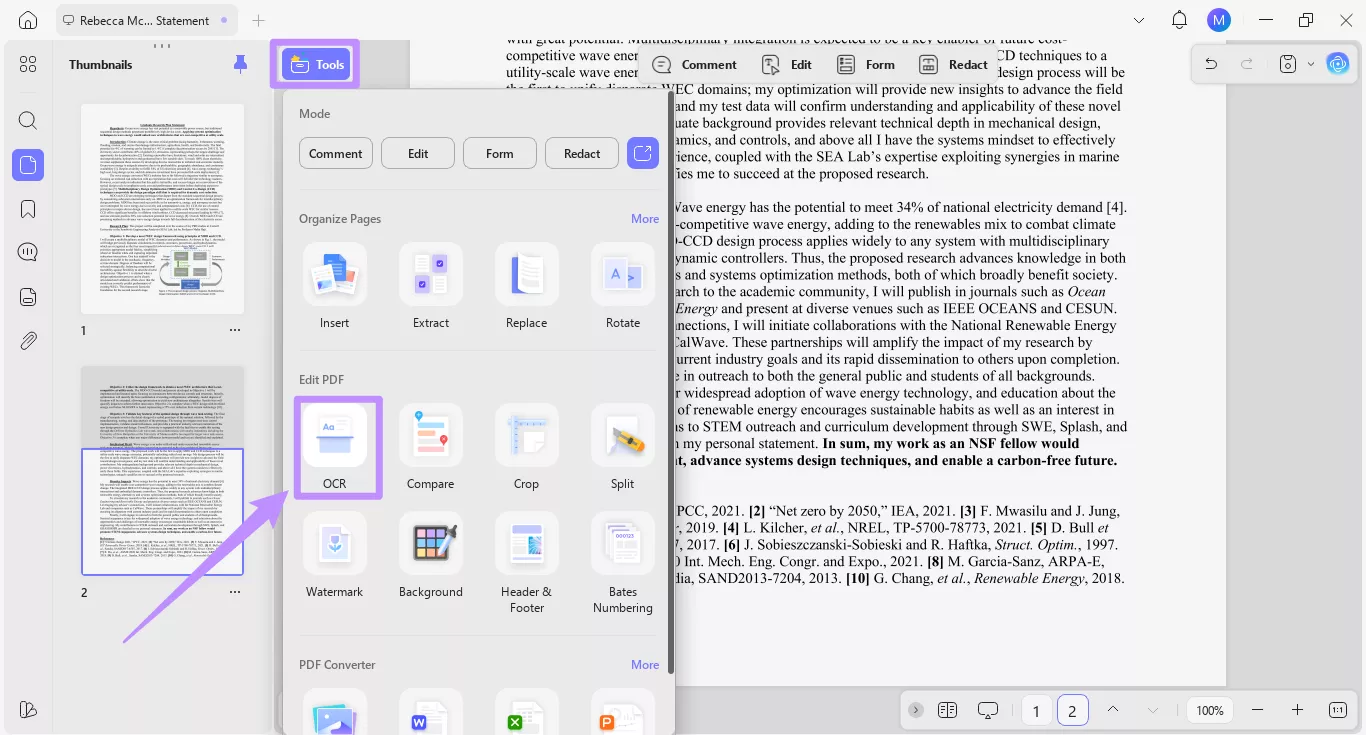
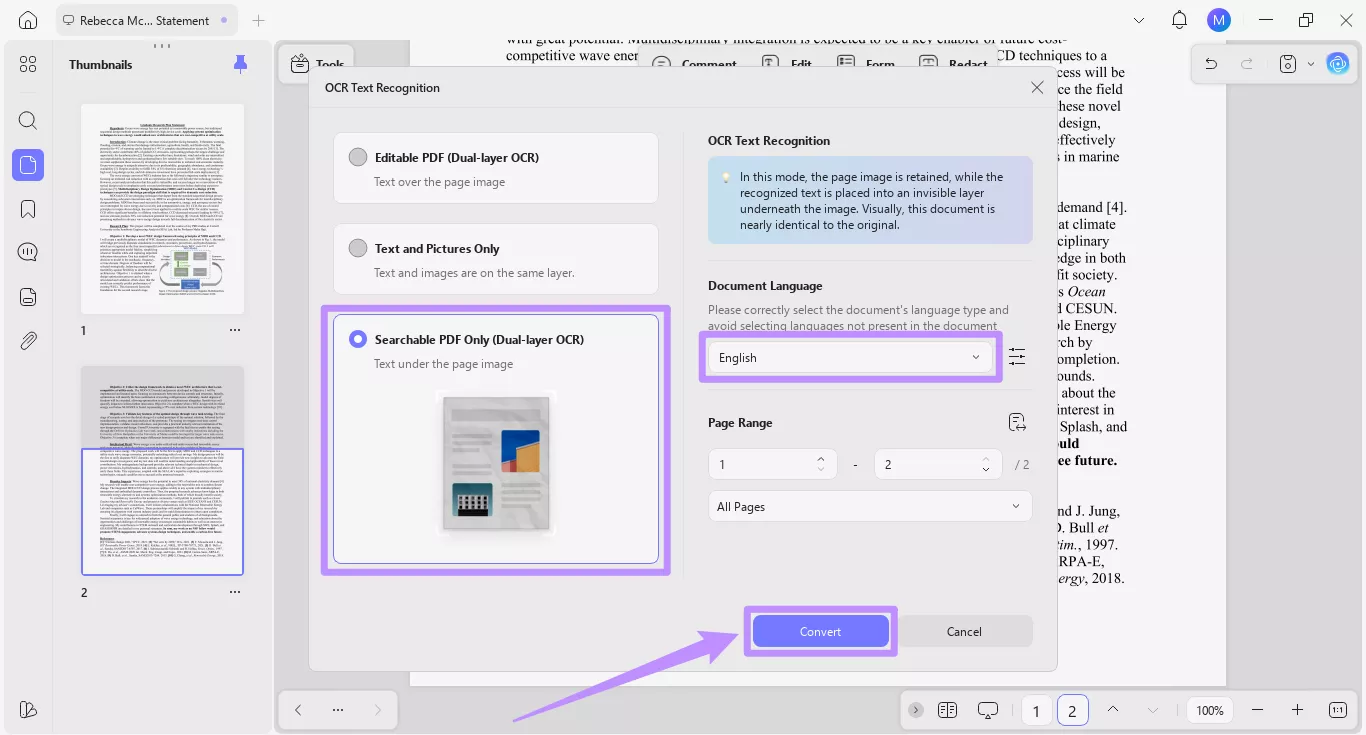
If your PDF contains text that is not selectable or searchable, the Research.gov portal cannot read or analyze it. This may lead to rejection of your application. To avoid this, you can use UPDF's OCR tool to convert static text into a searchable one before submitting the file.
- Simply, select "Tools" and choose "OCR" under the Edit PDF section.
- Select the "Searchable PDF" mode and choose the document language. Then, click "Convert."
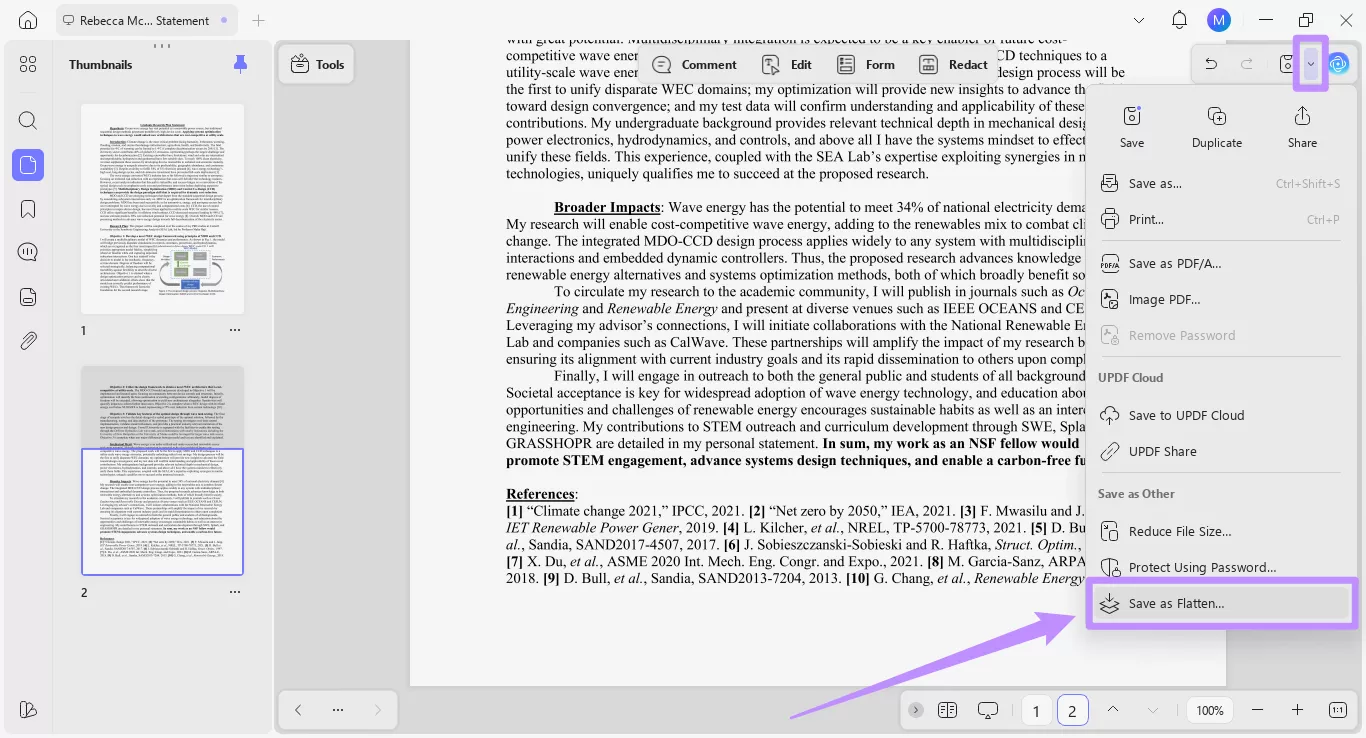
If your PDF has interactive elements, UPDF can flatten these into a single layer. This will ensure that these elements do not overlap or shift when your PDF is viewed on NSF's system.
- To do this, click the down arrow next to the "Save" option in the top right. Then, select "Save as Flatten" from the menu.
Part 4. FAQ: Navigating the NSF 2026 Cycle
Q1. Is the NSF GRFP 2026 still accepting proposals?
No. The NSF is no longer accepting applications for fellowships. For the 2026 award year, the official deadlines were in November 2025, which have already closed for submission.
Q2. How is the NSF GRFP changing?
The NSF GRFP 2026 has introduced significant changes to the system. Now, the second-year graduate students can no longer apply for a fellowship. Only the first-year grads with less than one academic year can apply. Moreover, the usual October deadlines were also pushed back to November.
Q3. Can I use a 10pt font for figure captions?
The NSF GRFP 2026 has introduced significant changes to the system. Now, the second-year graduate students can no longer apply for a fellowship. Only the first-year grads with less than one academic year can apply. Moreover, the usual October deadlines were also pushed back to November.
Q4. What counts as "Broader Impacts"?
Broader Impacts for the NSF GRFP means how your work can benefit society beyond just basic research. This includes supporting underrepresented groups in STEM, improving STEM education and public understanding, mentoring, and community outreach. This can be done either through the research itself or related activities.
Q5. How many letters of recommendation do I need?
You need at least two recommendation letters for your application to be considered for the GRFP. However, three letters are highly recommended to improve your chances of success. NSF even allows you to enter up to five potential referees in the system to make sure at least three letters are submitted before the deadline.
Q6. What are the odds of getting the GRFP?
Historically, the chances of winning a GRFP were quite high. NSF awarded about 2,100 fellowships per year from nearly 14,000 applications. However, in 2025, the awards are dramatically cut to just 1500 fellowships due to the NSF Budget in 2025. These changes have significantly reduced the rate of acceptance.
Conclusion
To sum up, the NSF GRFP 2026 is fiercely competitive. This is due to sudden changes in deadlines, reduced funding, and more restricted eligibility requirements. If you want to win a fellowship, UPDF can help you prepare a convincing personal and research plan statement. It allows you to analyze successful samples and align your statements to the NSF guidelines. Even better, you can get started with a free trial. So, don't miss out. Download and try UPDF today!
Windows • macOS • iOS • Android 100% secure




 Engelbert White
 Delia Meyer