 UPDF
UPDF
 Windows版UPDF
 Mac版UPDF
 iPhone/iPad版UPDF
 Android版UPDF
 Nomostar
 UPDF AI オンライン
 UPDF Sign
 IvyCraft
 PDF編集
PDF編集 PDF注釈付け
 PDF作成
PDF作成 PDFフォーム
 リンクの編集
 PDF変換
PDF変換 OCR機能
OCR機能 PDFからWordへ
 PDFから画像へ
 PDFからExcelへ
 PDFのページ整理
 PDF結合
PDF結合 PDF分割
PDF分割 ページのトリミング
 ページの回転
 PDF保護
PDF保護 PDF署名
PDF署名 PDFの墨消し
 PDFサニタイズ
 セキュリティ解除
 PDF閲覧
PDF閲覧 UPDF クラウド
 PDF圧縮
PDF圧縮 PDF印刷
PDF印刷 PDFのバッチ処理
 UPDF AIについて
 UPDF AIソリューション
 AIユーザーガイド
 UPDF AIによくある質問
 PDF要約
PDF要約 PDF翻訳
PDF翻訳 PDF付きチャット
 AIでチャット
 画像付きチャット
 PDFからマインドマップへの変換
 PDF説明
PDF説明 PDF AIツール
 画像AIツール
 AIチャットツール
 AIライティングツール
 AI学習ツール
 AI業務ツール
 その他のAIツール
 AI ブックマーク生成
 AI ブックマーク要約
 AI 透かし生成
 AI 背景生成
 AI ステッカー生成
 AI スタンプ生成
 AI 編集スイート
 UPDF コパイロット
 AI ページ管理
 AI セマンティックサーチ
 PDFからWordへ
 PDFからExcelへ
 PDFからPowerPointへ
 ソリューション
 電子署名
電子署名 ビジネスAI
 料金プラン
料金プラン 導入・運用ガイド
 ウェビナー
ウェビナー IT
IT 教育
教育 建設
建設 金融サービス
 医療
医療 保険
保険 法務
法務 製造業
製造業 官公庁
官公庁 研究者・博士向け
 個人事業主・フリーランス向け
 弁護士・法務専門家向け
 不動産担当者・仲介業者向け
 教育機関向けソリューション
 導入事例
導入事例 ユーザーガイド
 公式ブログ
公式ブログ UPDF 活用術
 UPDF vs Adobe Acrobat
 UPDF vs Foxit
 UPDF vs PDF Expert
 よくある質問(FAQ)
 ダウンロードセンター
 動作環境・仕様
 お問い合わせ
 ニュースルーム
 アップデート履歴
 ユーザーレビュー
 会社概要
会社概要

 UPDF AI
AIでリサーチクエスチョンを作成・改善
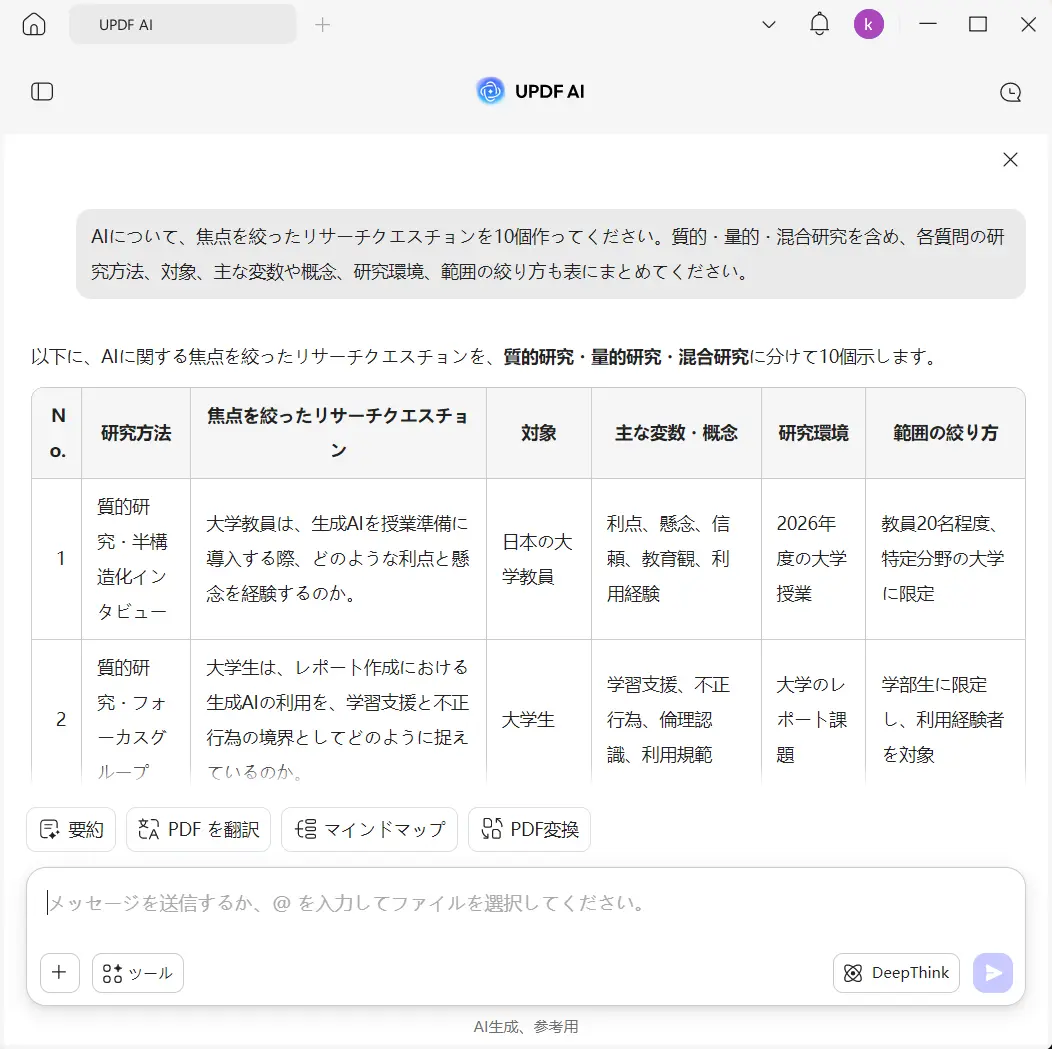
研究テーマを入力し、対象、主要概念や変数、研究環境、期間、研究方法などの条件を加えると、検討の出発点となるリサーチクエスチョンをAIで作成できます。生成結果はそのまま確定せず、研究目的や利用できるデータに照らして調整してください。
搭載モデル
 GPT-5.6 |
  DeepSeek R1
5,000件以上のレビュー
 4.8
4.8
UPDF AI対応環境


 デスクトップ・モバイルアプリ

400万人以上のユーザーに利用され、学生・研究者・専門家から信頼されています






UPDF AIでリサーチクエスチョンを作成する方法
研究テーマと目的を入力する
調べたいテーマと研究の目的を簡潔に入力します。専門分野や学習段階も添えると、目的に合う候補を得やすくなります。研究方法や問いの型を指定する
質的研究、量的研究、混合研究、比較研究、PICO/PICOTなど、想定する方法や形式を指定します。対象と条件を加える
対象集団、主要概念や変数、研究環境、期間、利用できるデータなどを追加し、問いの範囲を具体化します。入力条件を確認して絞り込む
テーマと条件が明確か確認します。広すぎる場合は対象、場所、期間、変数のいずれかを限定してください。送信して生成結果を検討する
Enterキーを押して候補を生成します。研究目的との一致、必要なデータ、実施可能性を確認し、必要に応じて再調整してください。

UPDF AIリサーチクエスチョン生成ツールを使うメリット
広い研究テーマを具体的な問いへ絞り込む
「ソーシャルメディアとメンタルヘルス」のような広いテーマに、対象集団、プラットフォーム、行動、結果、場所、期間などの条件を加え、課題と利用可能な資料に合う問いへ絞り込めます。

曖昧で調査しにくい問いを避ける
範囲が広すぎる、概念が曖昧、前提に偏りがある、必要な変数が不足しているなど、調査を難しくする要素を見直し、より明確な候補へ調整できます。

研究方法に合う問いの形を考える
経験やプロセスを扱う質的研究、関係や効果を検討する量的研究、両者を組み合わせる混合研究、集団や施策を比べる比較研究など、方法に応じた候補を作成できます。

臨床研究向けのPICO/PICOT質問を作成する
対象(P)、介入(I)、比較(C)、結果(O)を整理し、検索しやすい臨床上の問いへまとめられます。期間が必要な場合はTを加え、PICOT形式の候補を作成できます。

UPDF AIと一般的なリサーチクエスチョン生成ツールの比較
UPDF AI
一般的な生成ツール
無料で開始

ツールにより異なる
ログインなしで利用
多くのWebツールで利用可能
質的・量的研究の質問
一部のツールで利用可能
PICO/PICOT質問の生成
ガイド付きプロンプトで対応
専用PICOツールでは主要機能
学術論文検索
Paper Searchで2億2,000万件以上の論文を検索
多くの単体生成ツールには非搭載
リサーチギャップの発見
通常は非対応
参考PDFとのチャット
通常は非対応
文献レビュー支援
Scholar Researchで対応
通常は限定的
よくある質問
Q1. UPDF AIはPICO形式のリサーチクエスチョン生成にも使えますか?
Q2. UPDF AIとBoltAIのリサーチクエスチョン生成ツールの違いは何ですか?
Q3. AIが生成したリサーチクエスチョンの独自性は保証されますか?
Q4. 研究論文をUPDF AIにアップロードしても安全ですか?
他の人気なUPDF AIツール